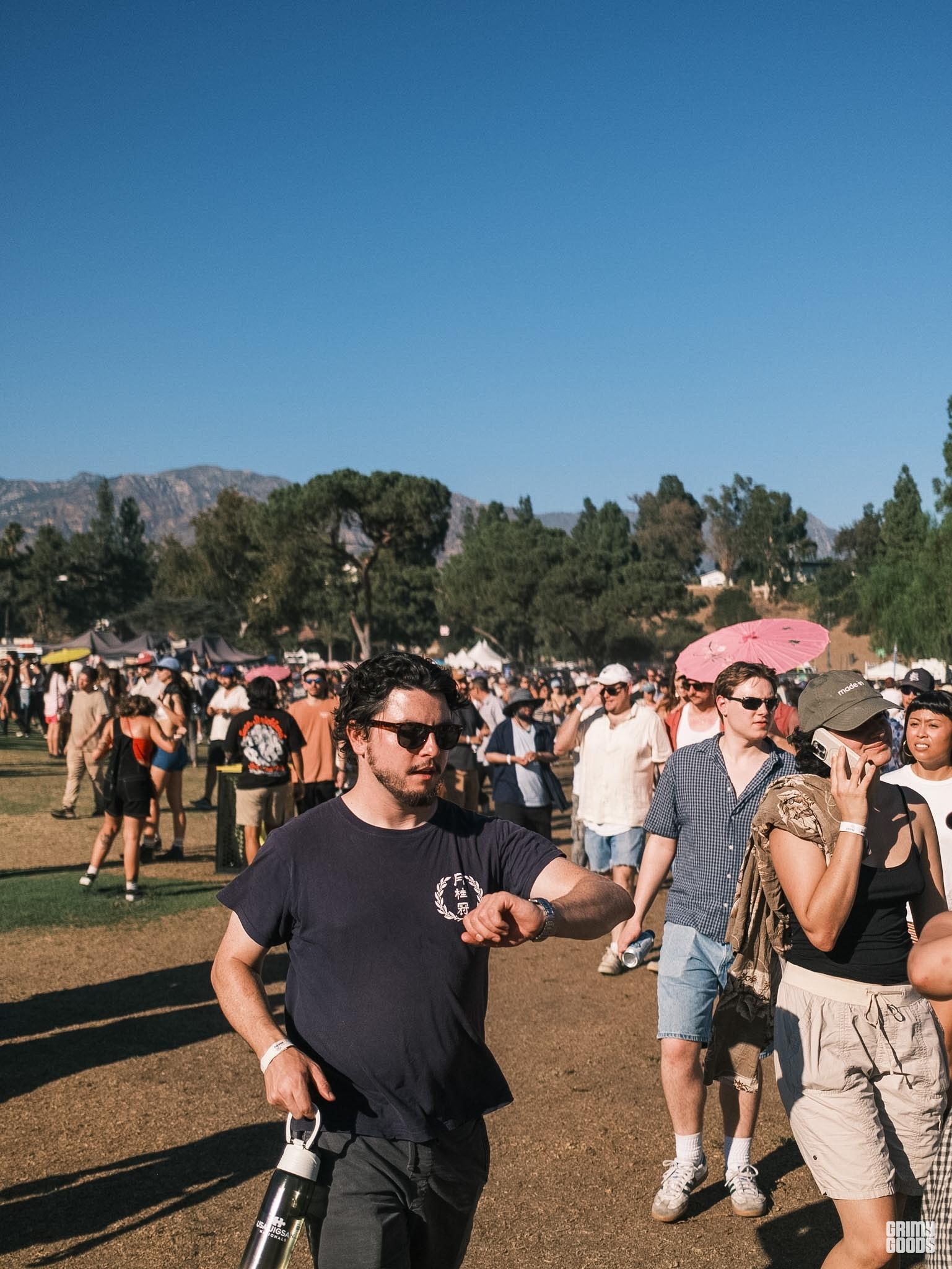
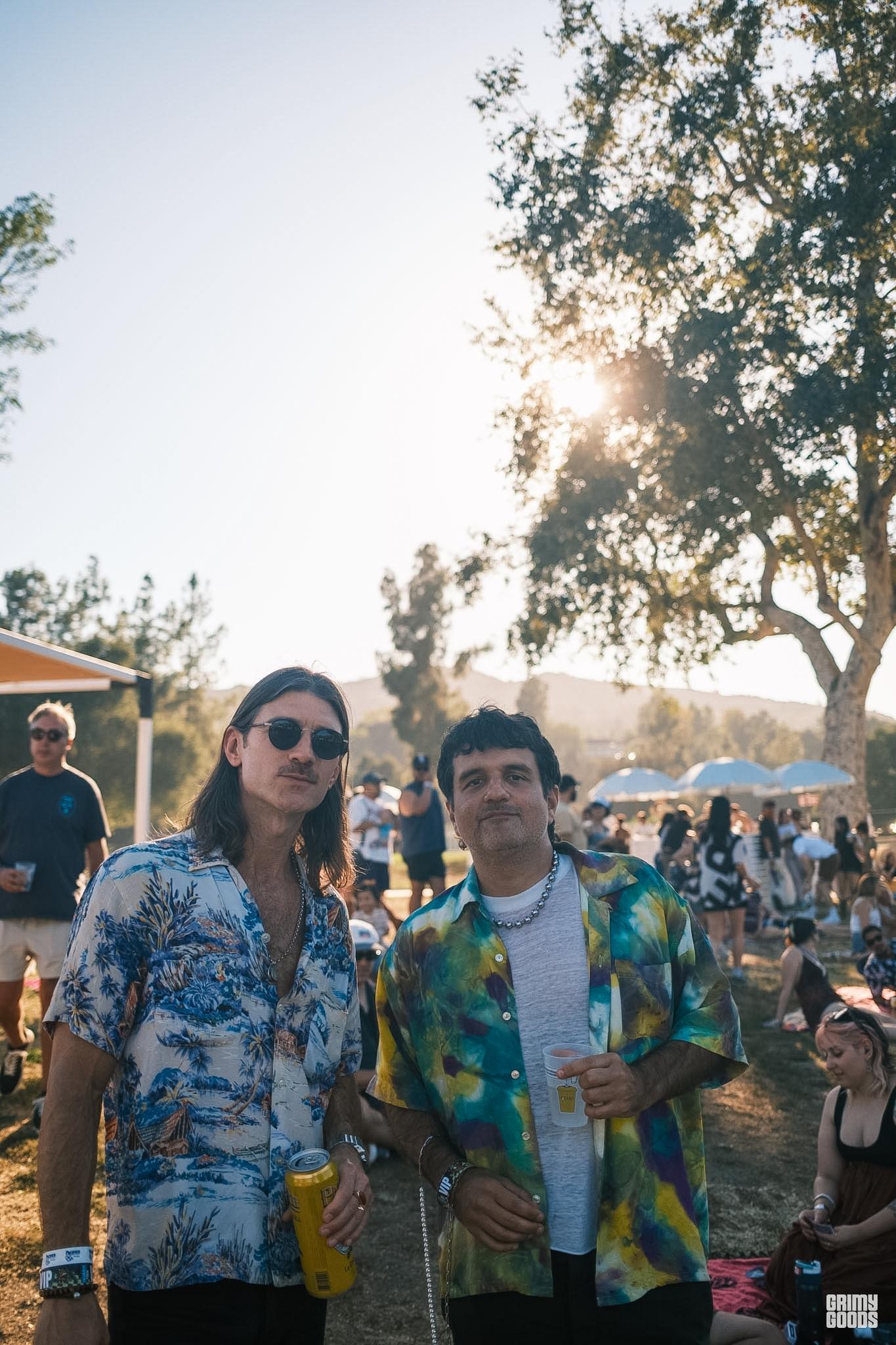
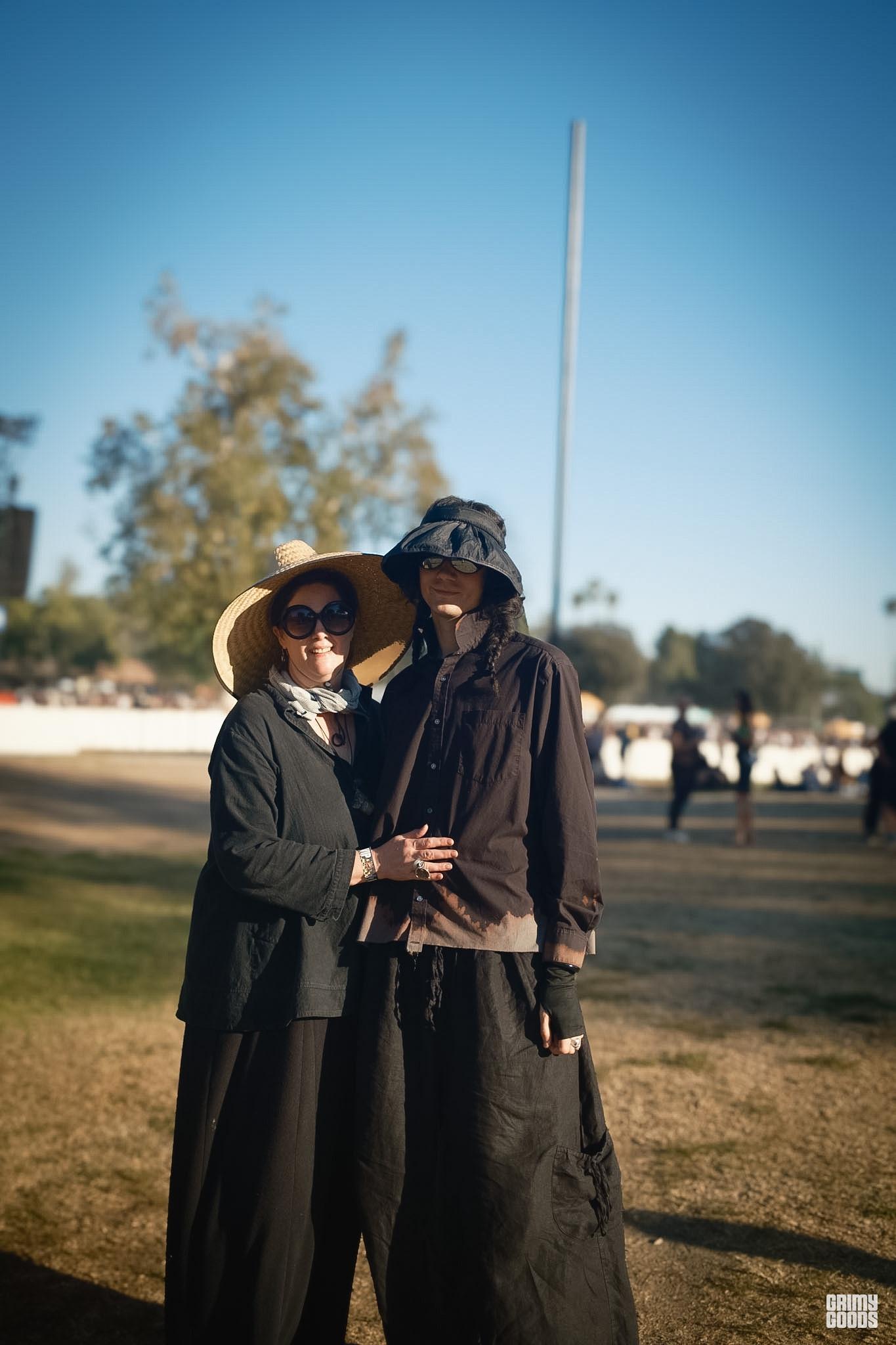
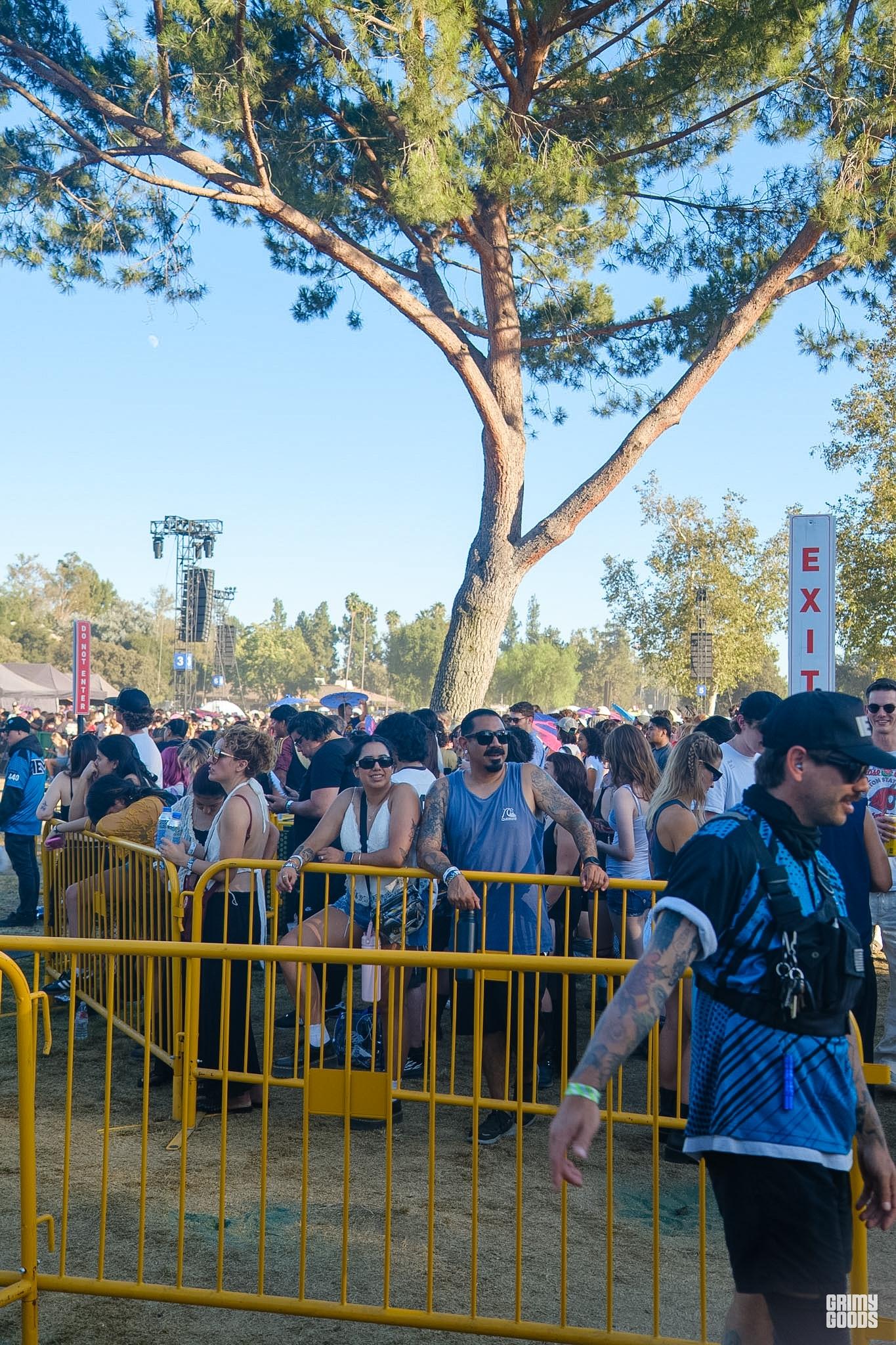
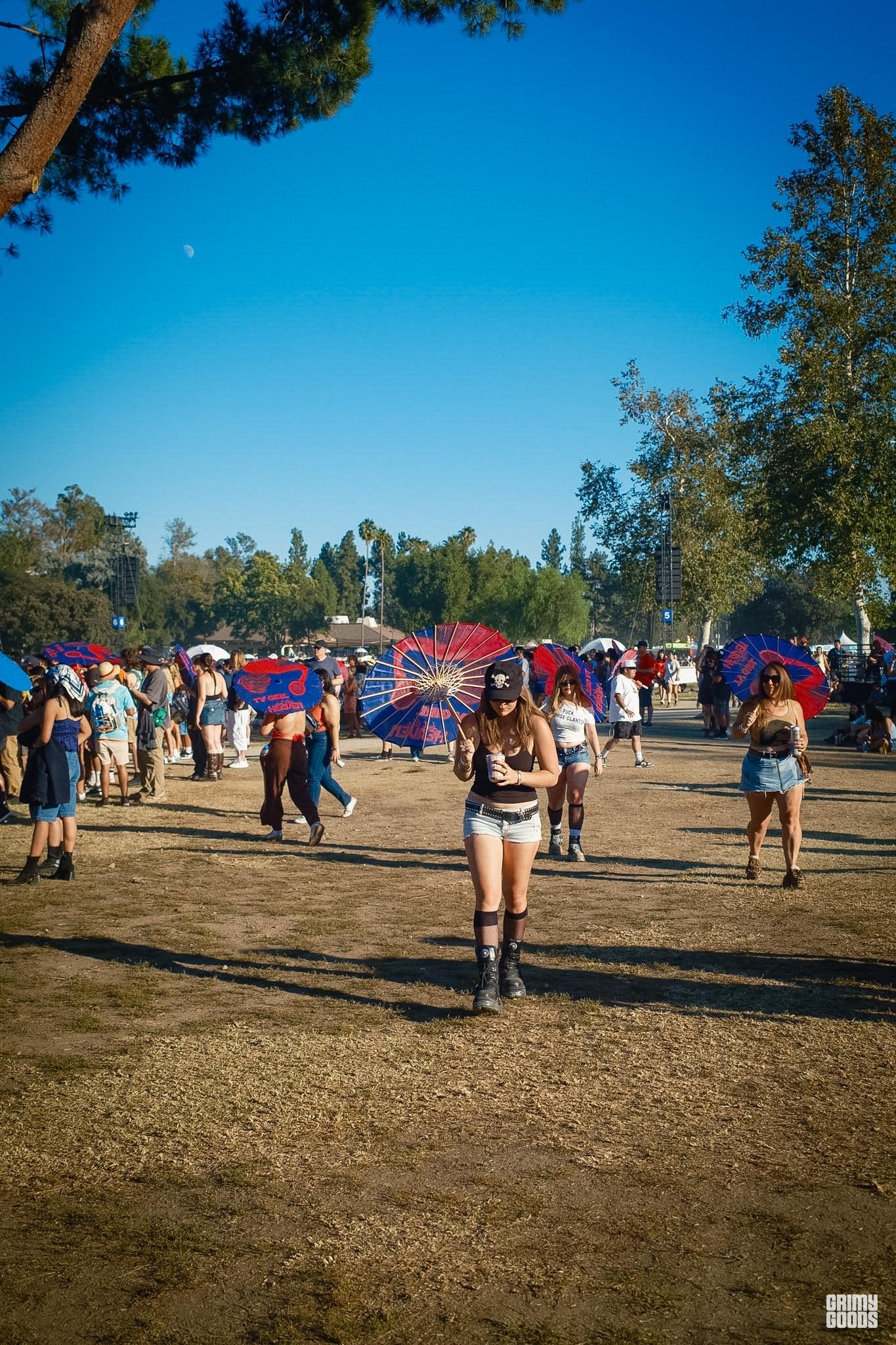
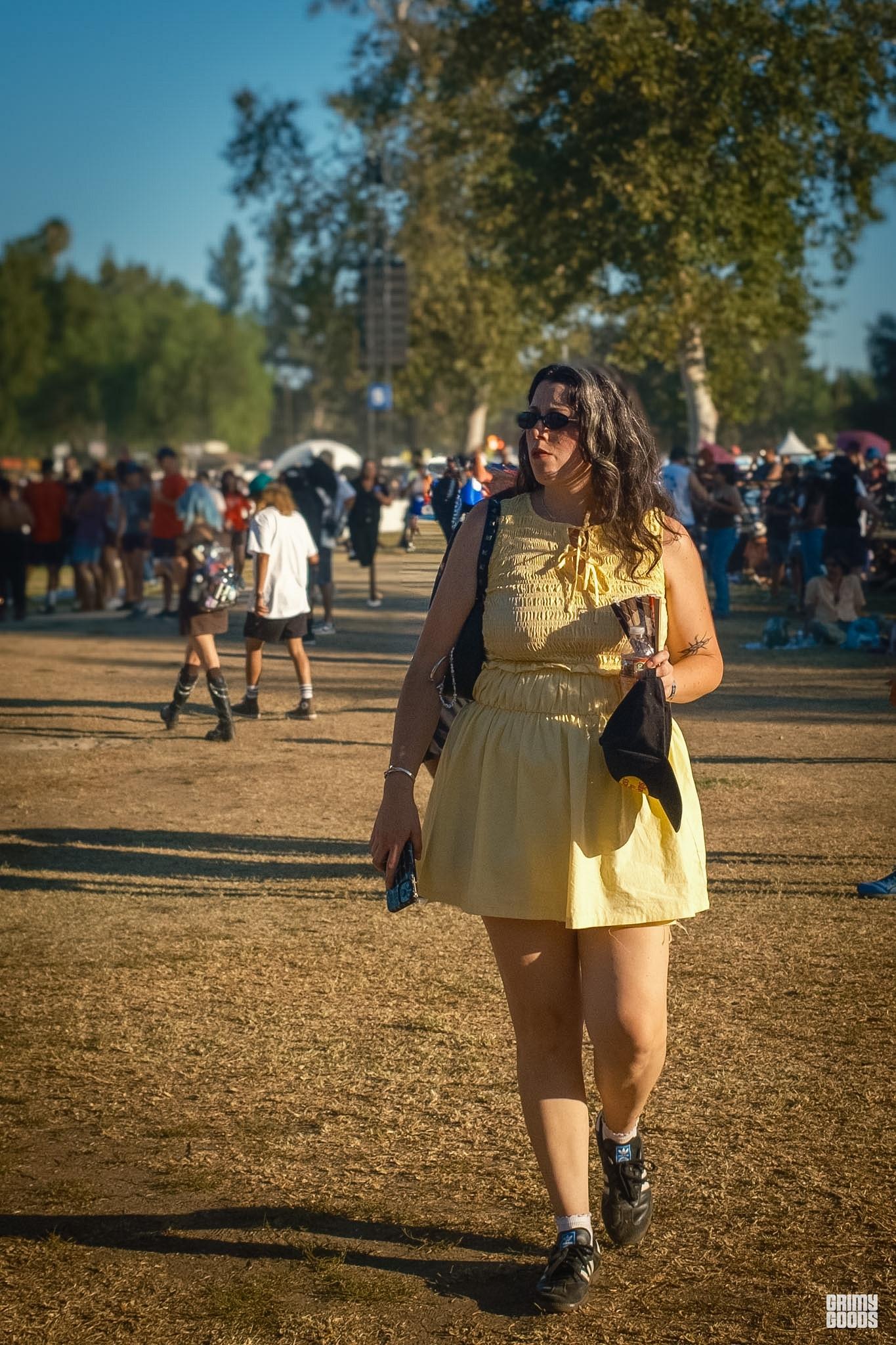
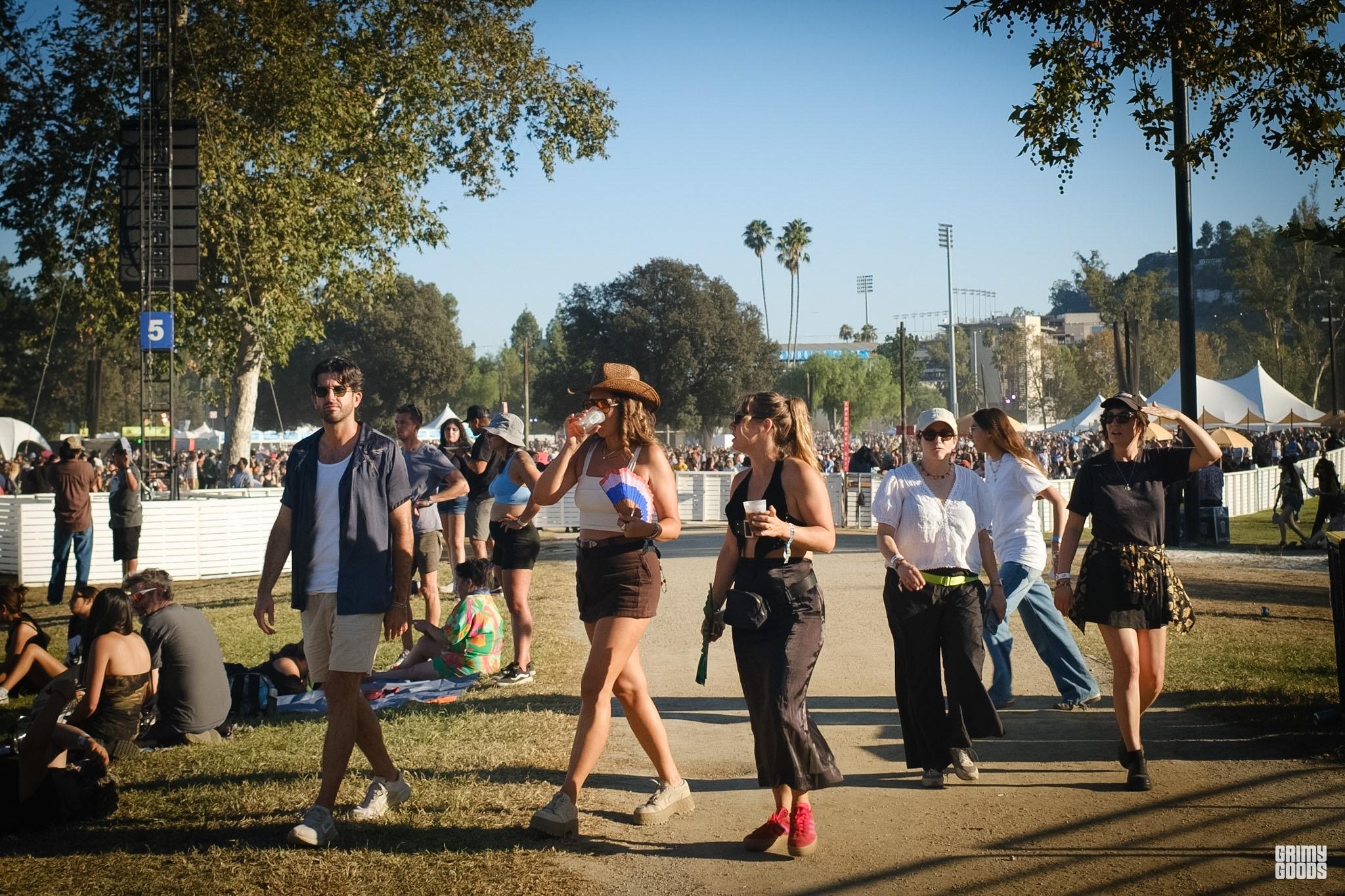
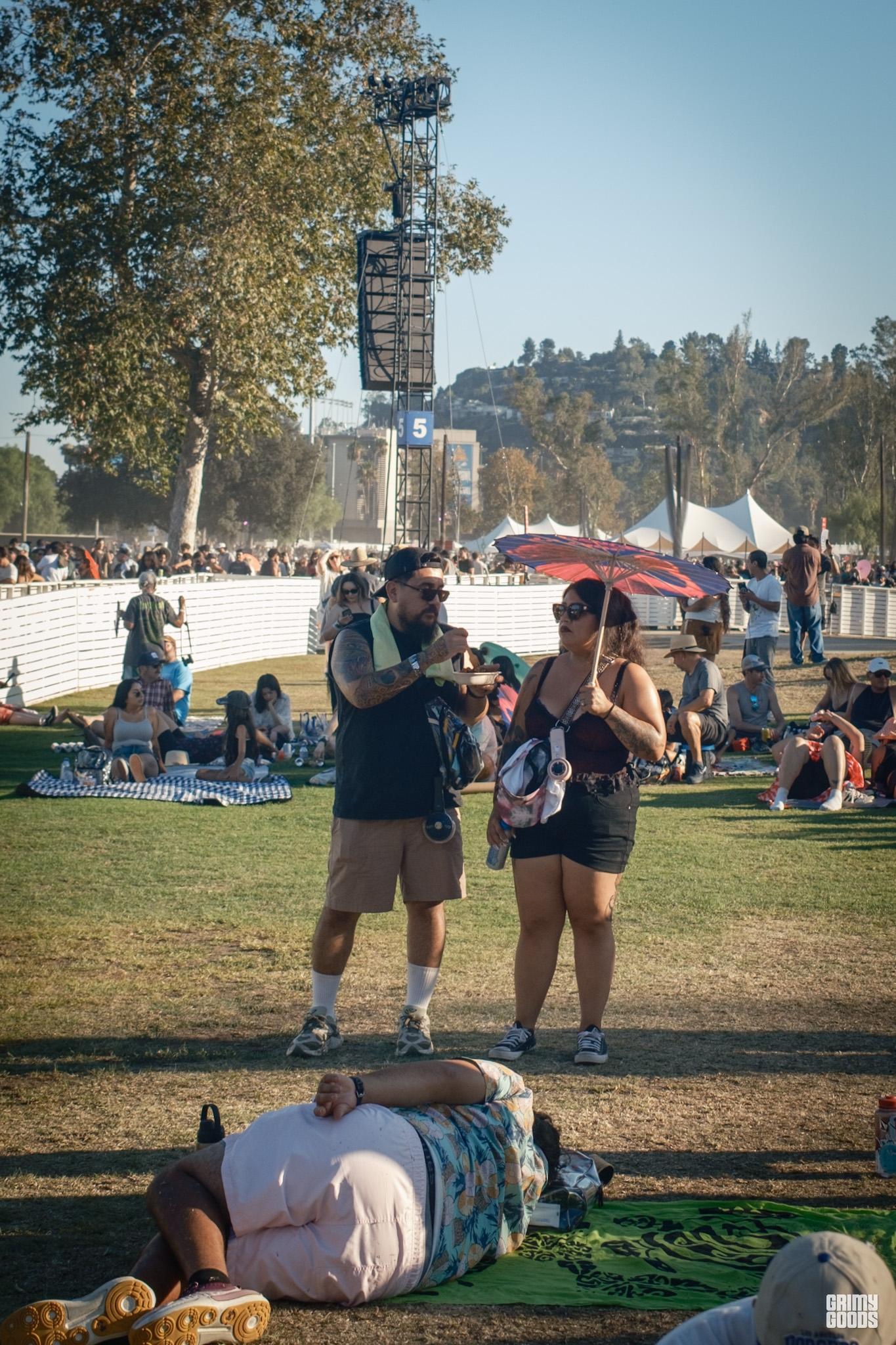
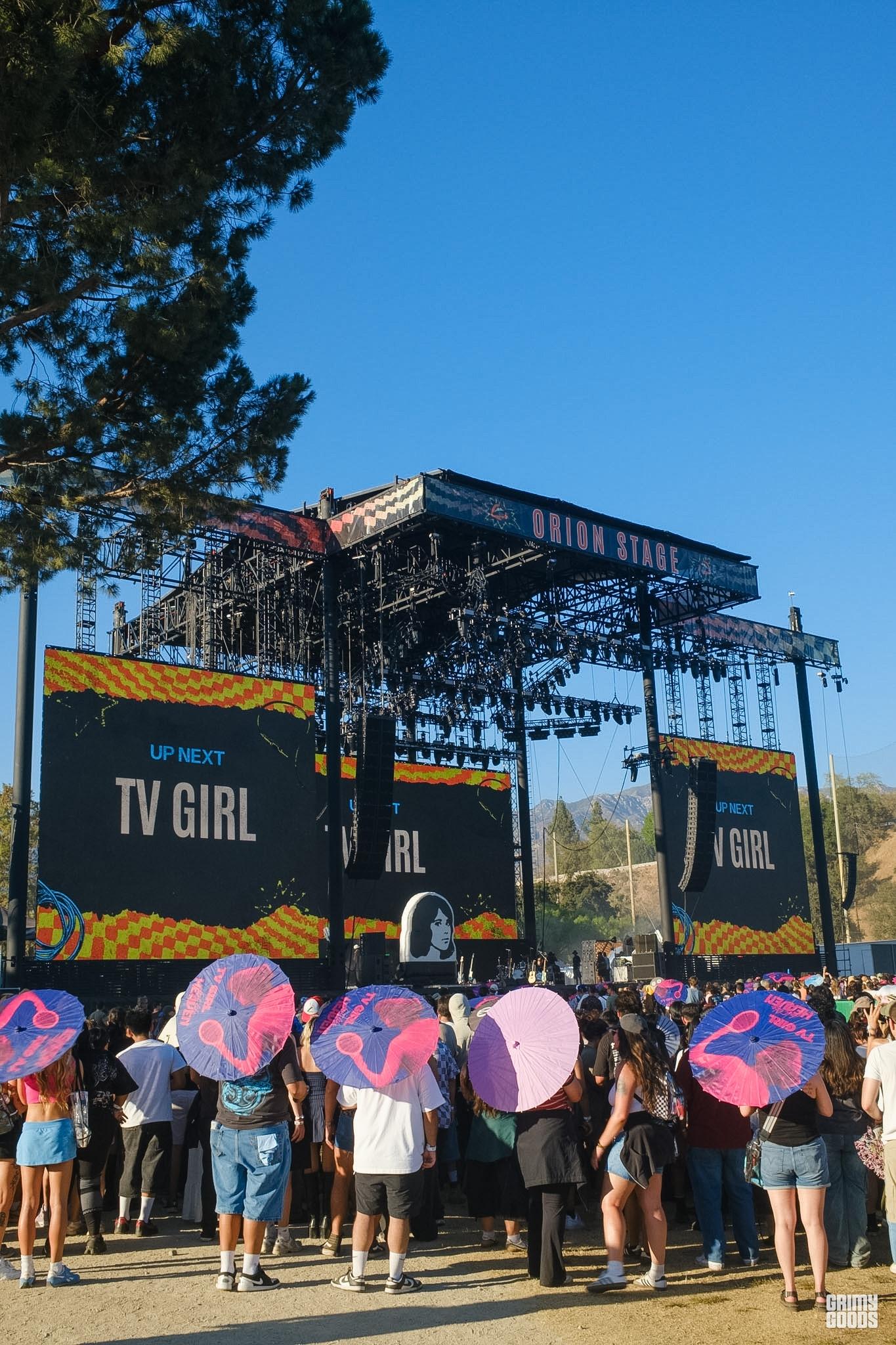
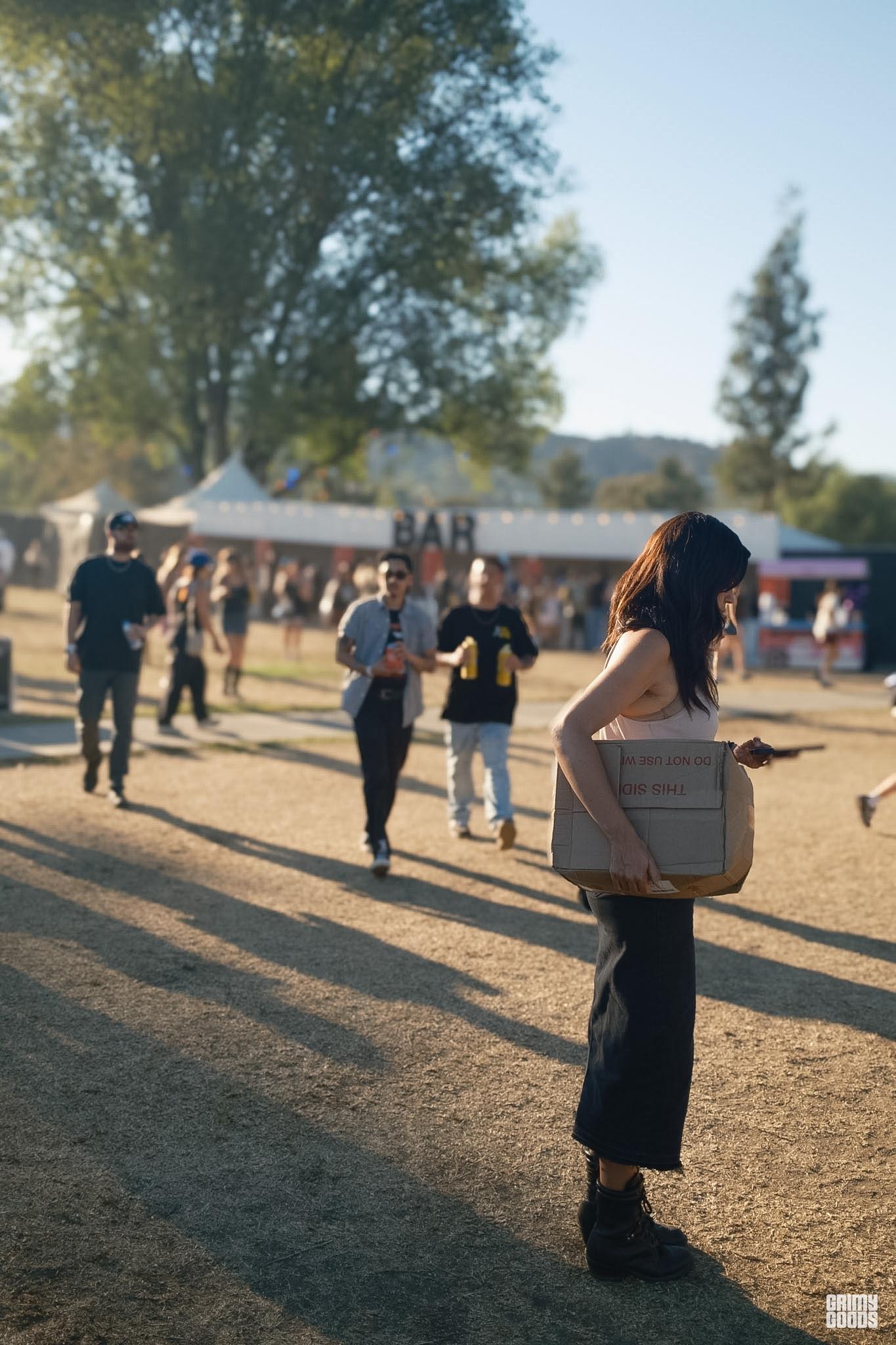
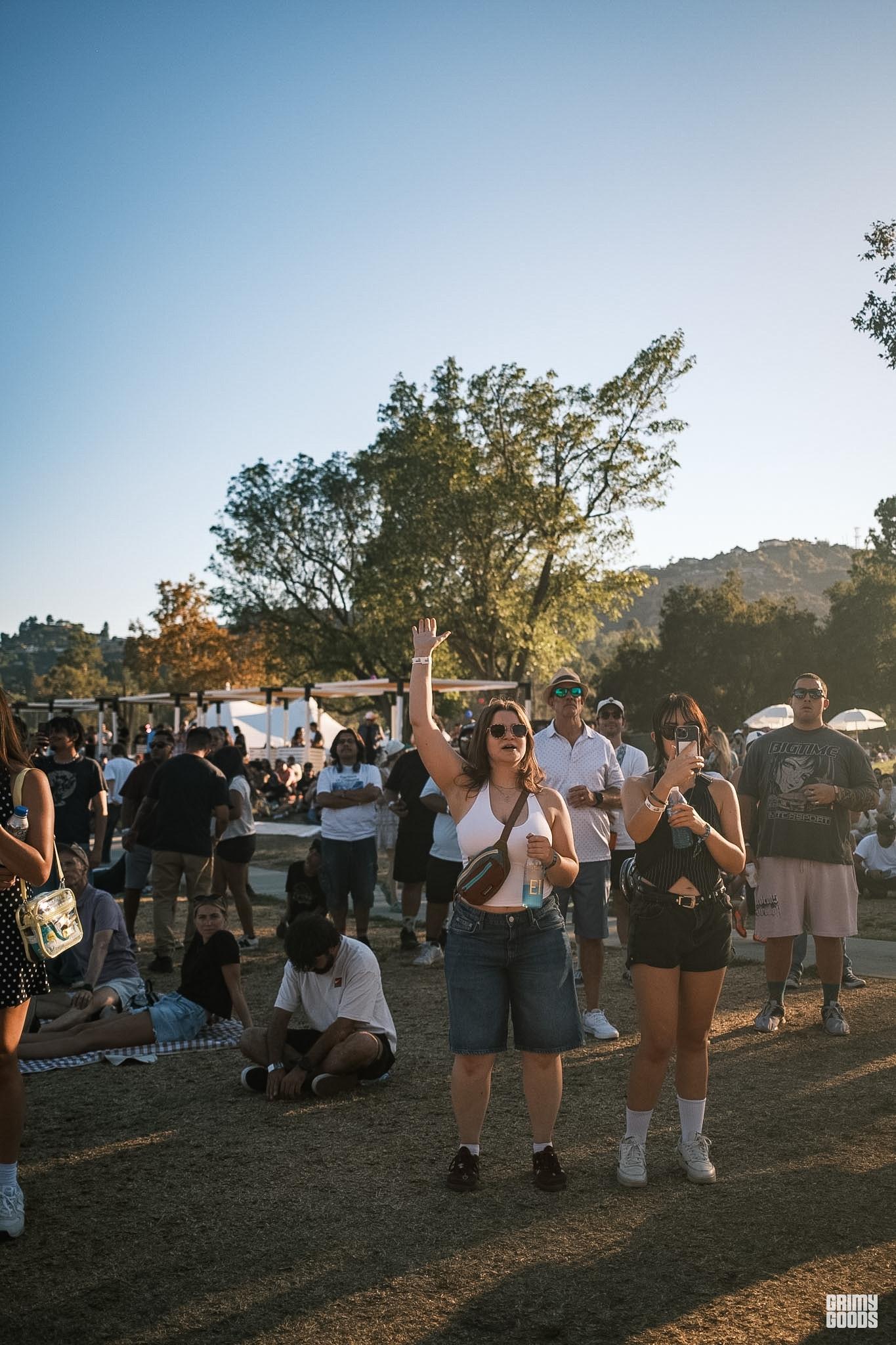
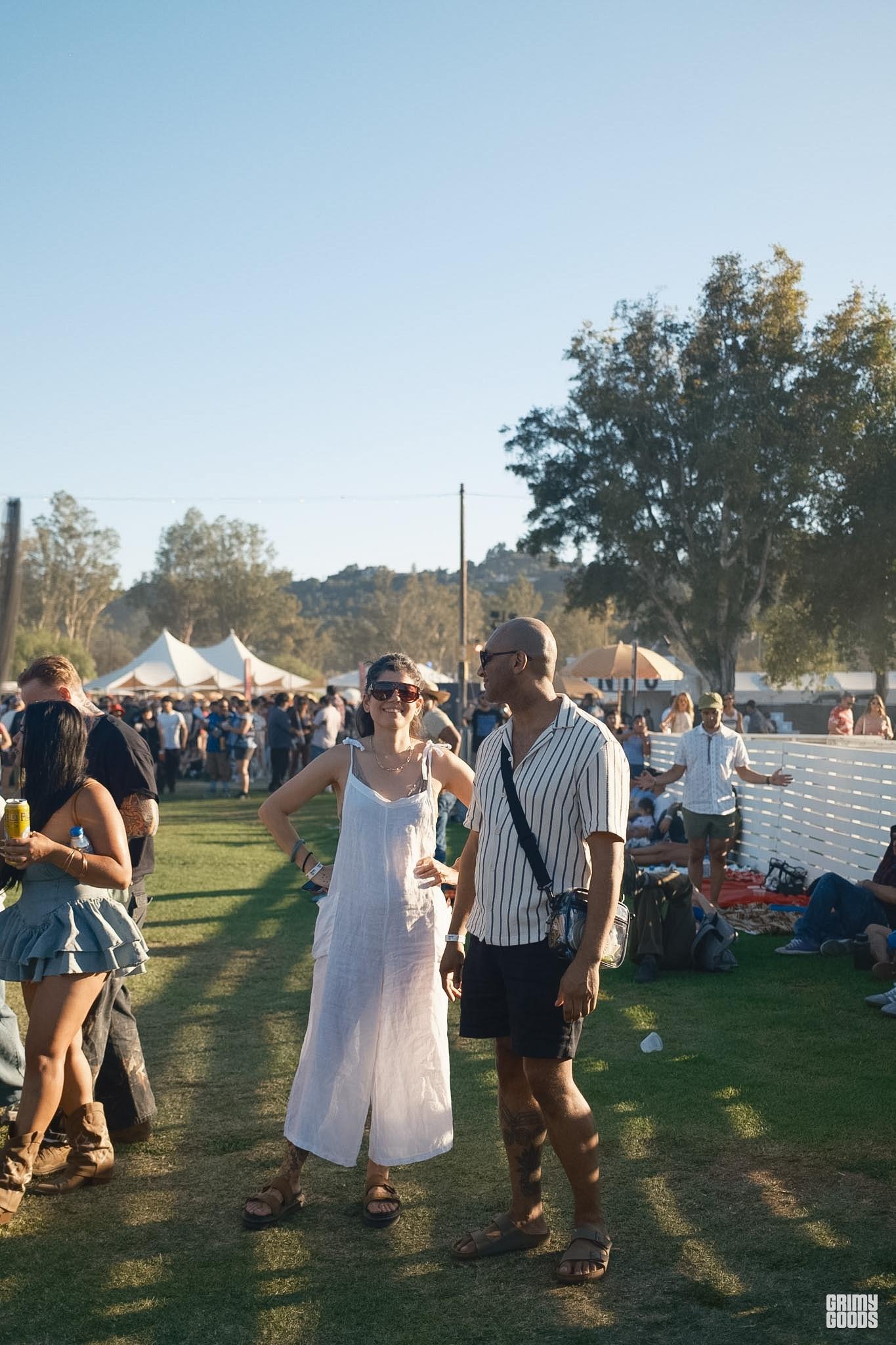
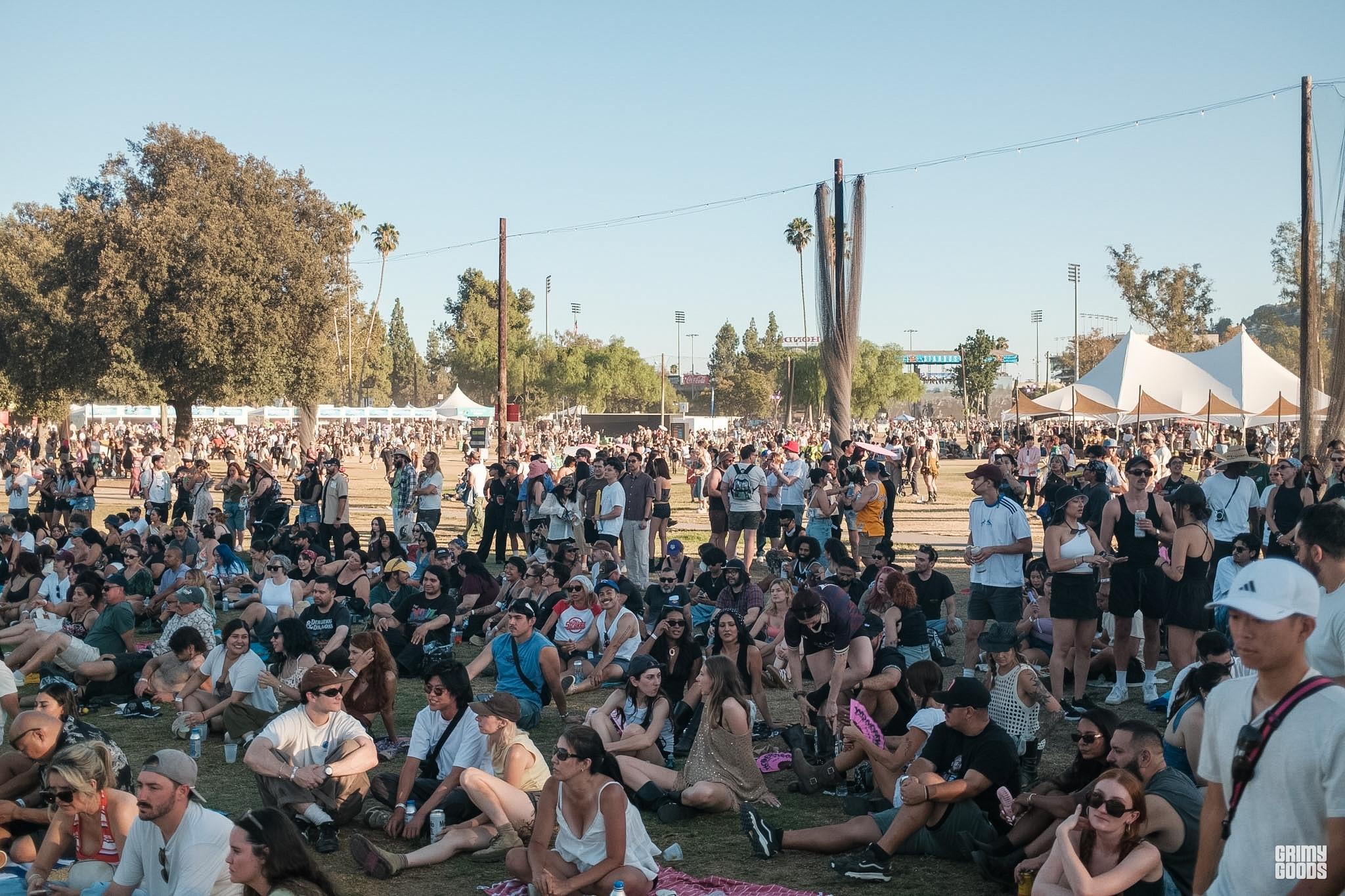
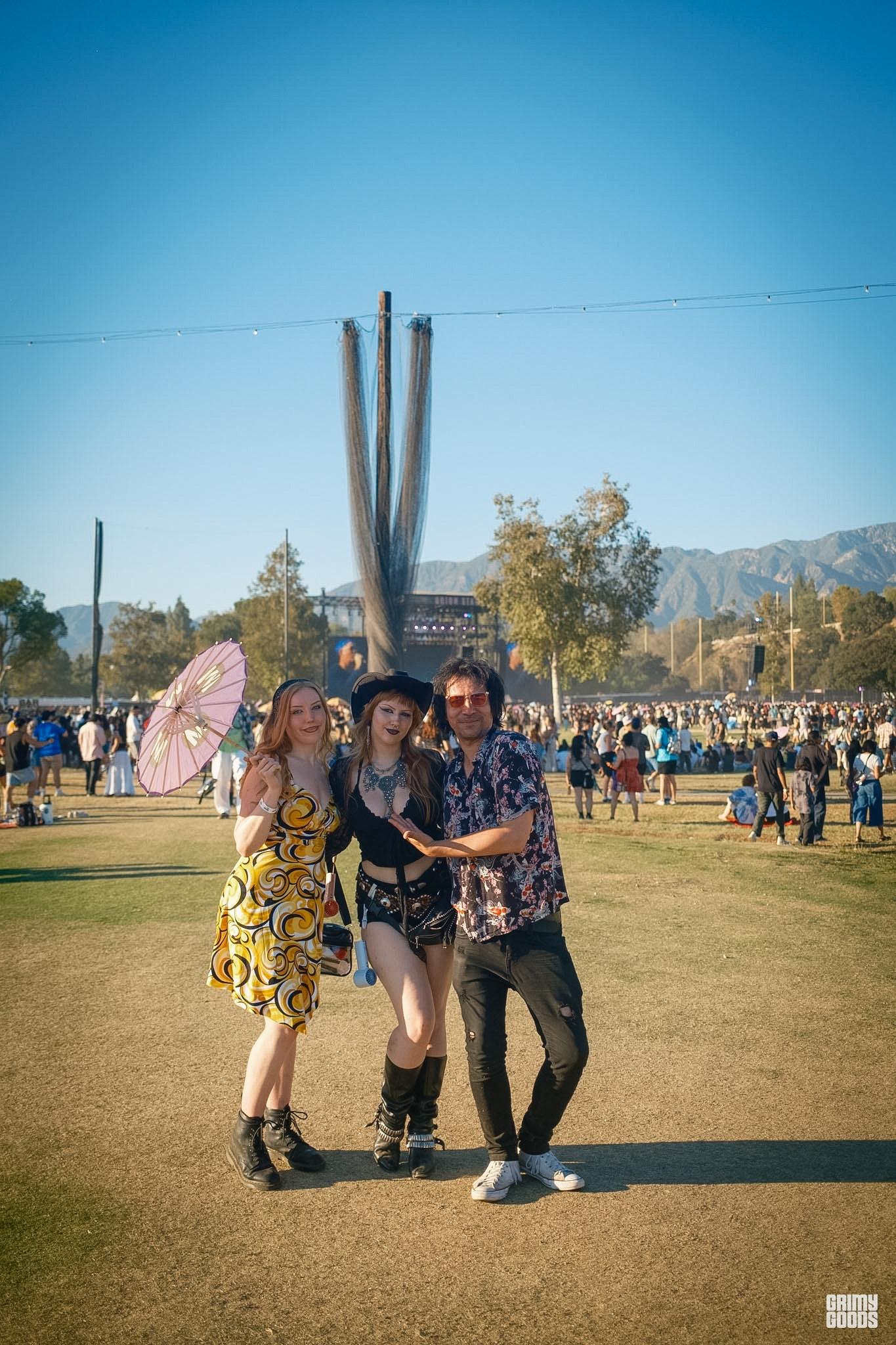
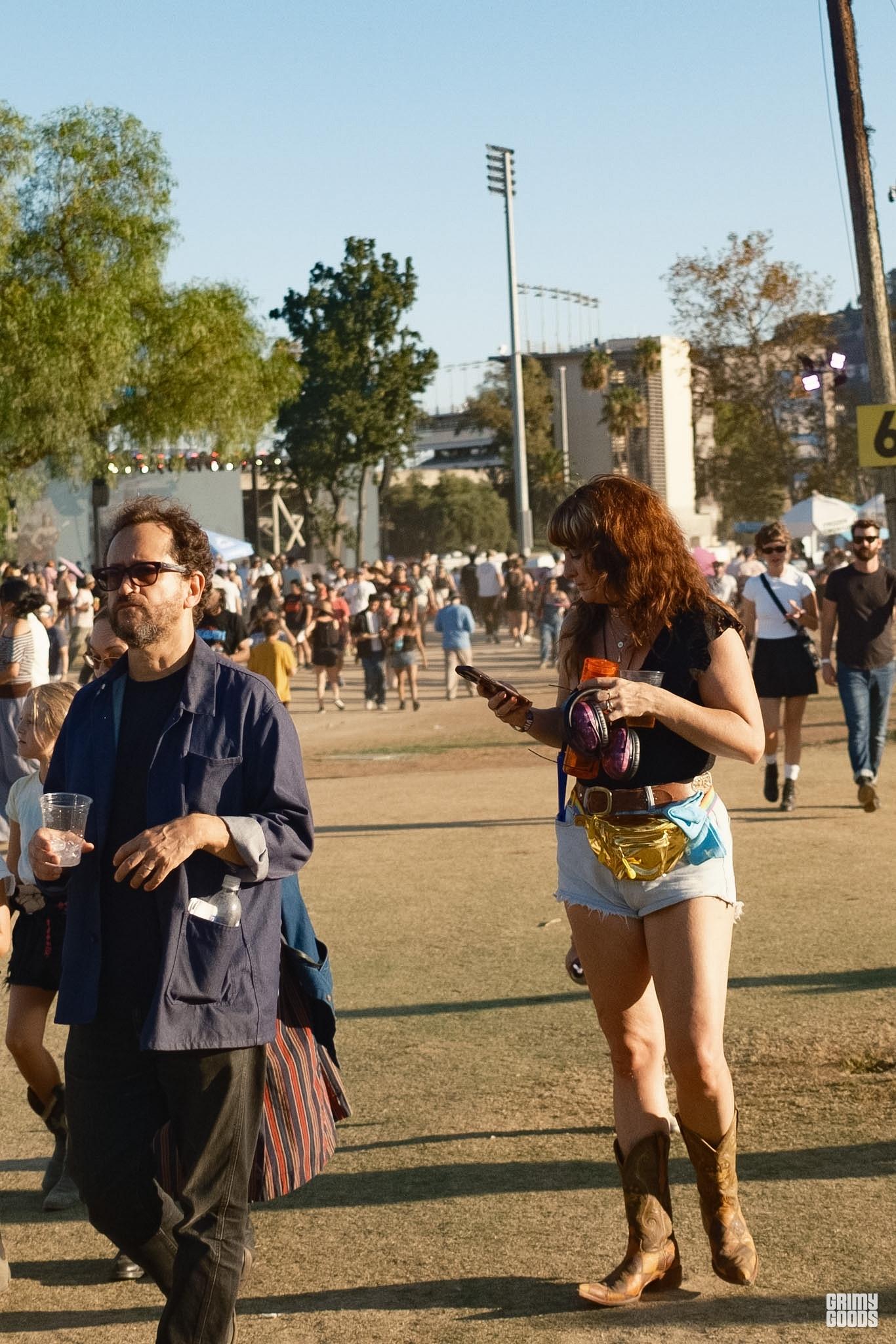
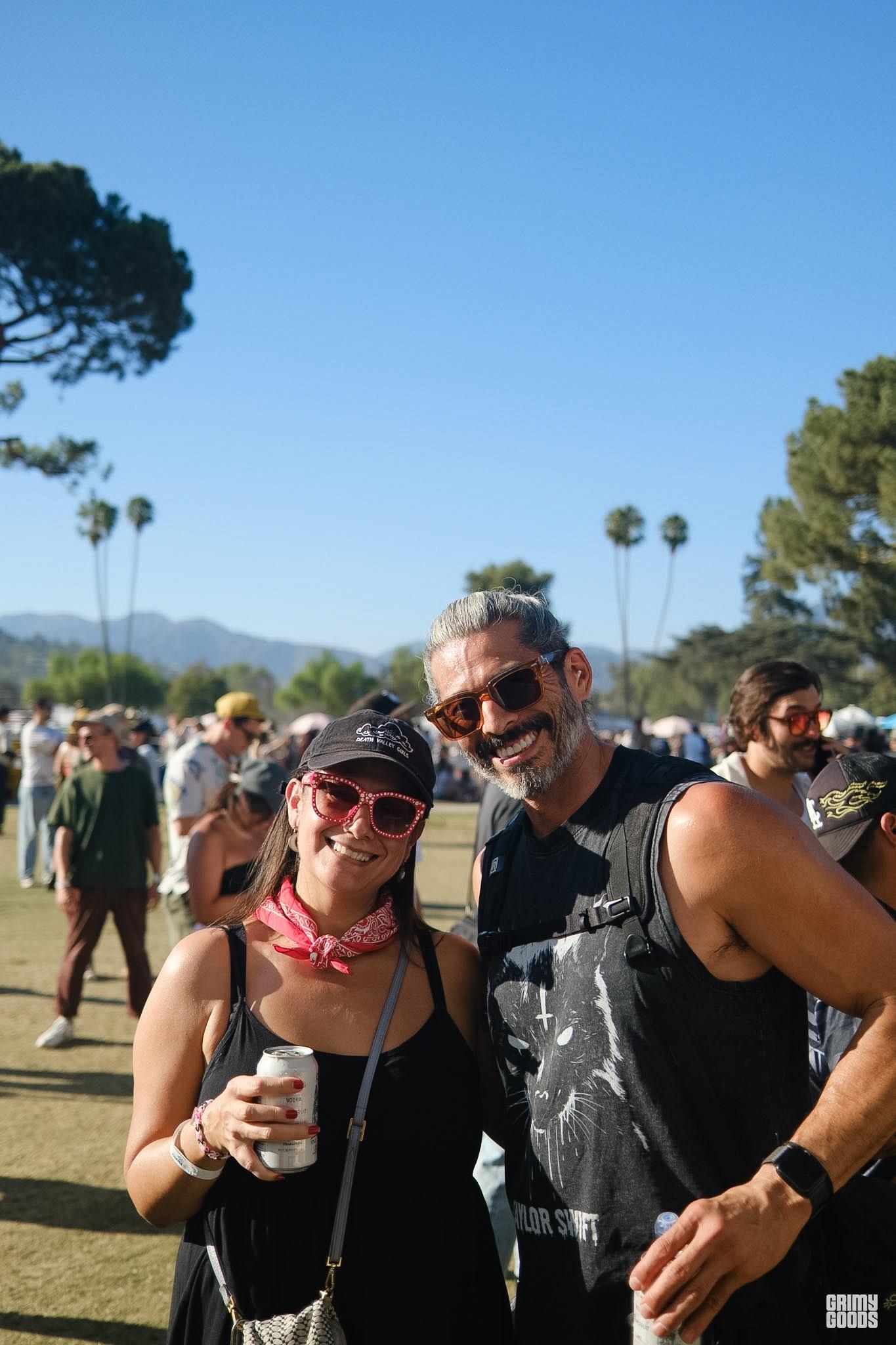
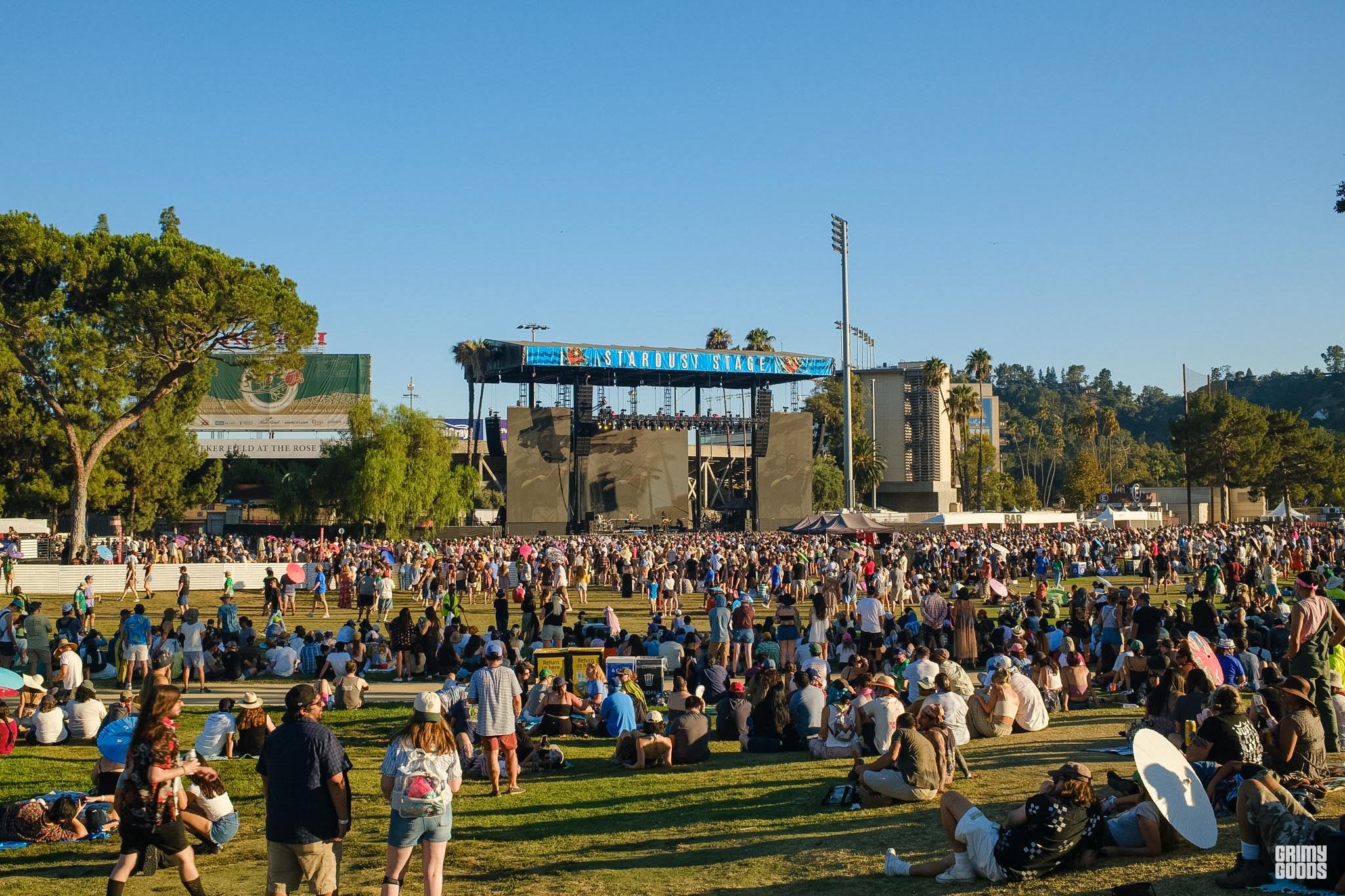
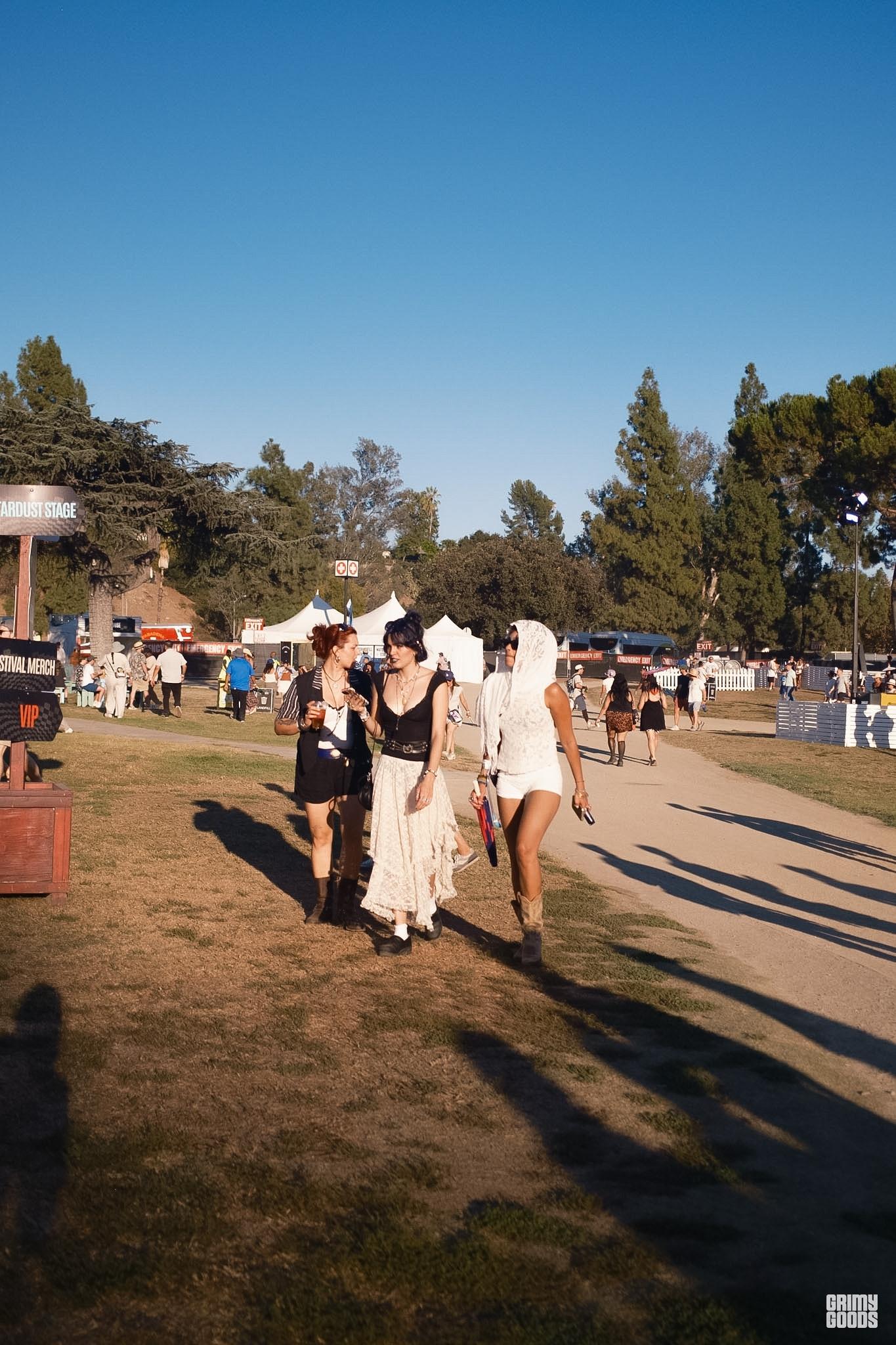
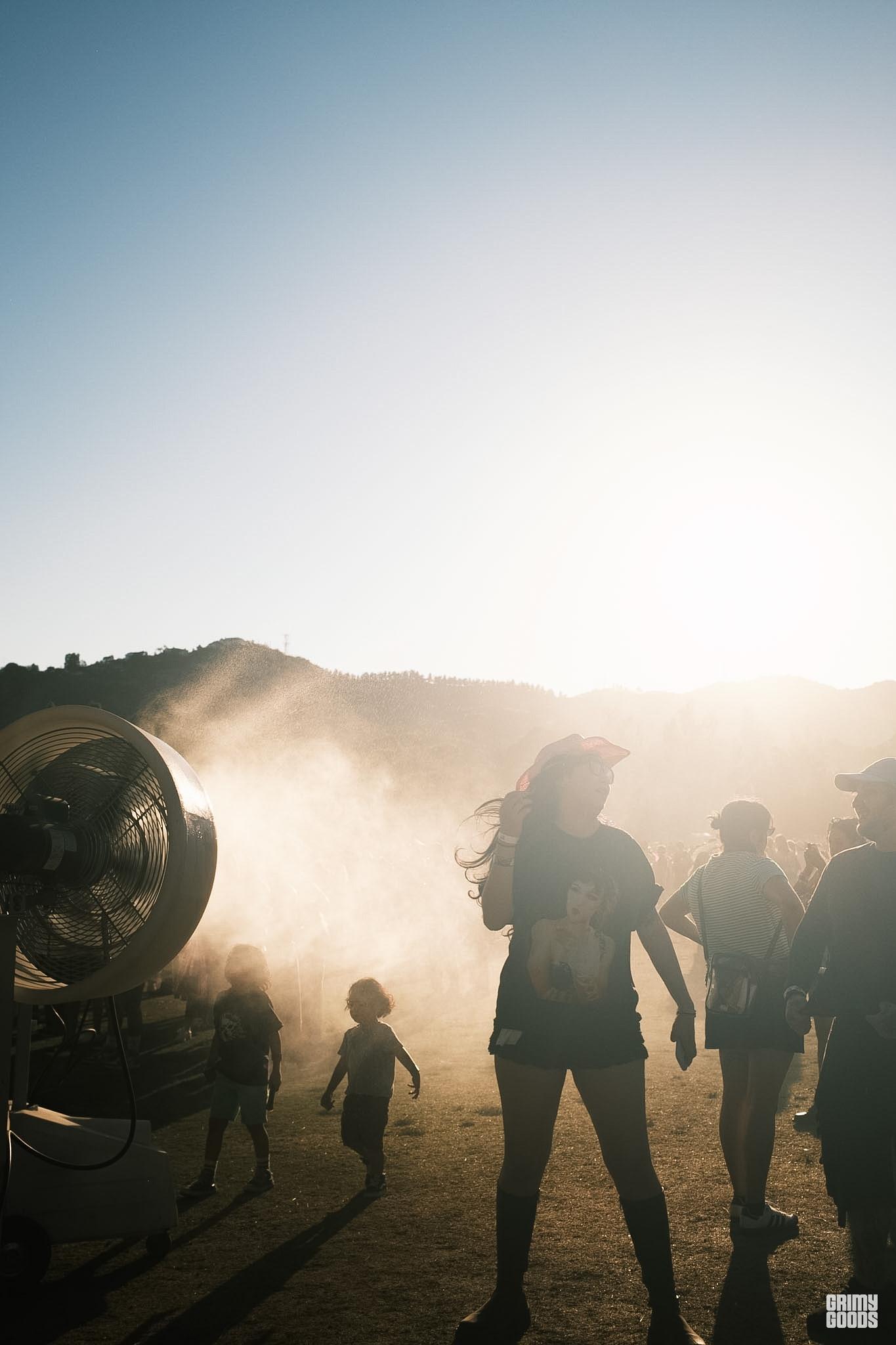
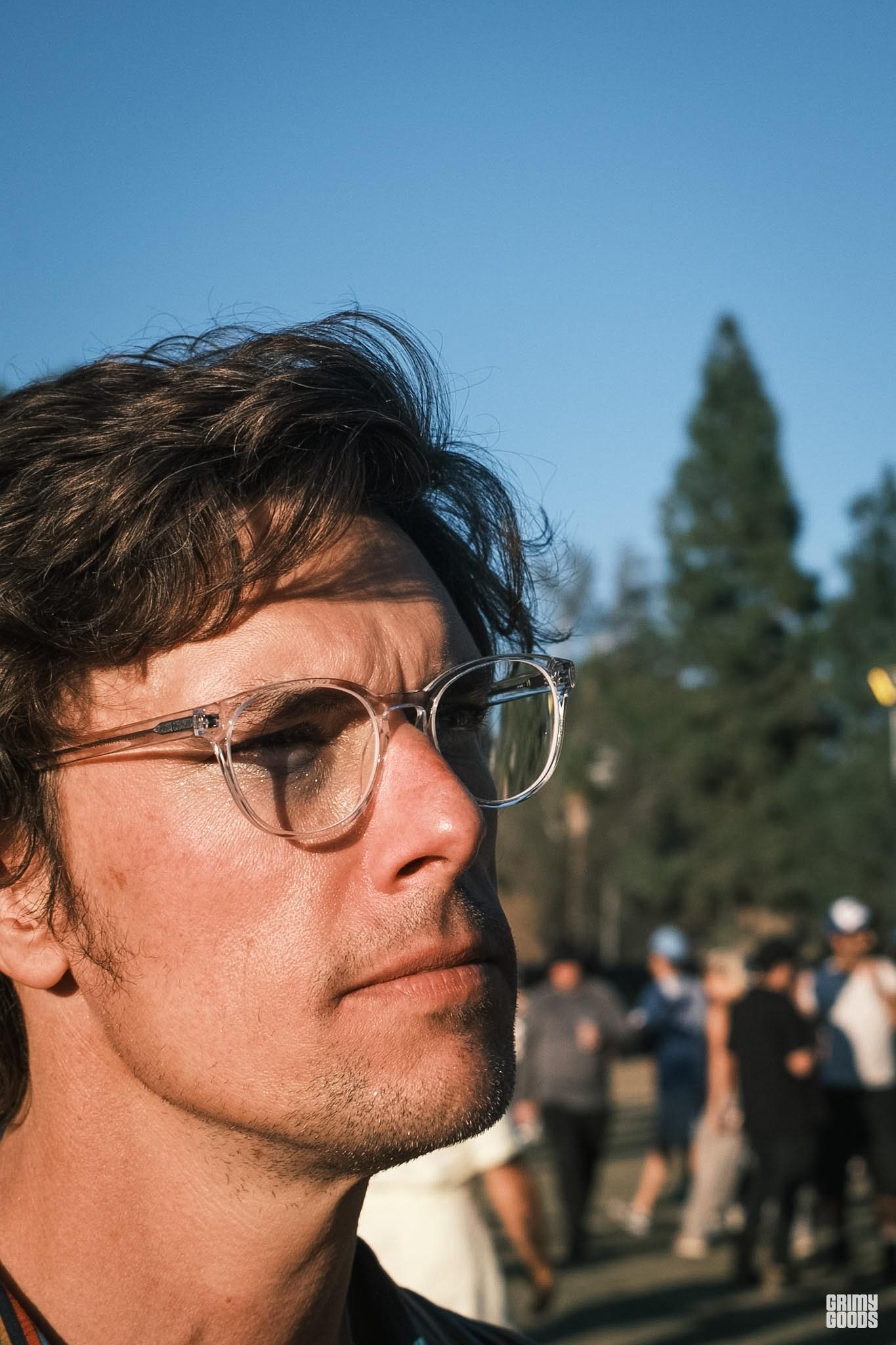
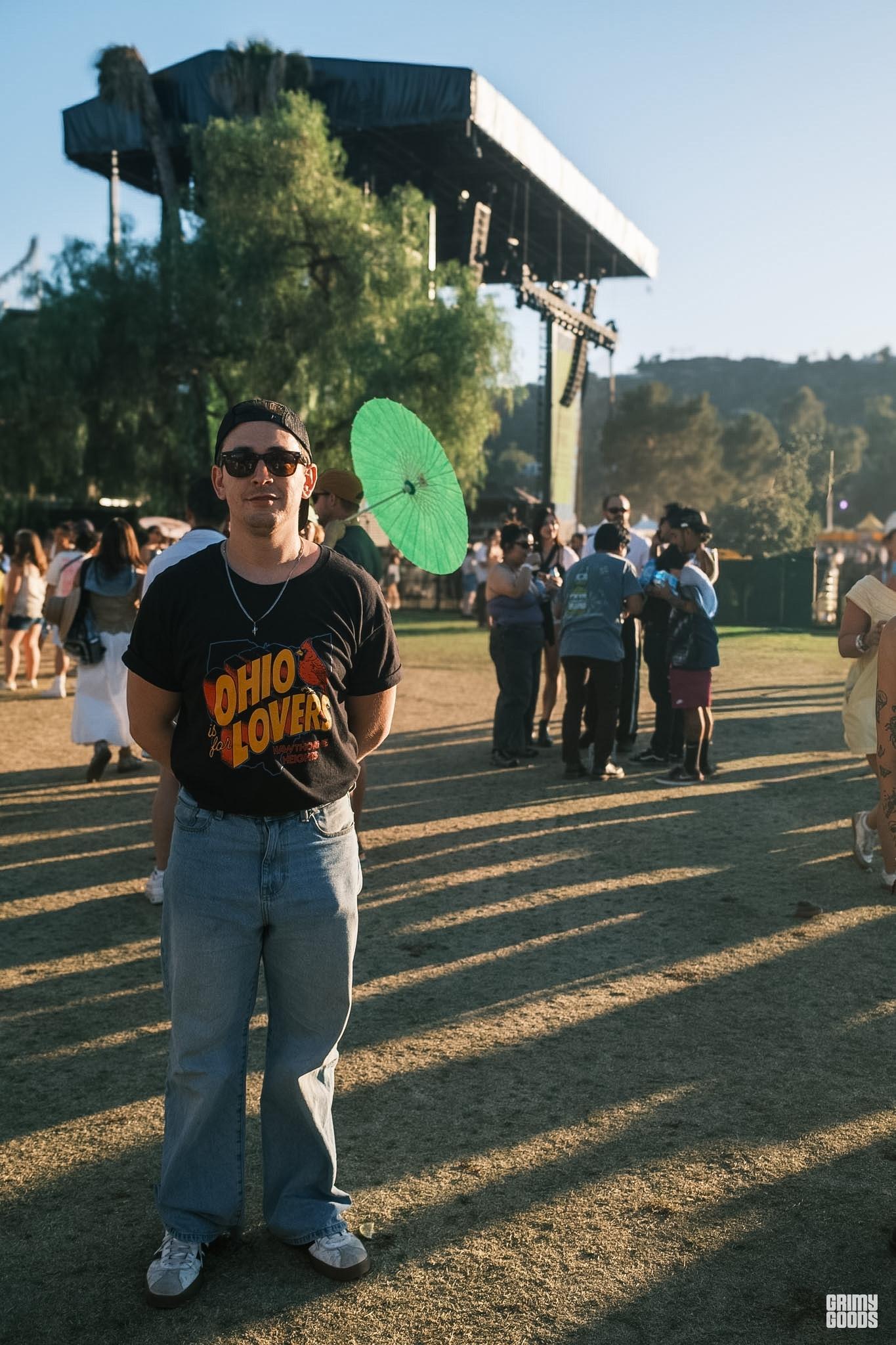
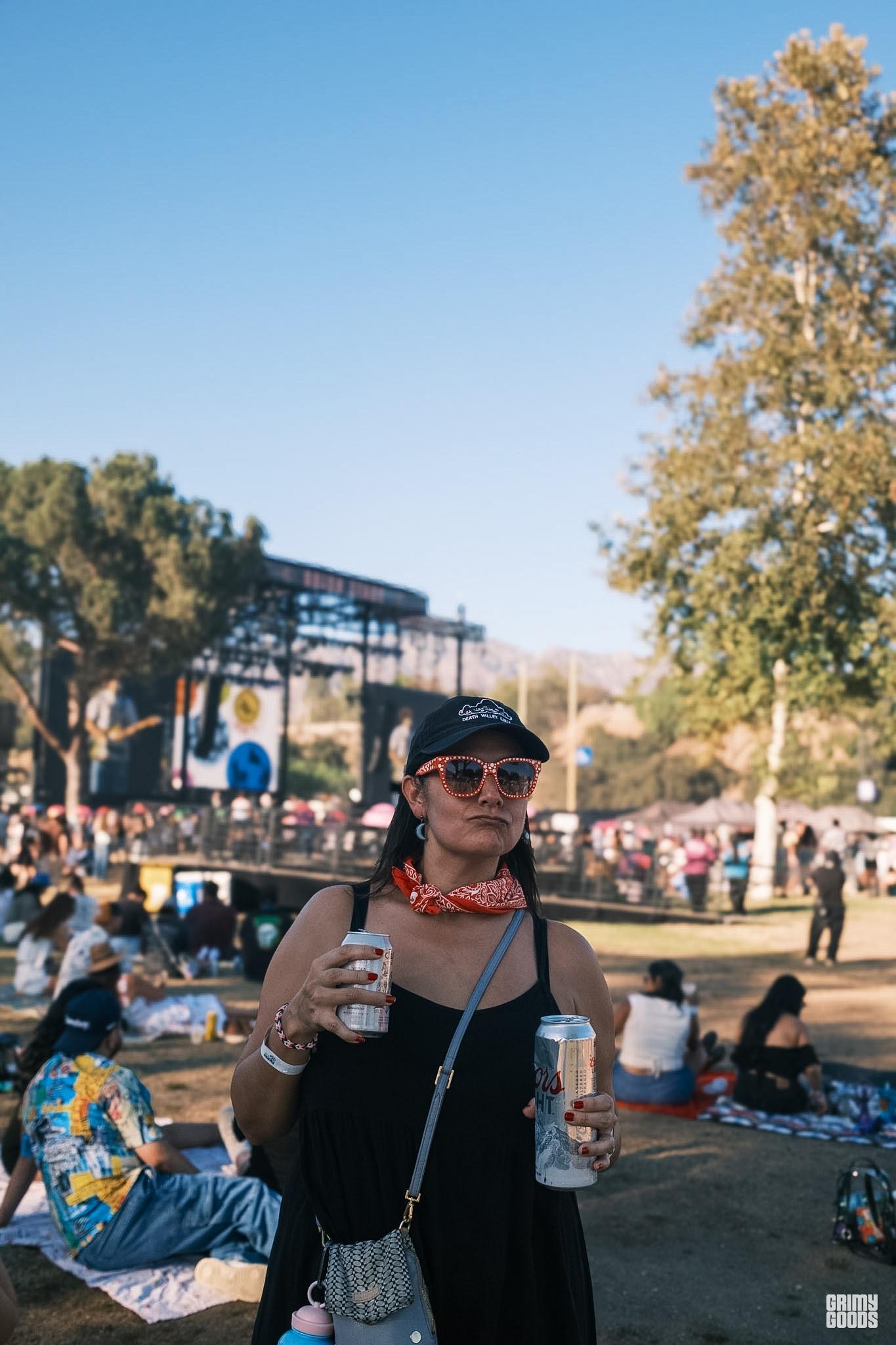
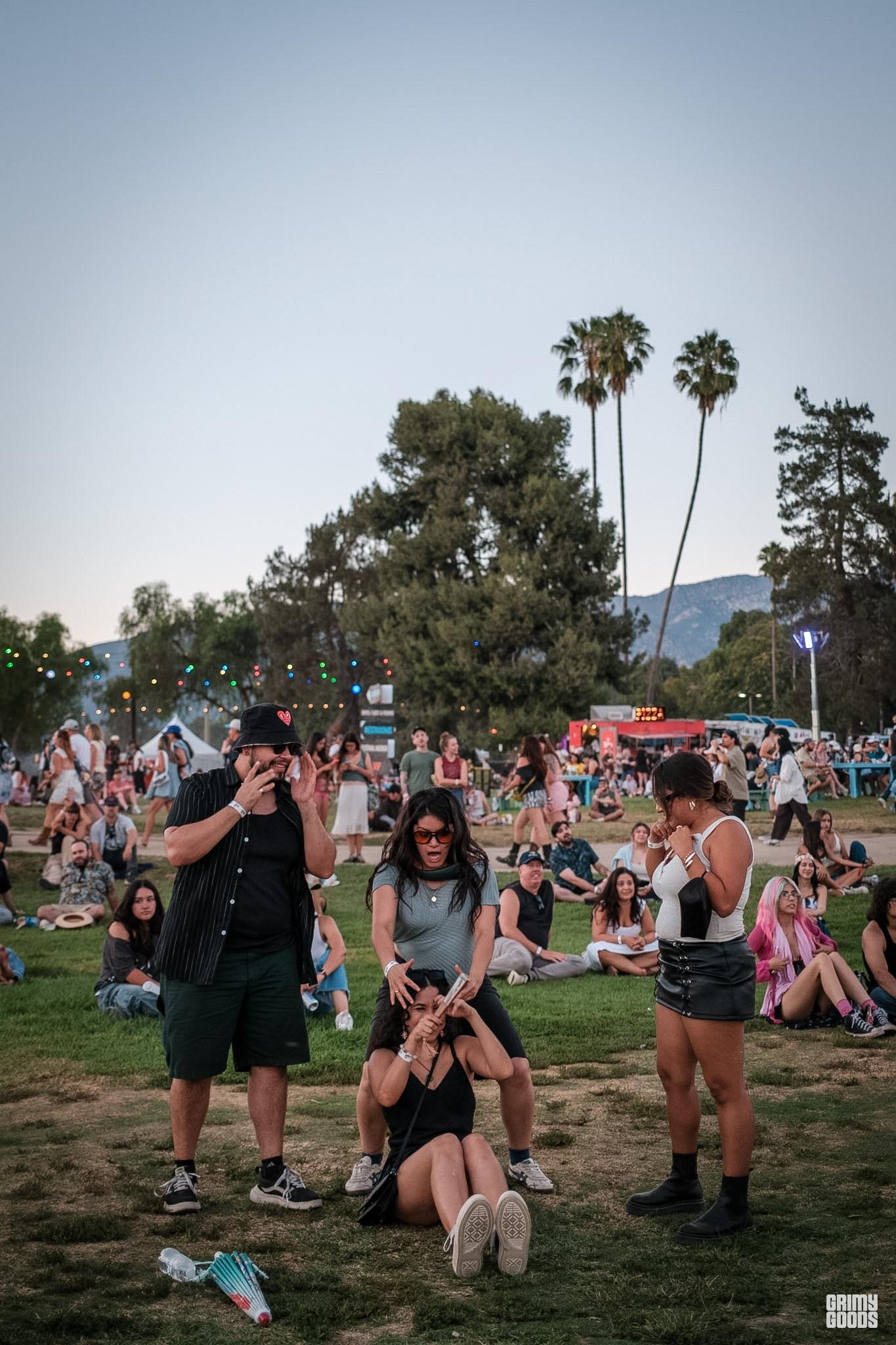
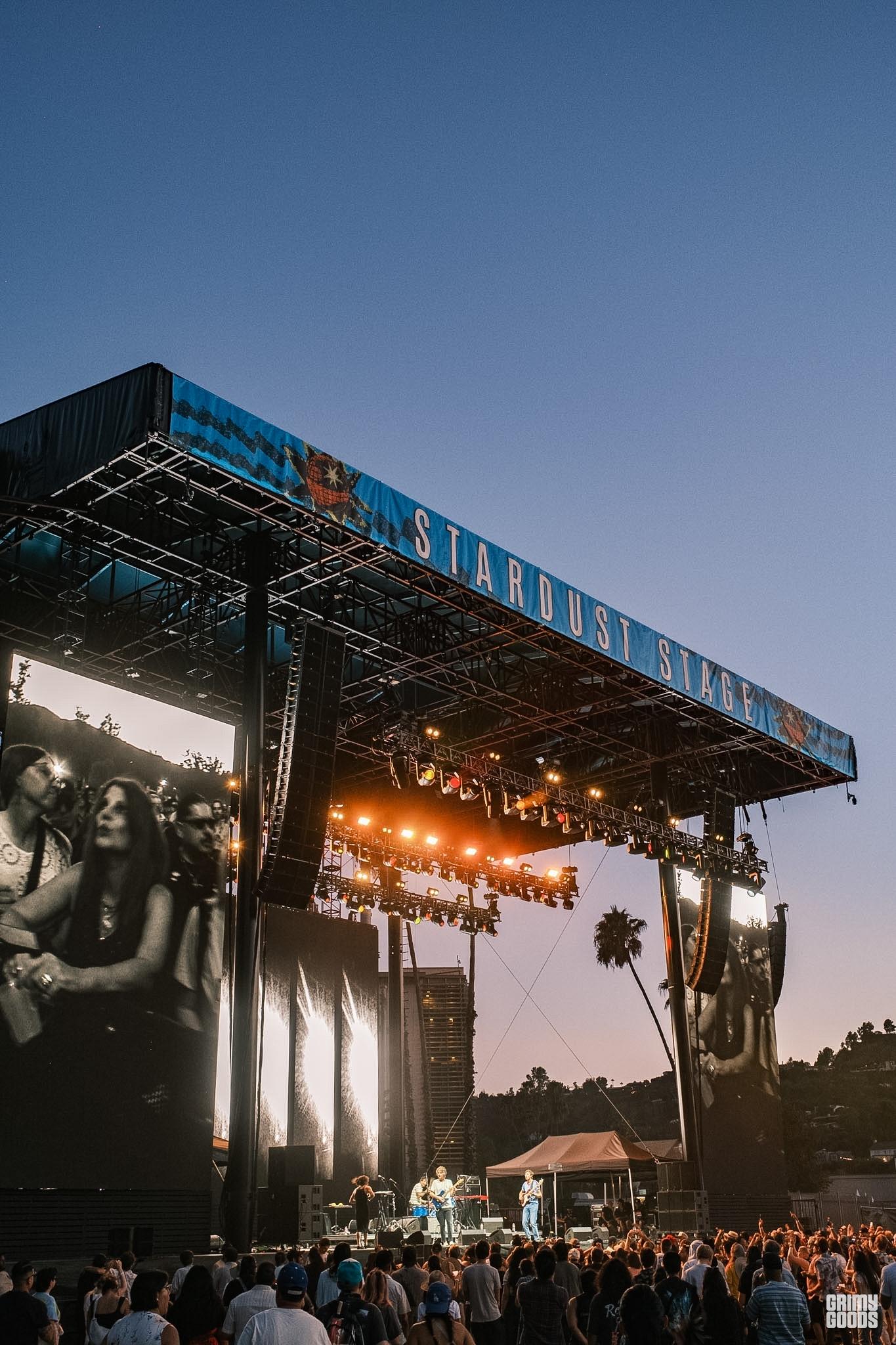
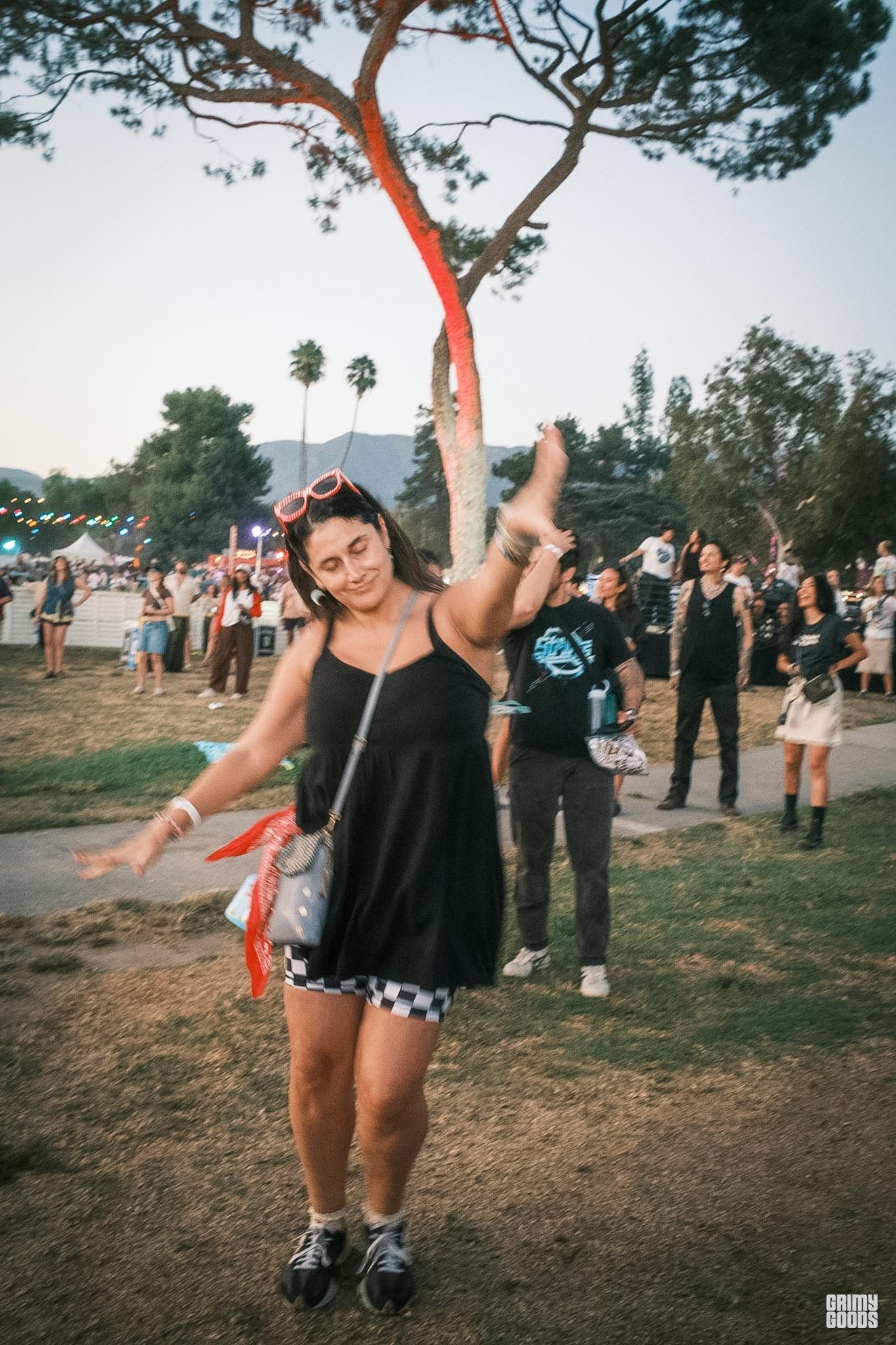
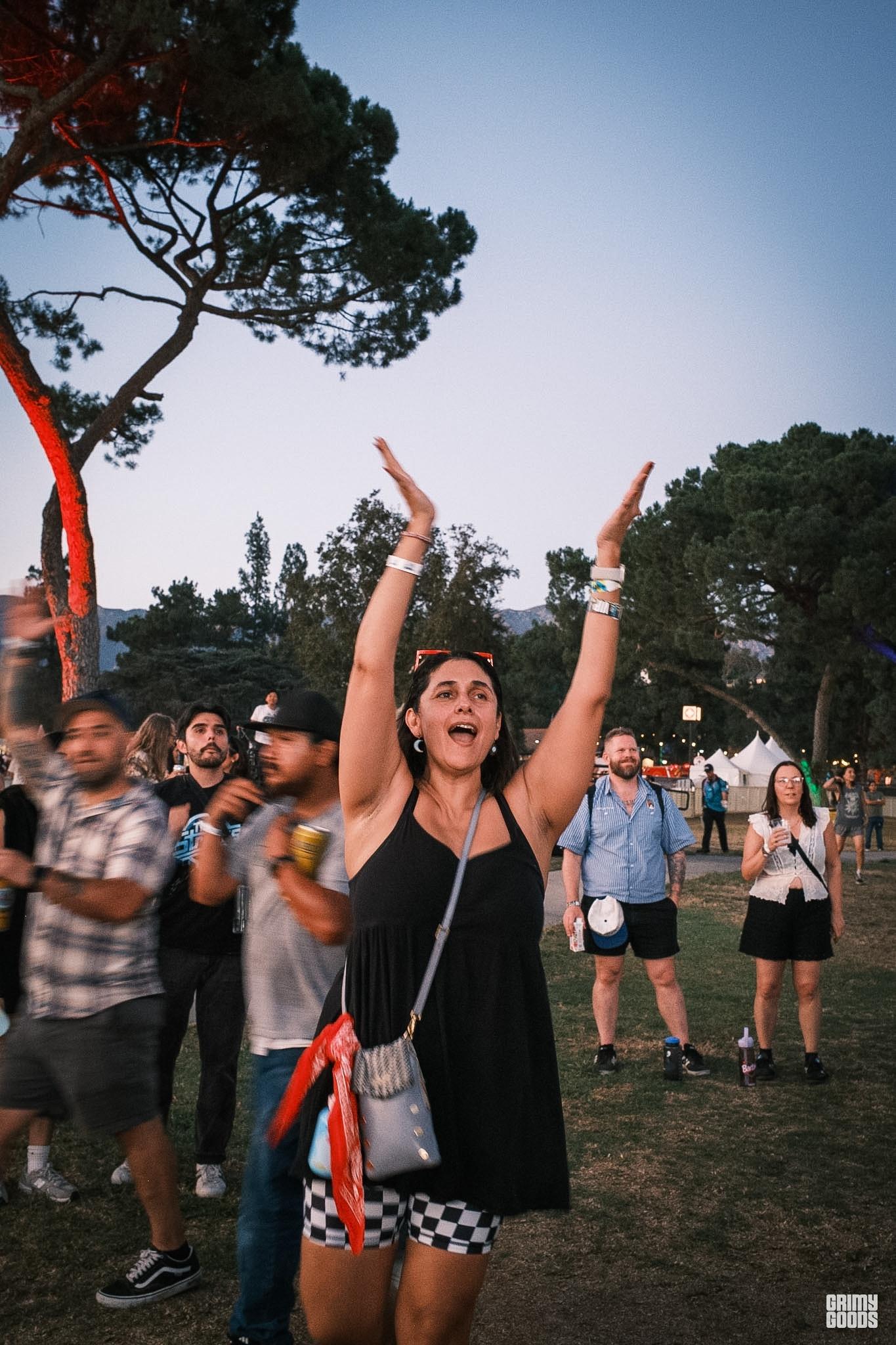
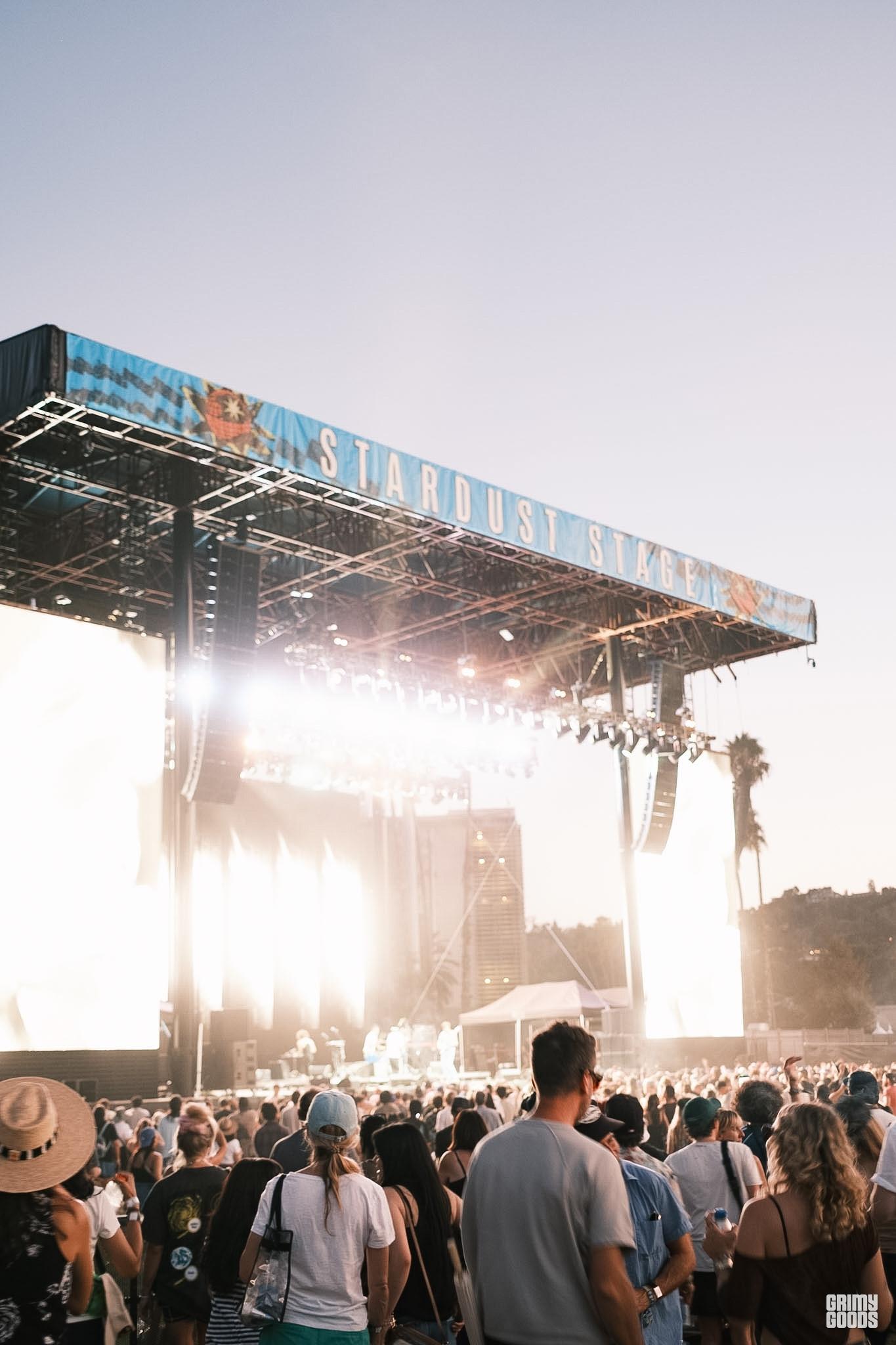
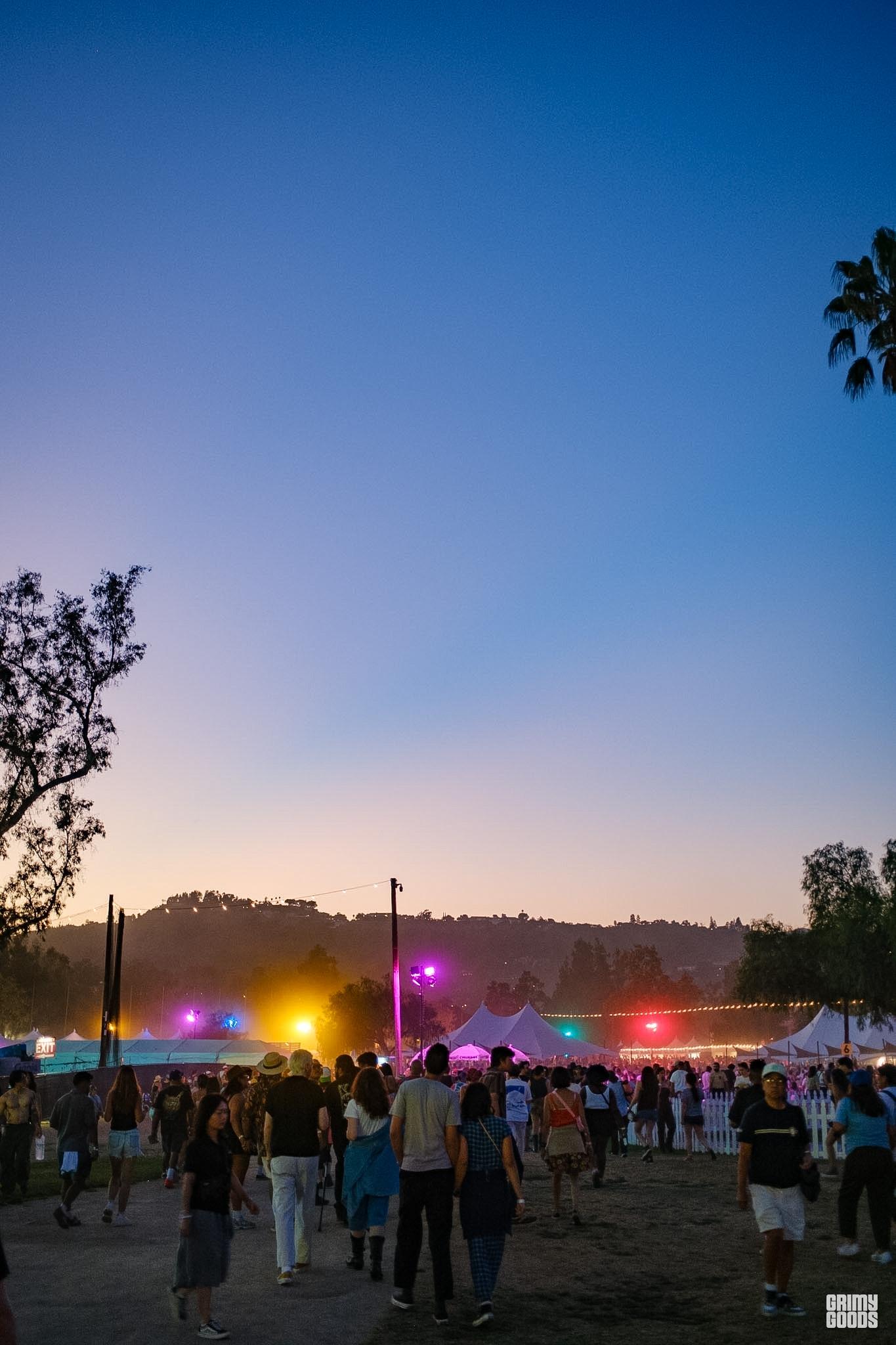
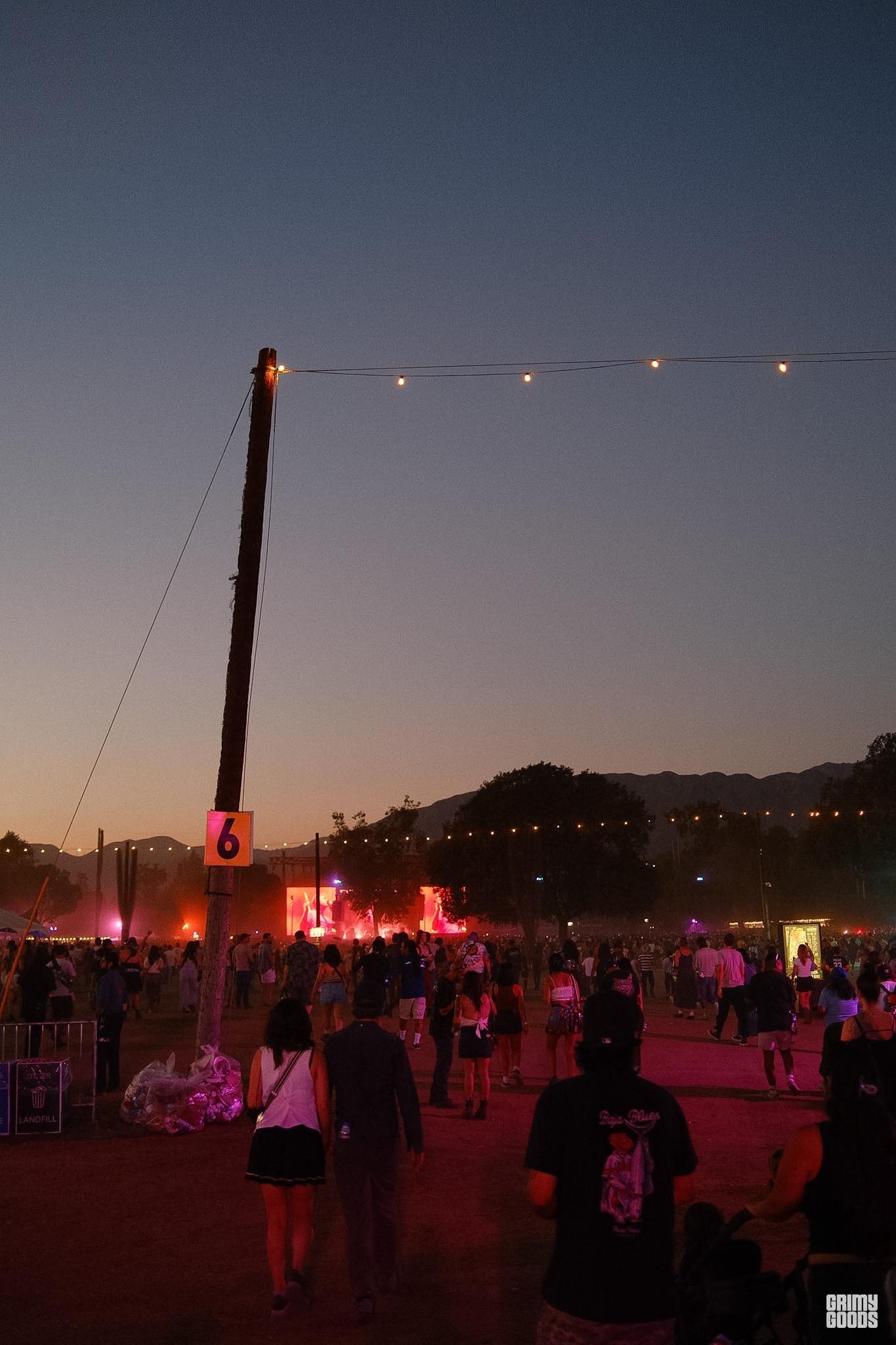
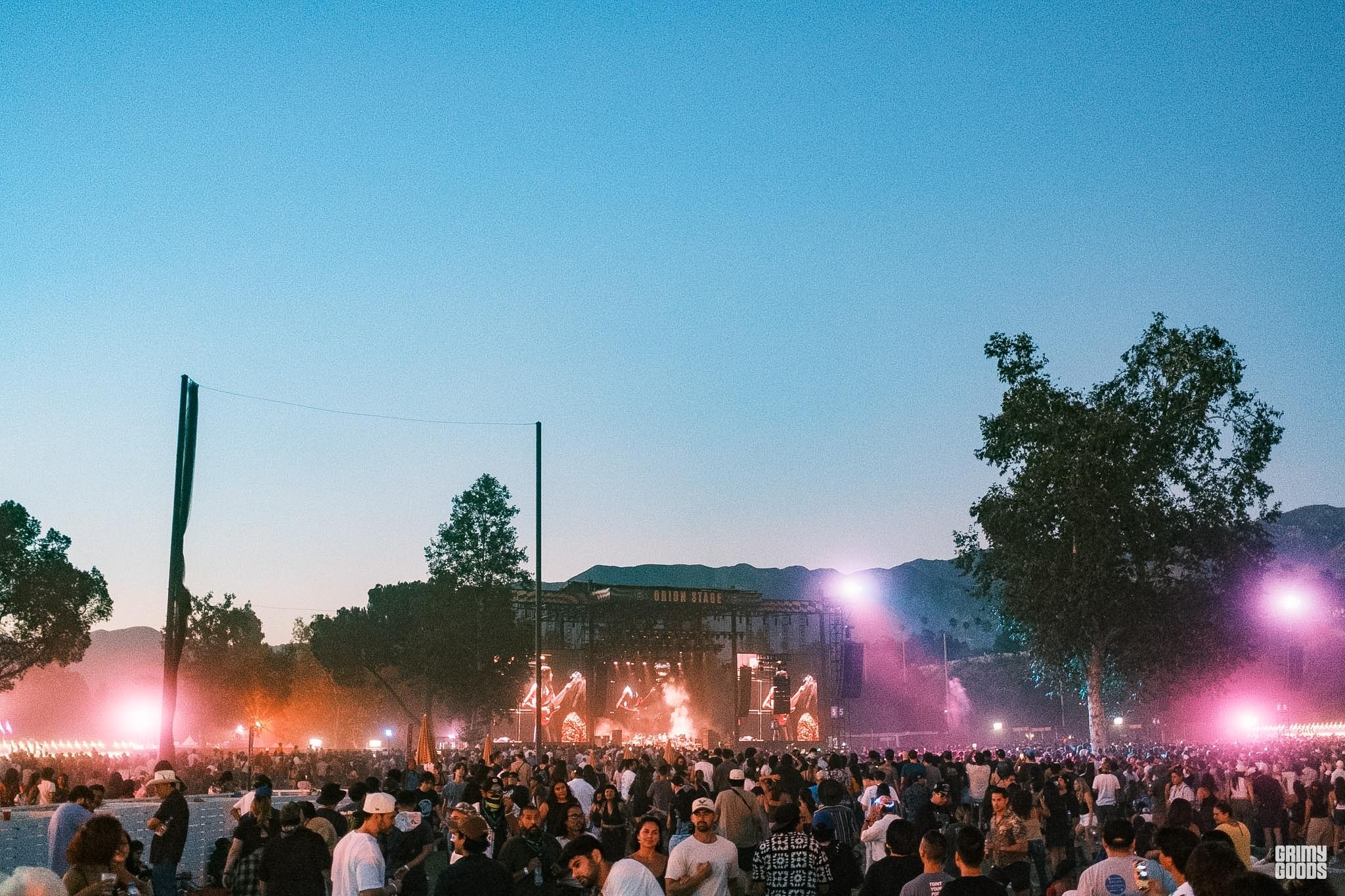
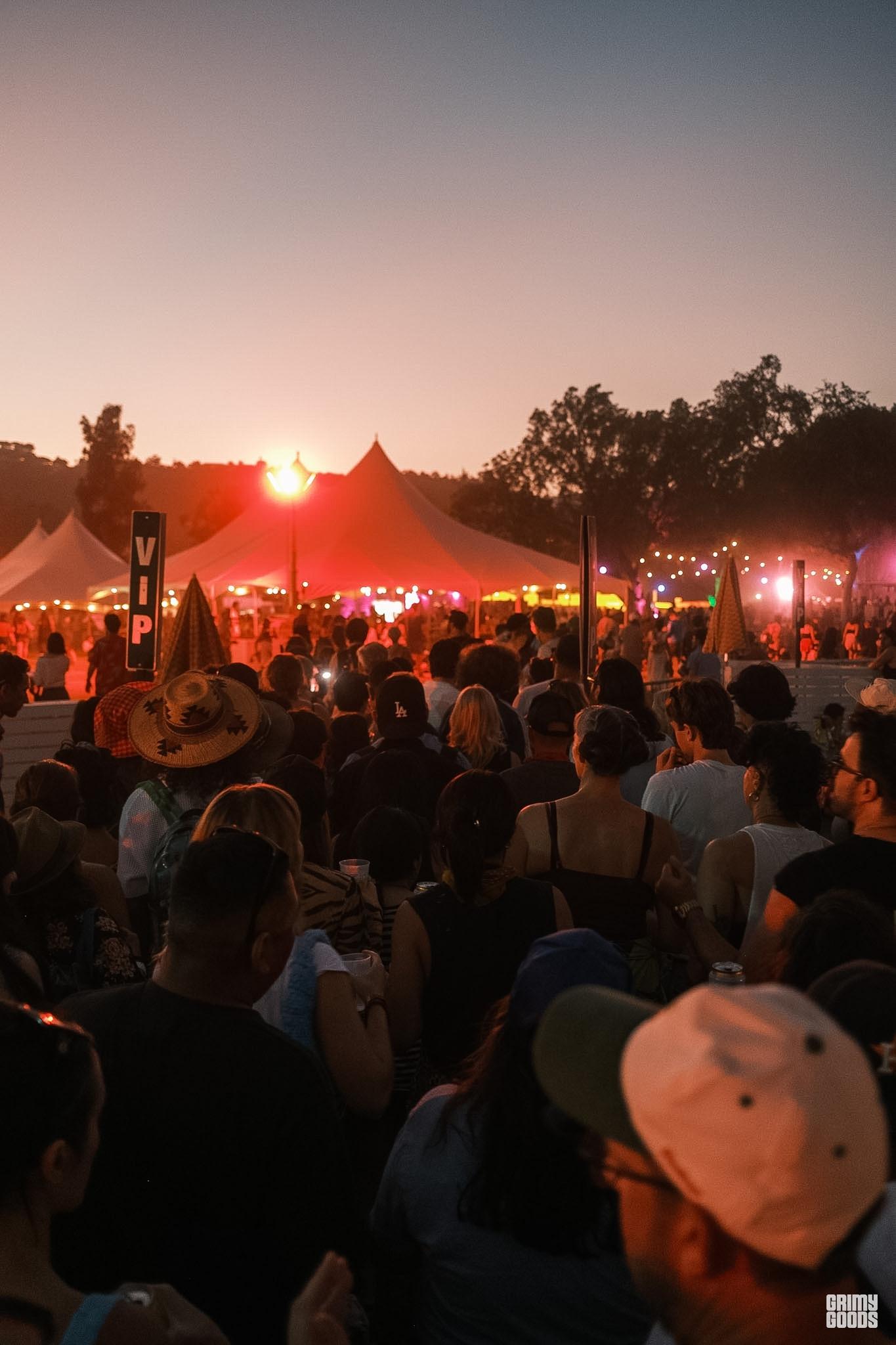
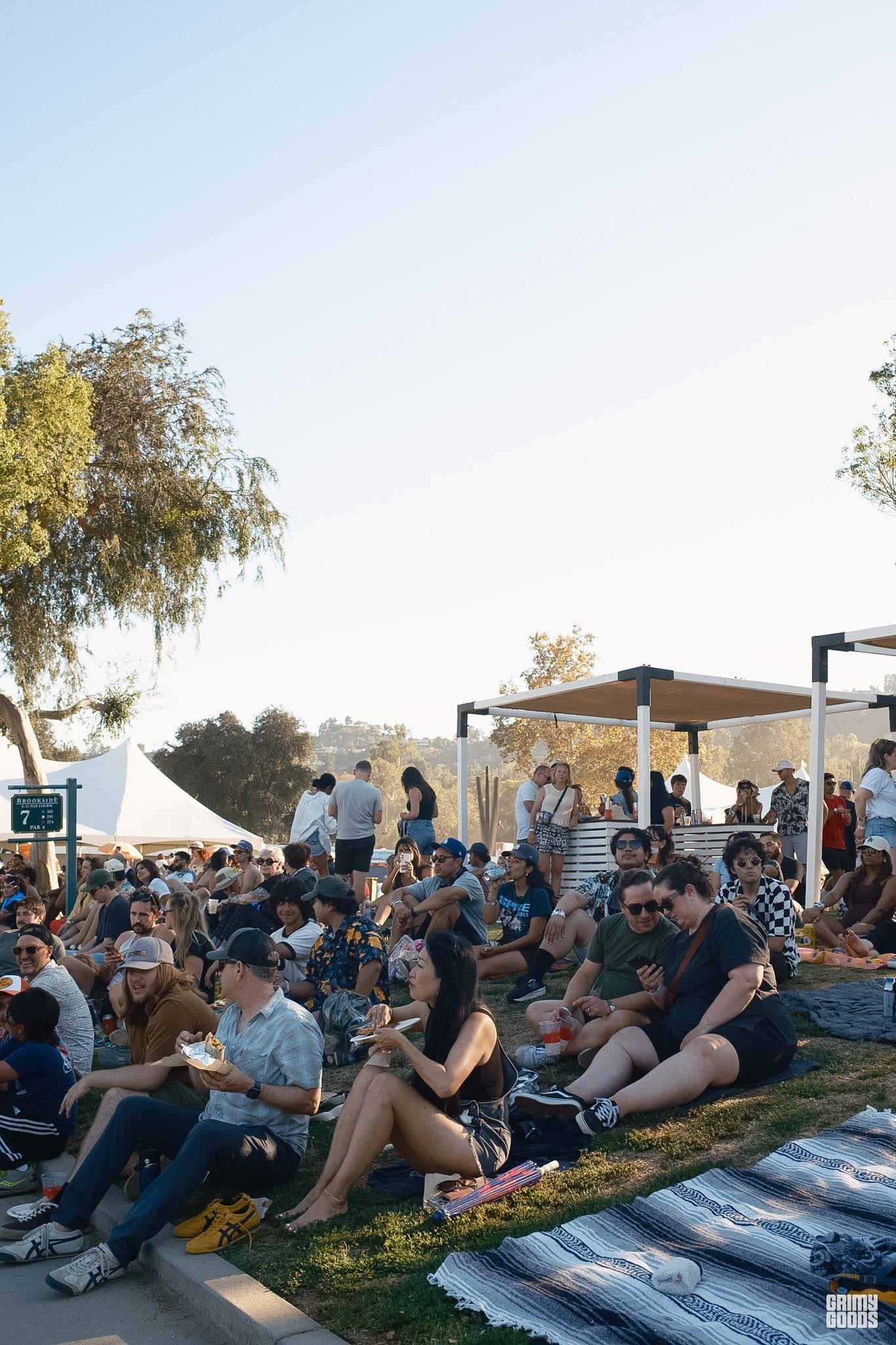
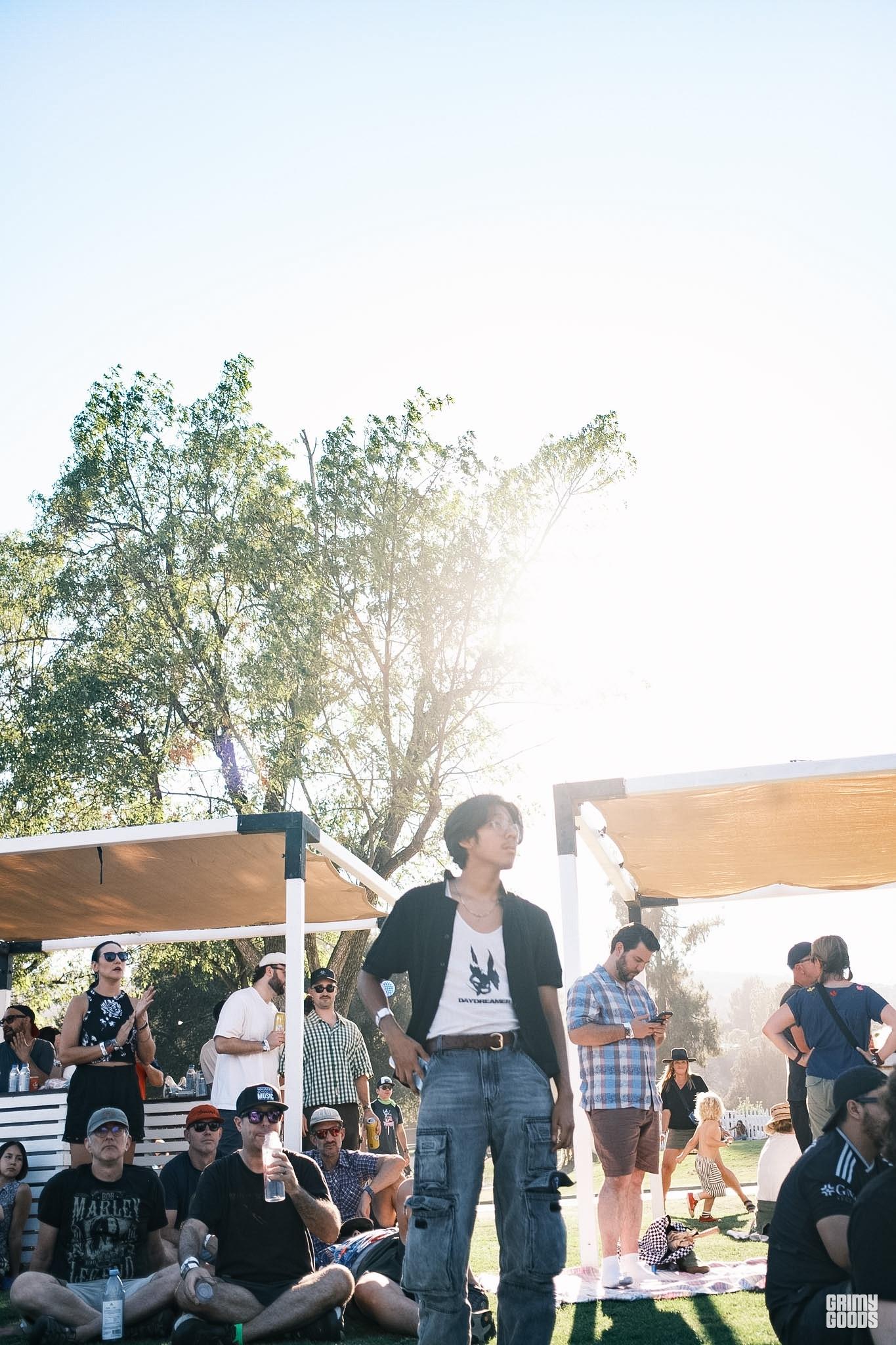
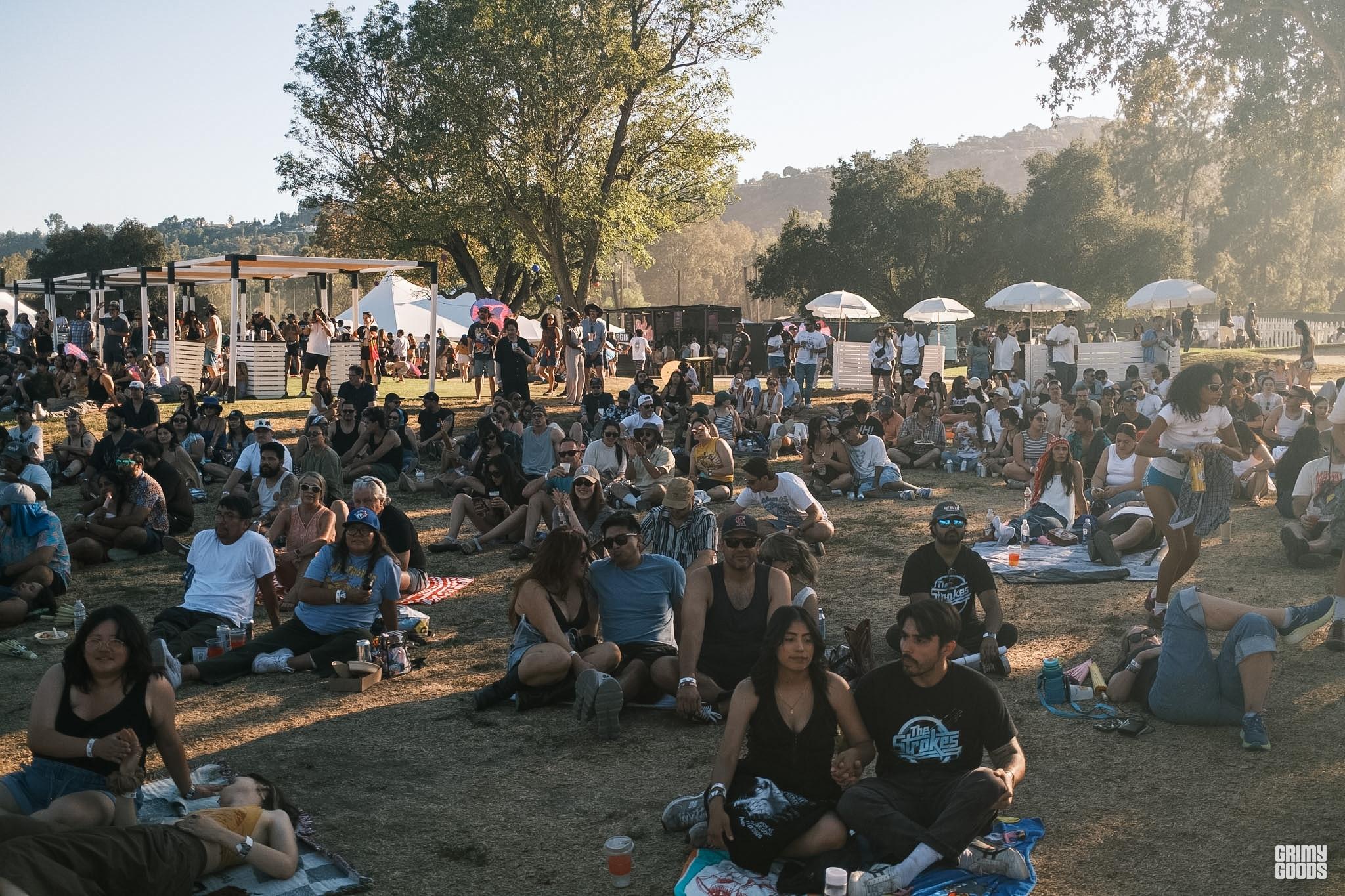
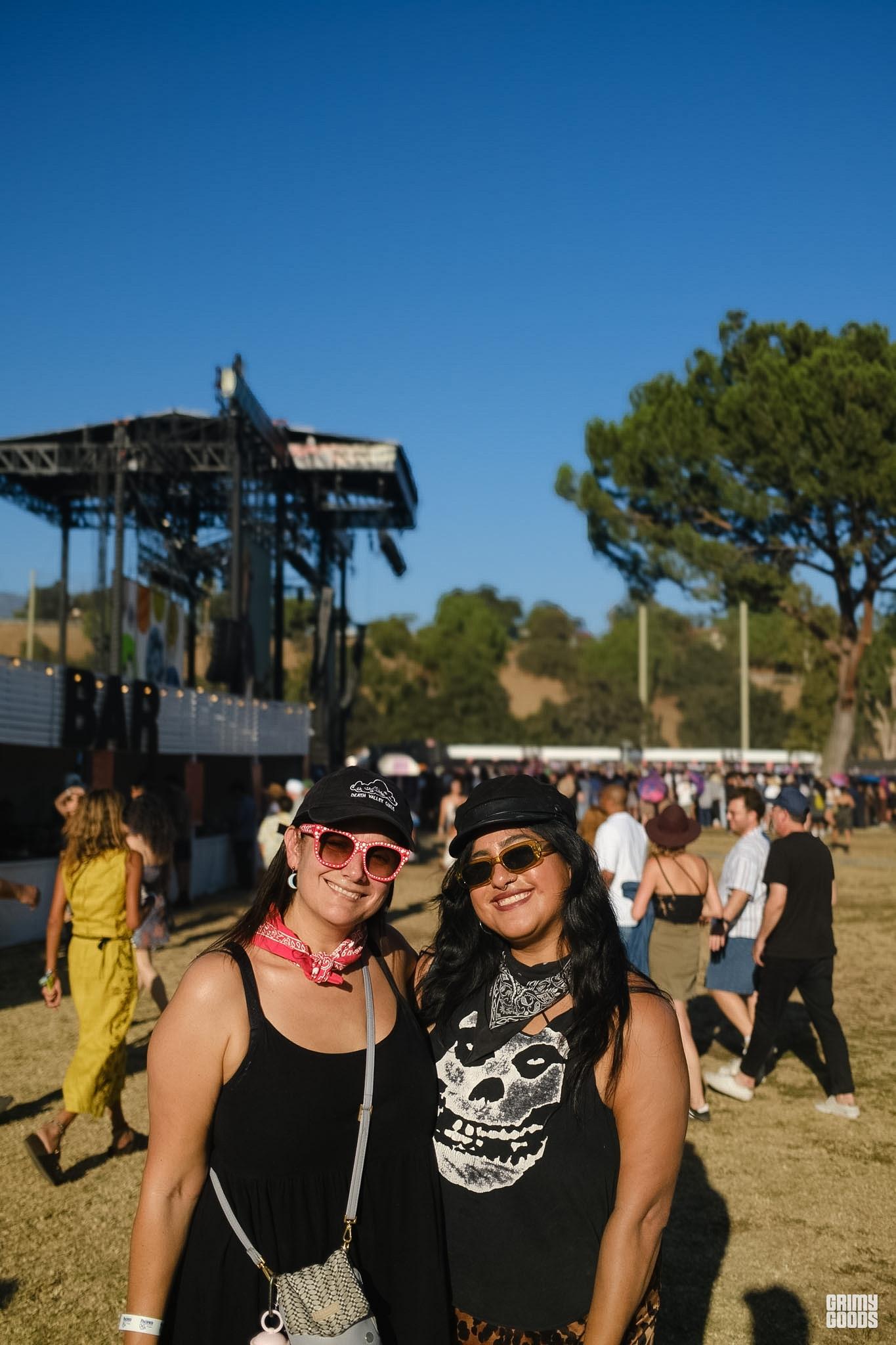
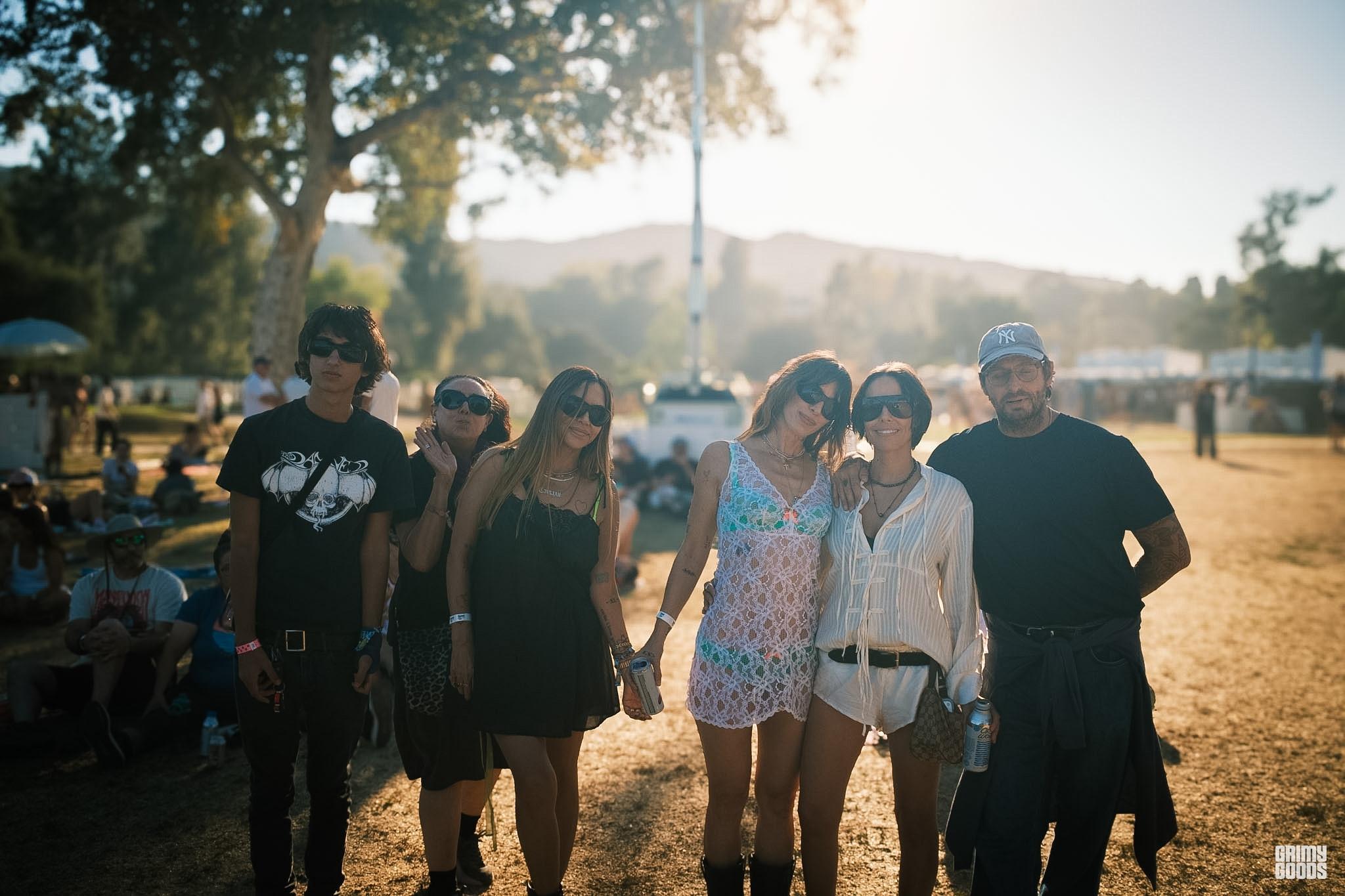
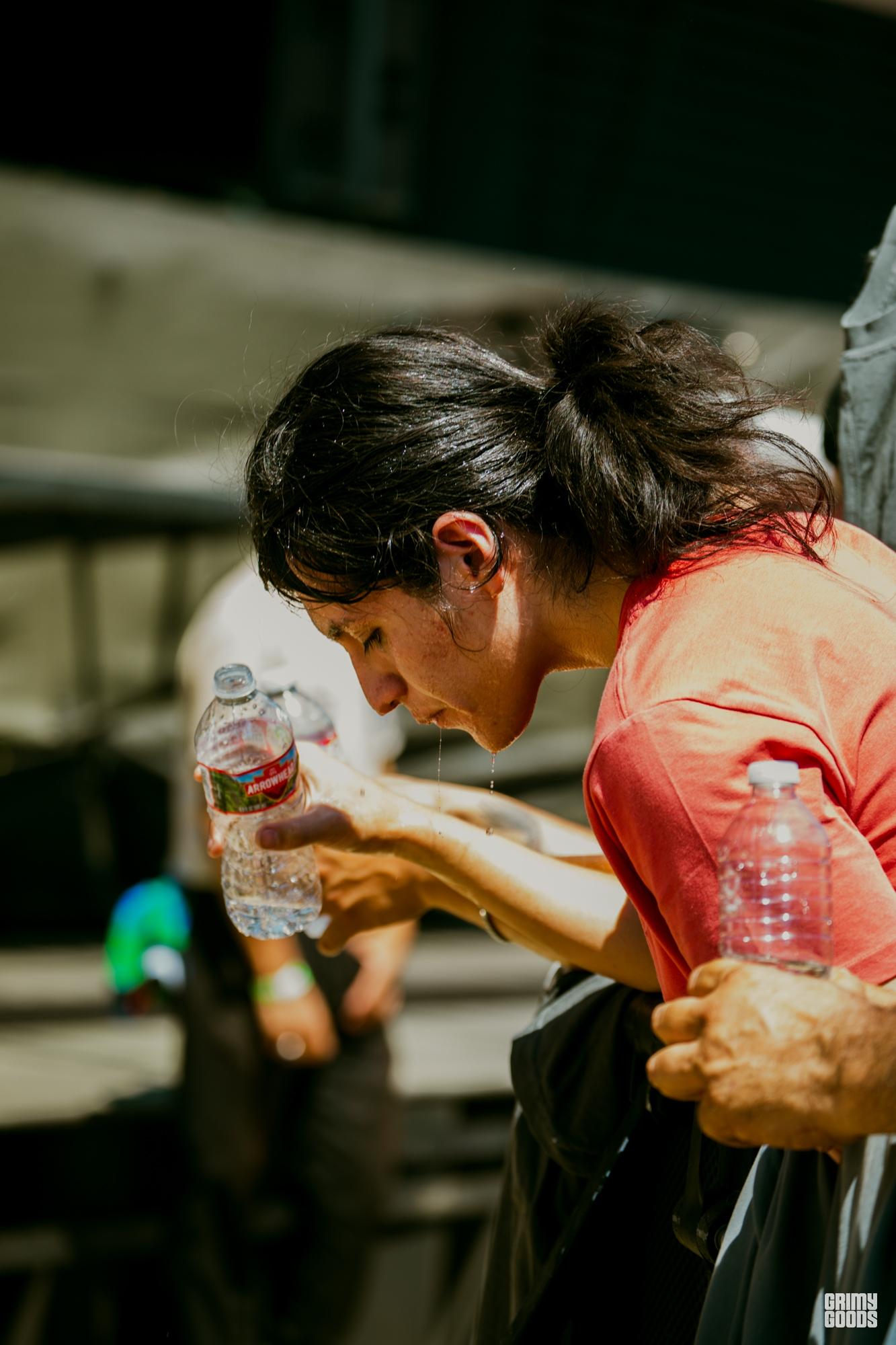
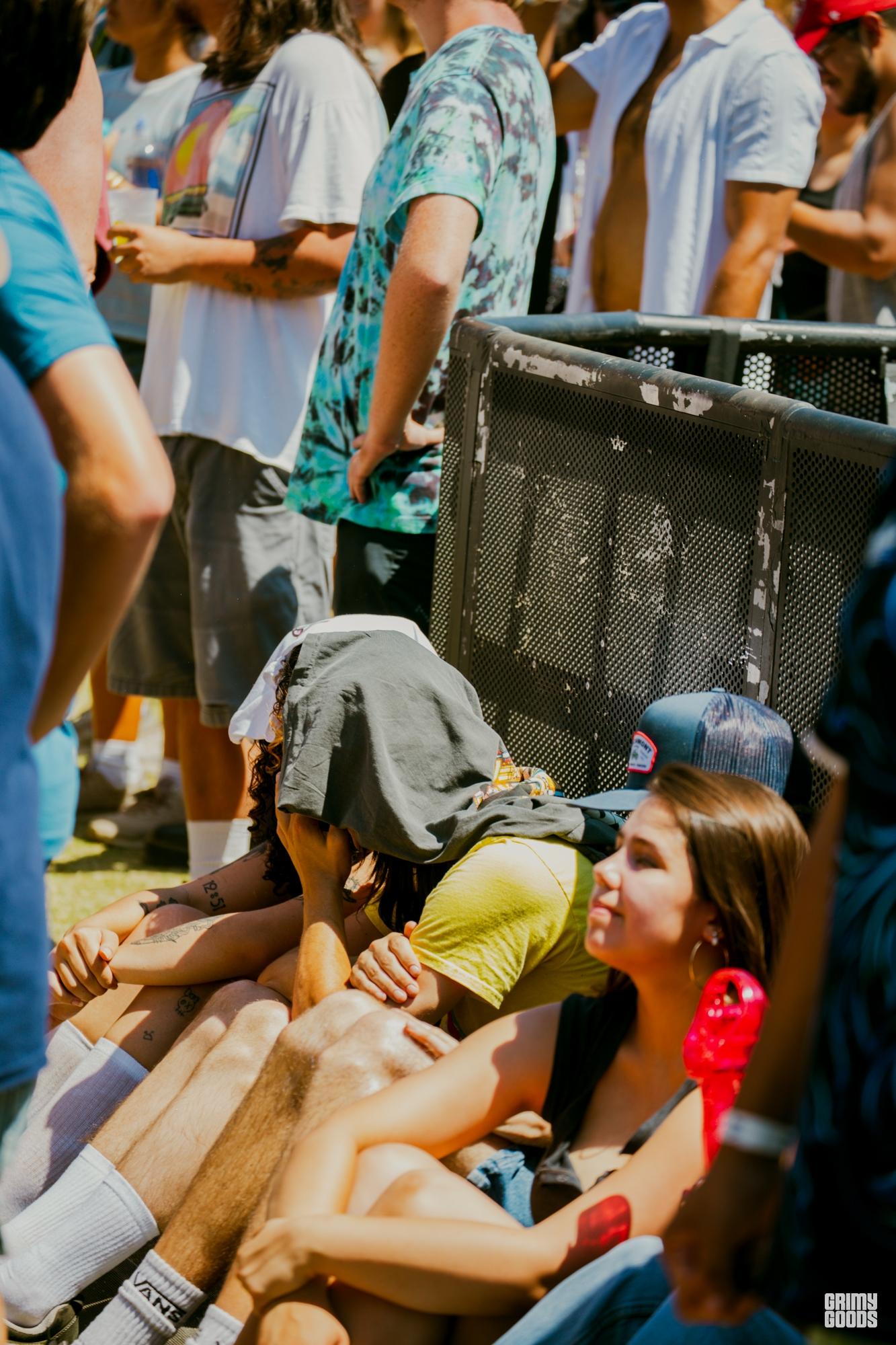
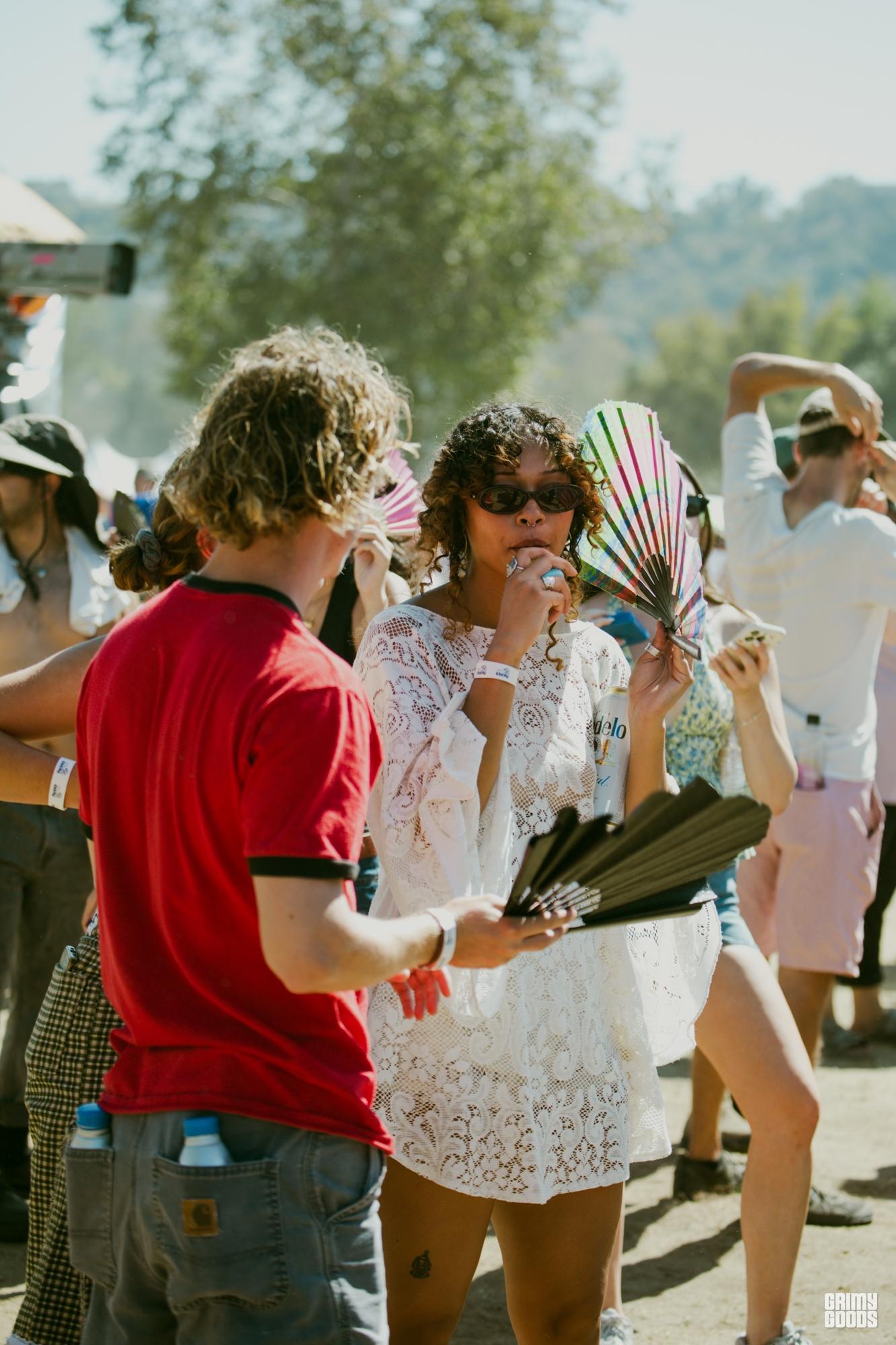
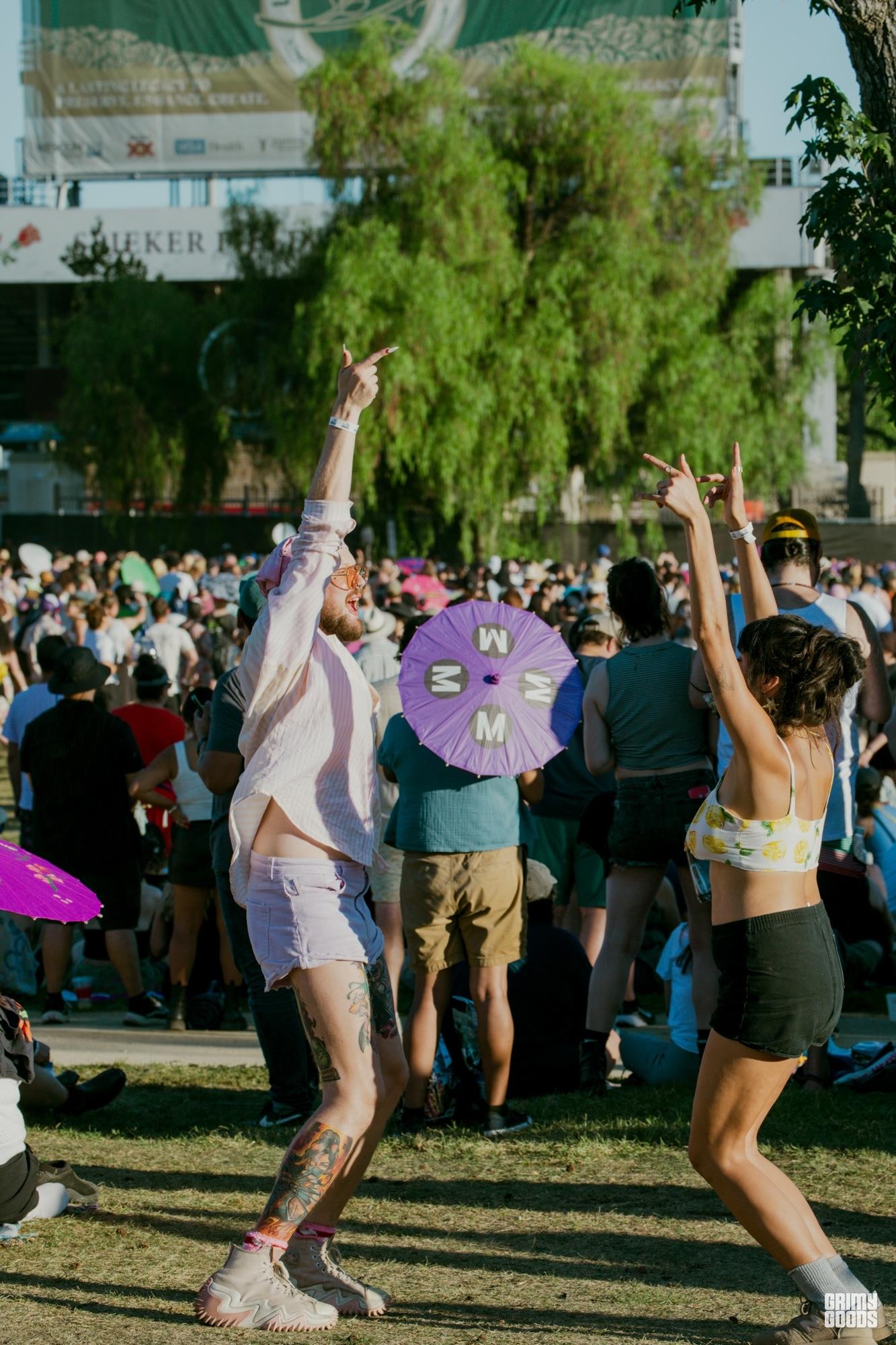
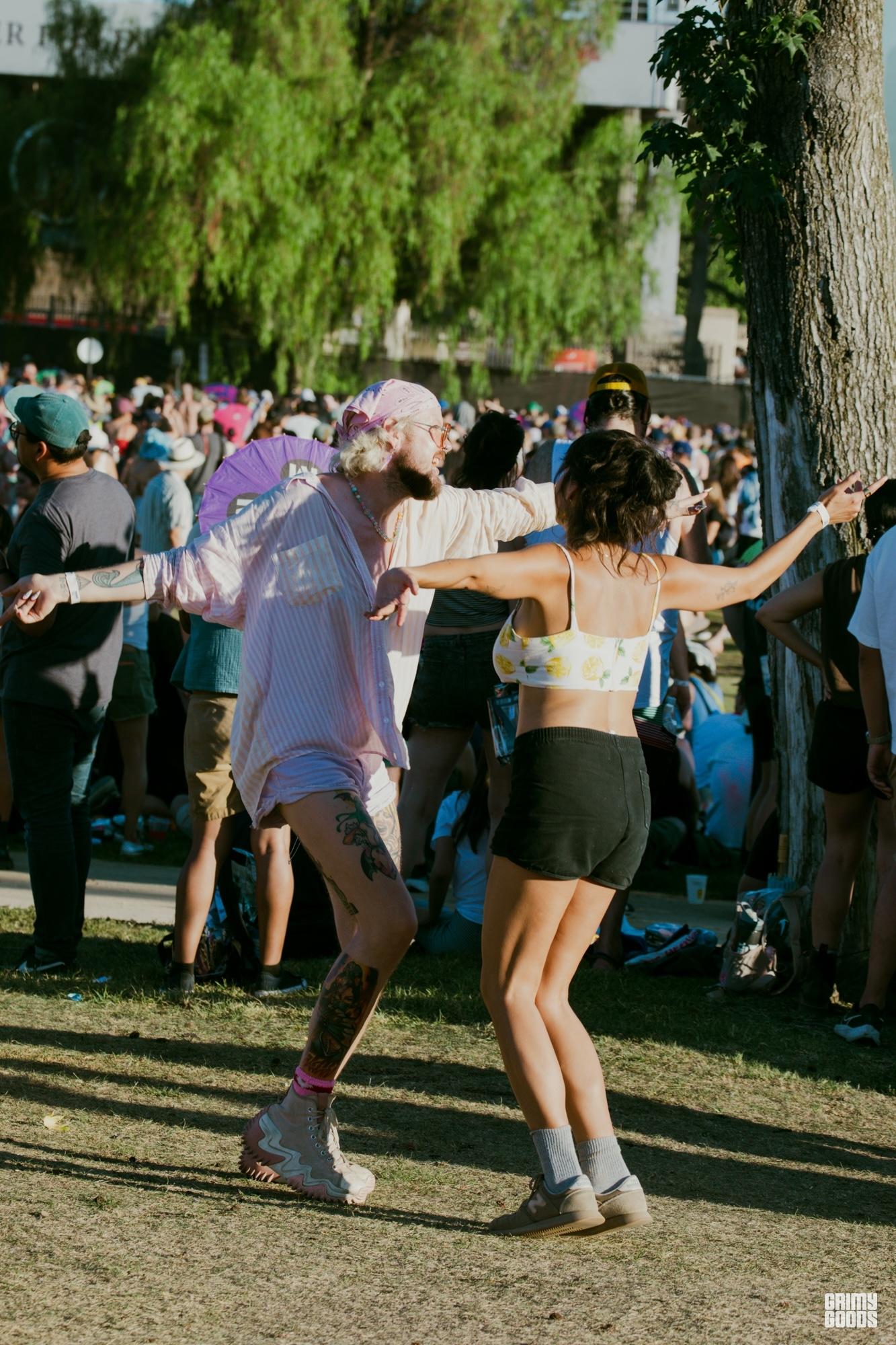
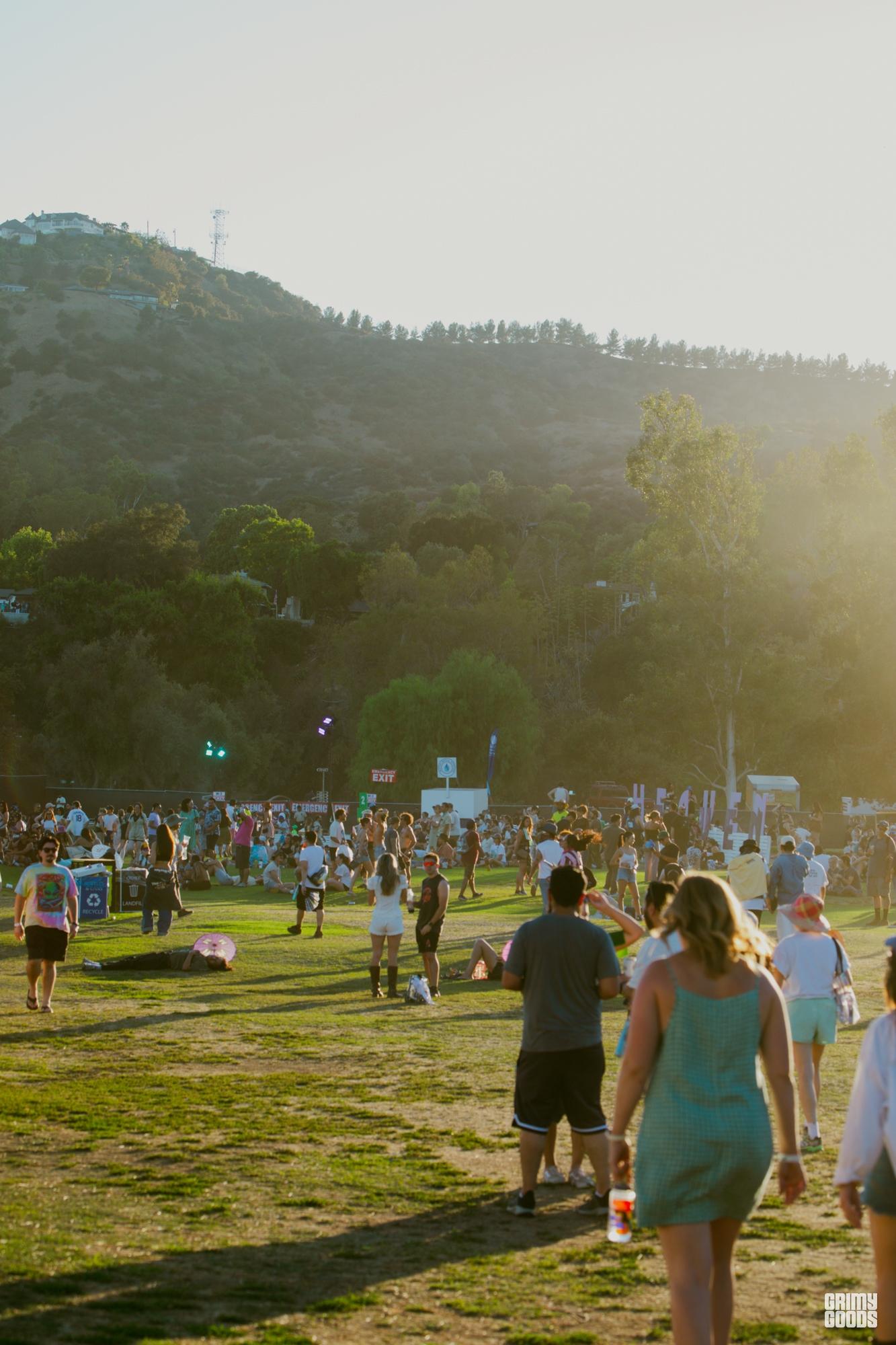
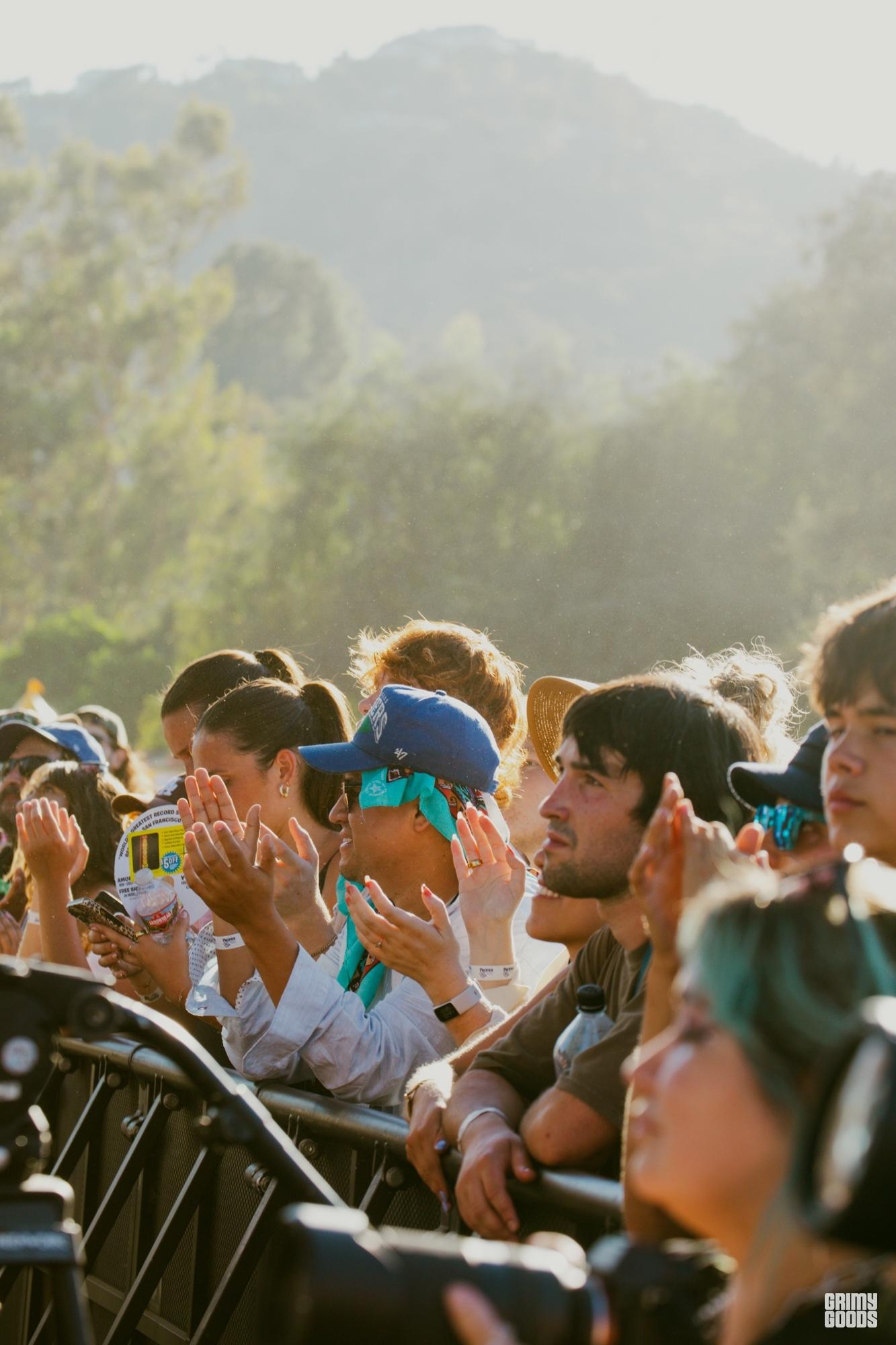
Shortly after gates opened at Just Like Heaven, people were already rationing trips between stages, exclusive TV Girl x Just Like Heaven collab parasols had become coveted merch turned survival gear, and nearly every patch of shade at Brookside had developed its own tiny civilization. Even Matt and Kim surrendered their stage backdrop to the most accurate assessment of the day: “IT’S SO DAMN HOT.” Somewhere between water refills and strategically abandoning sets, the same joke kept floating through the grounds: Just Like Heaven had become Just Like Hell. The funny part was that people kept dancing anyway.


Now in its sixth edition, Just Like Heaven has become something of an annual pilgrimage for anyone who spent the early aughts building their personality around skinny jeans, music blogs and bands with questionable fashion and haircuts. (Guilty!) I’ve been to every iteration, from its original 2019 home at the Queen Mary to its current residency at Brookside, and this year marked my first experience without 20 pounds of camera gear strapped to my body. It turns out festivals are considerably more enjoyable when you aren’t sprinting between stages trying to make the first three songs of every set. Still, there was no escaping the heat.

Ahead of the festival, organizers had announced additional precautions, including increased shade, misting fans and free water refill stations. The latter were plentiful enough that I never found myself searching long for water, and electrolyte samples from Electrolit (that blue raspberry was delish) became something of a personal side quest every time I passed one. Even the bars got in on the hydration game with electrolyte cocktails, which, if you’re going to drink alcohol under a Pasadena sun apparently trying to kill you, at least felt like harm reduction.

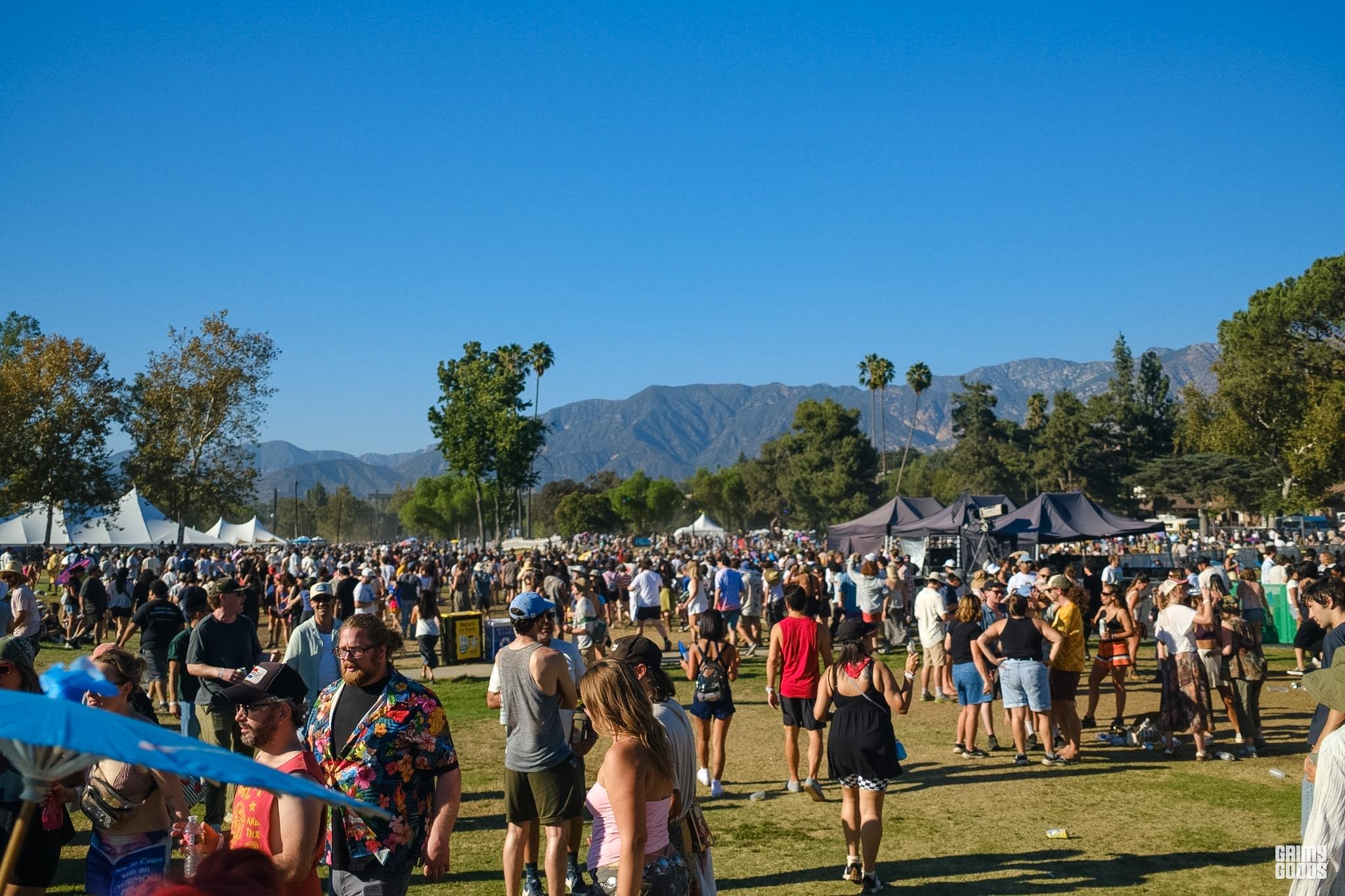
The afternoon crowd appeared noticeably lighter than previous years, although the grounds filled considerably as the sun began its merciful descent. And while plenty of criticism floated around about why Just Like Heaven didn’t simply move dates, there is an inconvenient detail: it did. Although we don’t know the reasoning behind the move from mild temps in May to sweltering August, we do know that last year’s Just Like Heaven also hit 98 degrees. It was a random heatwave. At a certain point, maybe the problem isn’t the calendar. Just Like Heaven can open the nostalgia portal as wide as it wants, but climate change simply doesn’t care that we’d all like to pretend it’s 2006 for eight hours. Thankfully, the soundtrack helped.

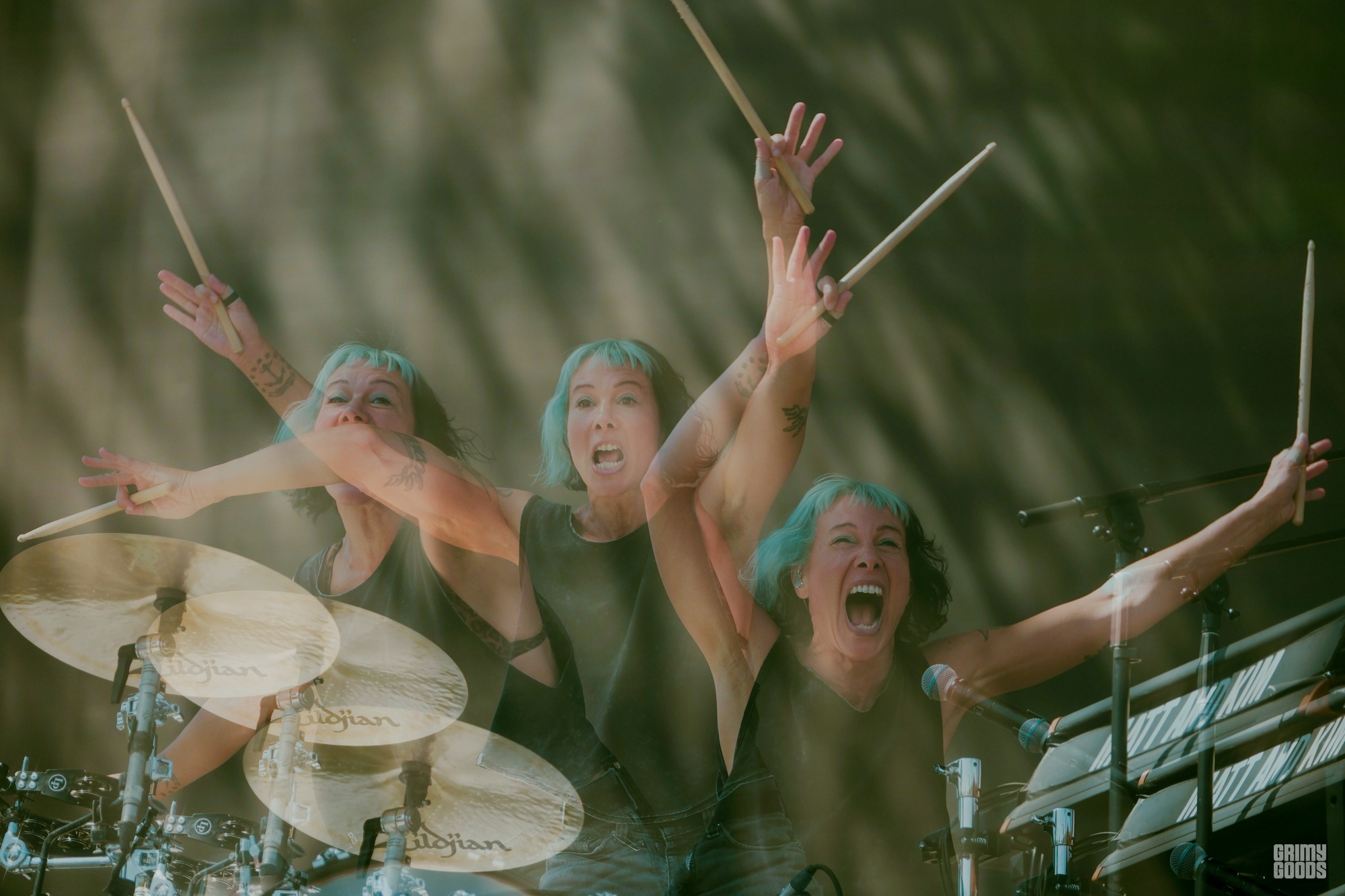
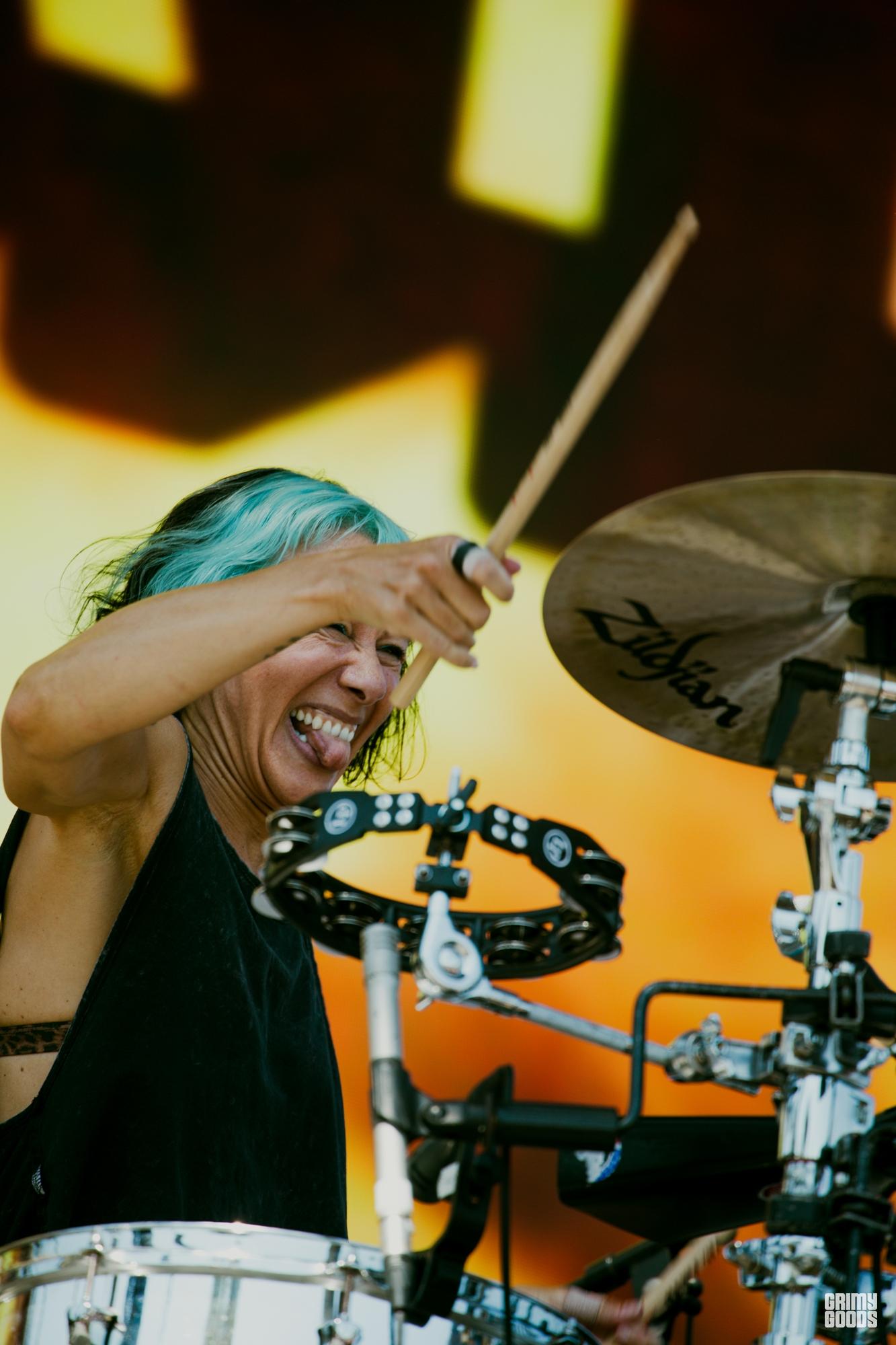
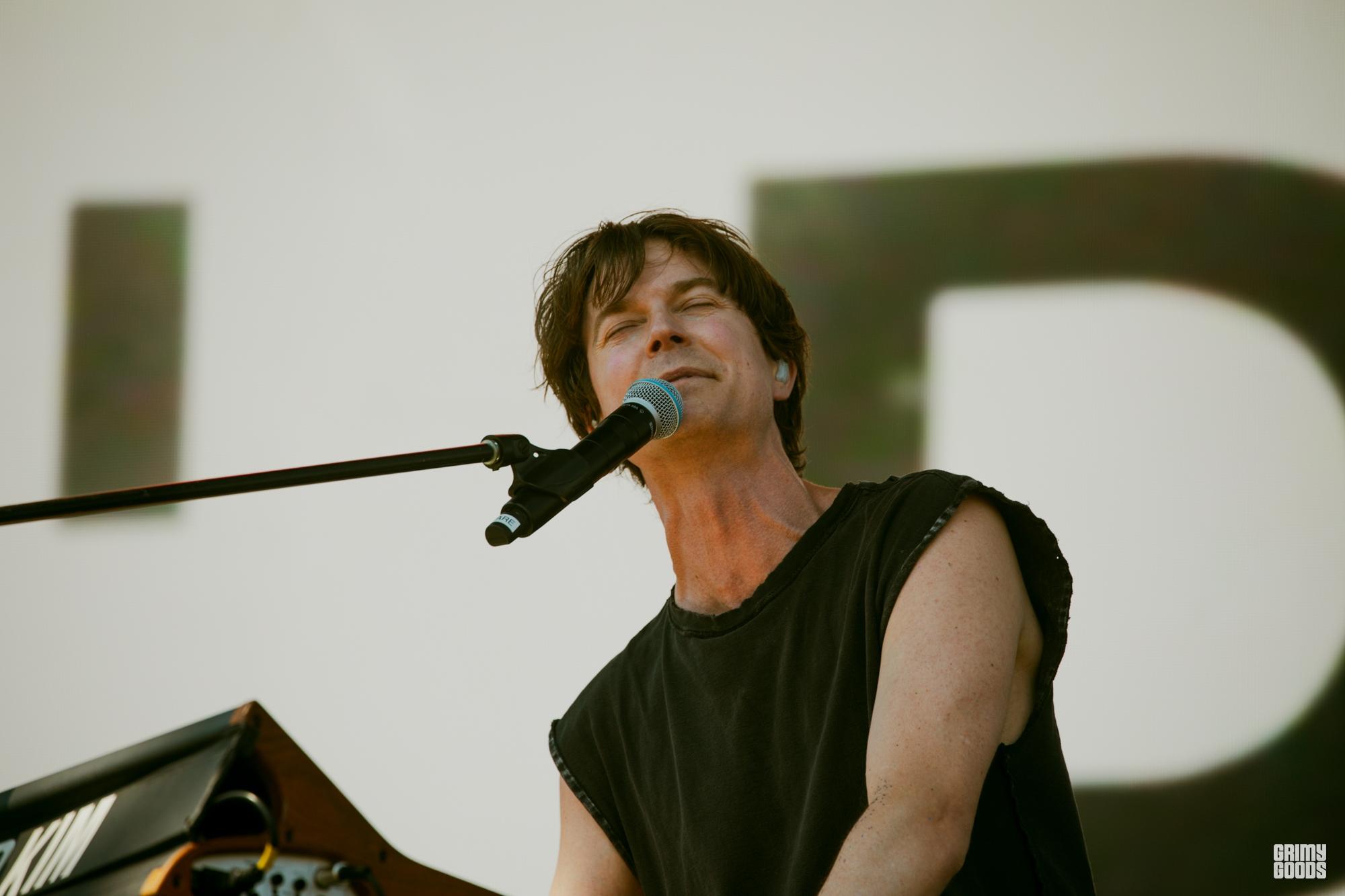
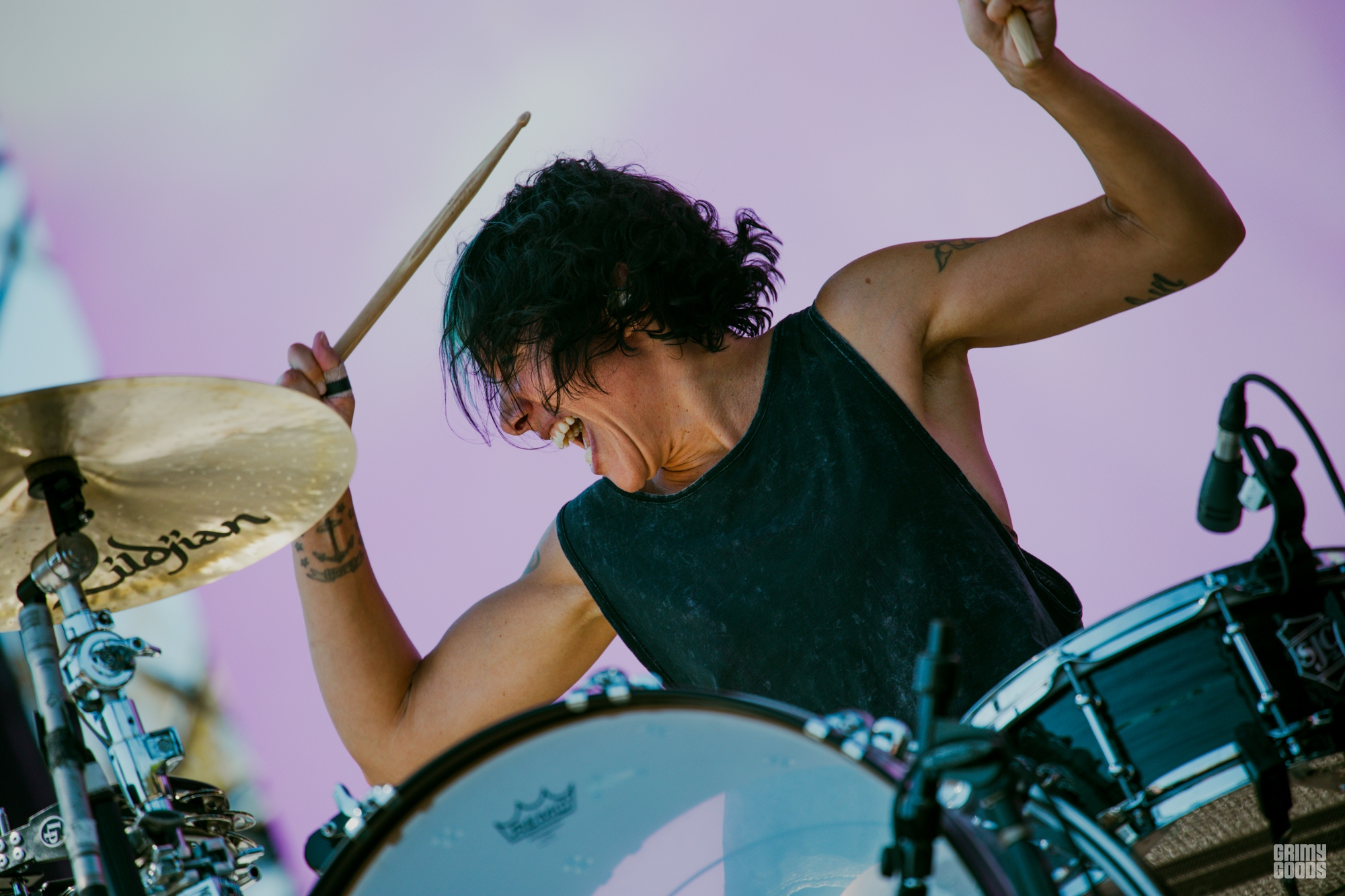
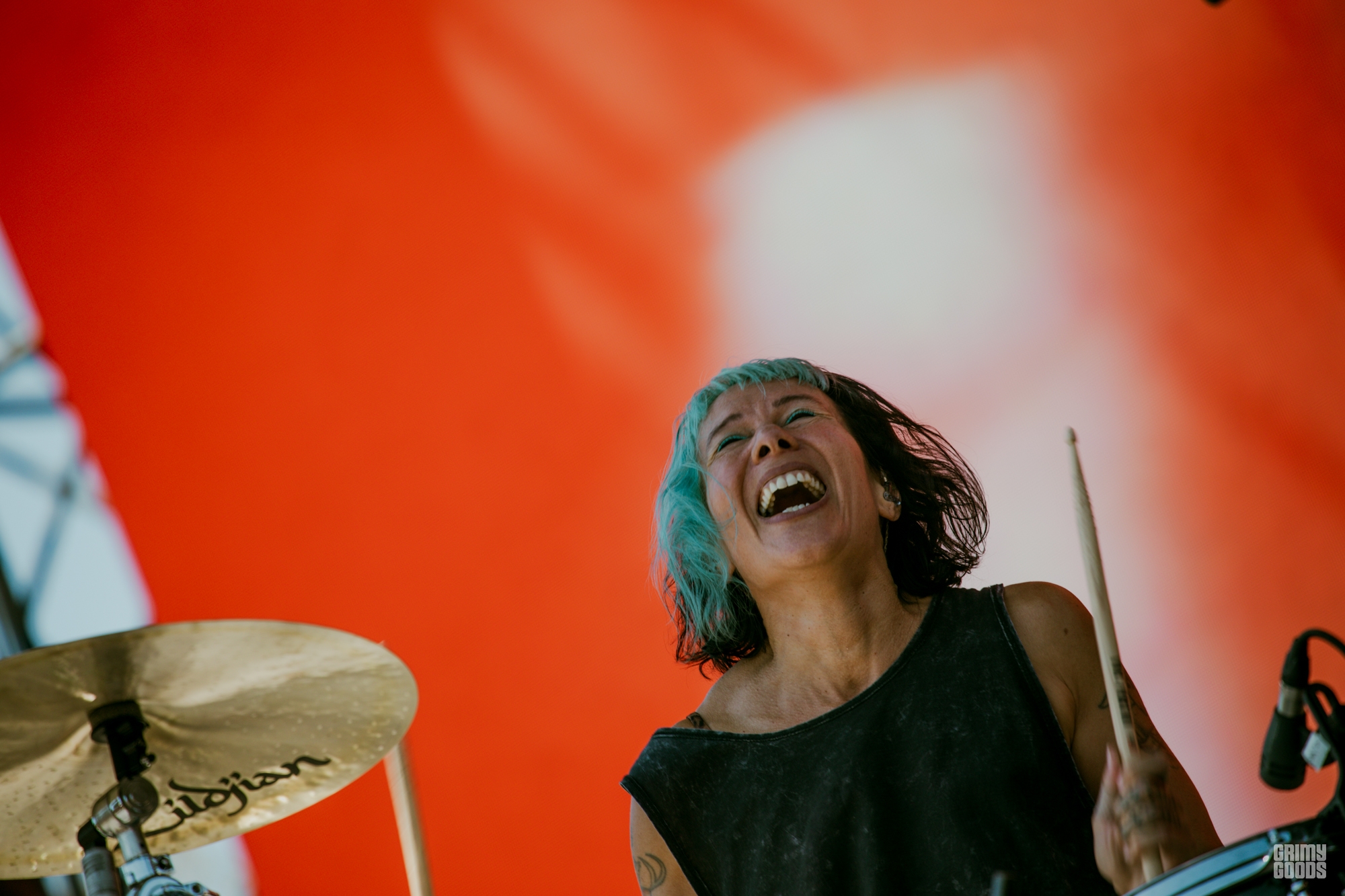
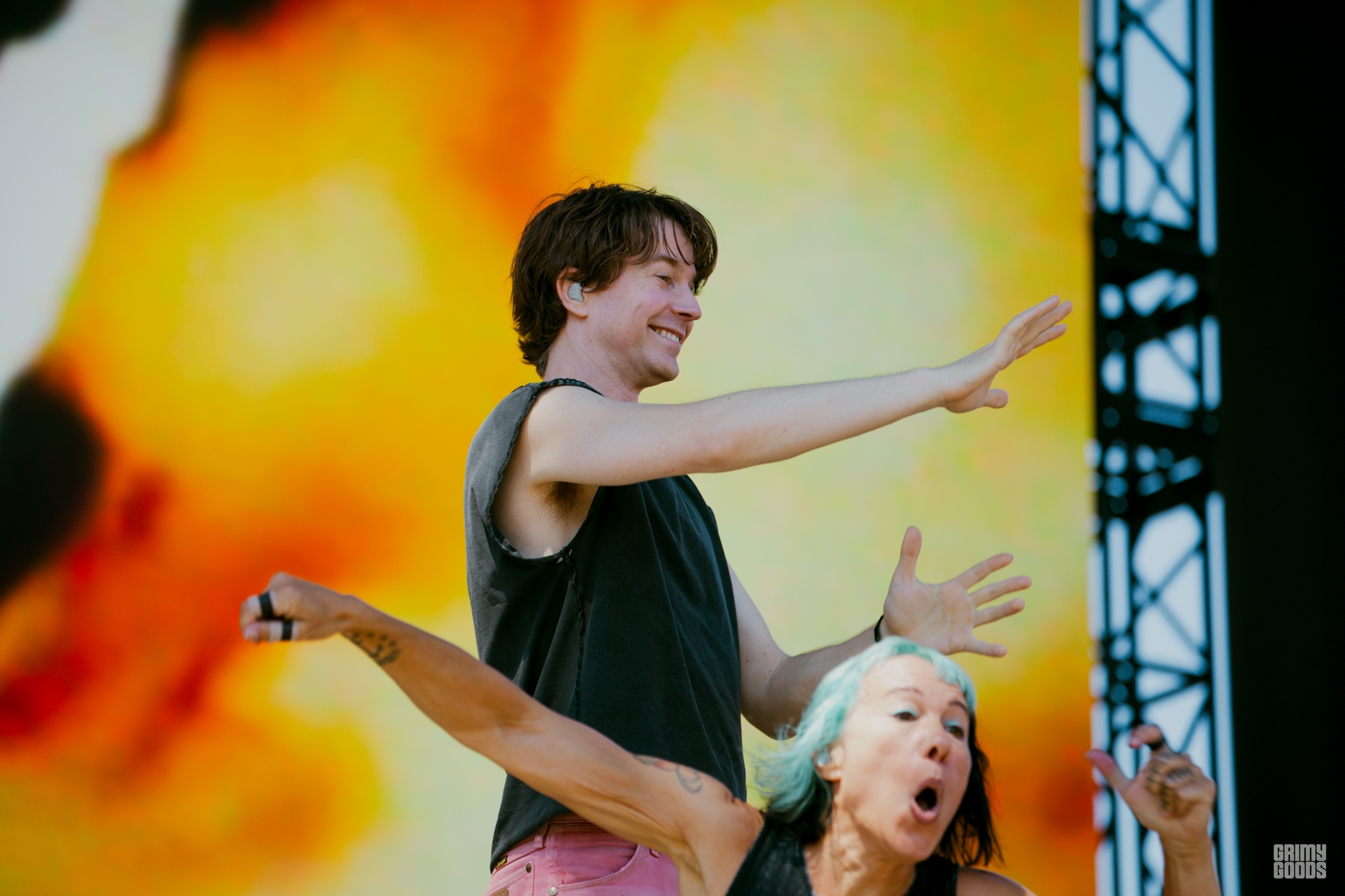
Matt and Kim delivered the kind of relentlessly enthusiastic set that makes you briefly forget you’re watching two people exert themselves in conditions where simply standing still feels ambitious. Kim Schifino attacked the drums with her usual athletic ferocity, while the pair’s almost offensively adorable chemistry remained intact. EKKSTACY similarly powered through an incredible and visibly sweat-soaked set, while Twin Peaks offered one of my first unexpected jolts backward in time. Somehow I had missed that the Chicago band had reunited, and suddenly seeing them again transported me directly into a very particular pocket of my own indie-rock history. Then came TV Girl.

Looking around before their set, I noticed the festival’s collaborative TV Girl parasols had seemingly multiplied across the grounds. At first, I couldn’t tell whether everyone desperately wanted portable shade or whether TV Girl had developed a fandom far bigger than I realized. The answer, judging by the enormous crowd that migrated toward their stage, was both.
It was also one of my first uncomfortable realizations of the day: Oh! There are things happening in indie music that I am apparently no longer automatically aware of. This is what aging looks like, I guess.
That feeling kept surfacing throughout the festival, and it is also where Just Like Heaven’s evolution has become most interesting. The inaugural 2019 lineup was essentially an indie time capsule, populated almost entirely by bands whose names once dominated music blogs and carefully curated iPod shuffles. Six editions later, nostalgia remains the festival’s backbone, but 2026 made a more explicit effort to place that history beside artists carrying pieces of it somewhere new.

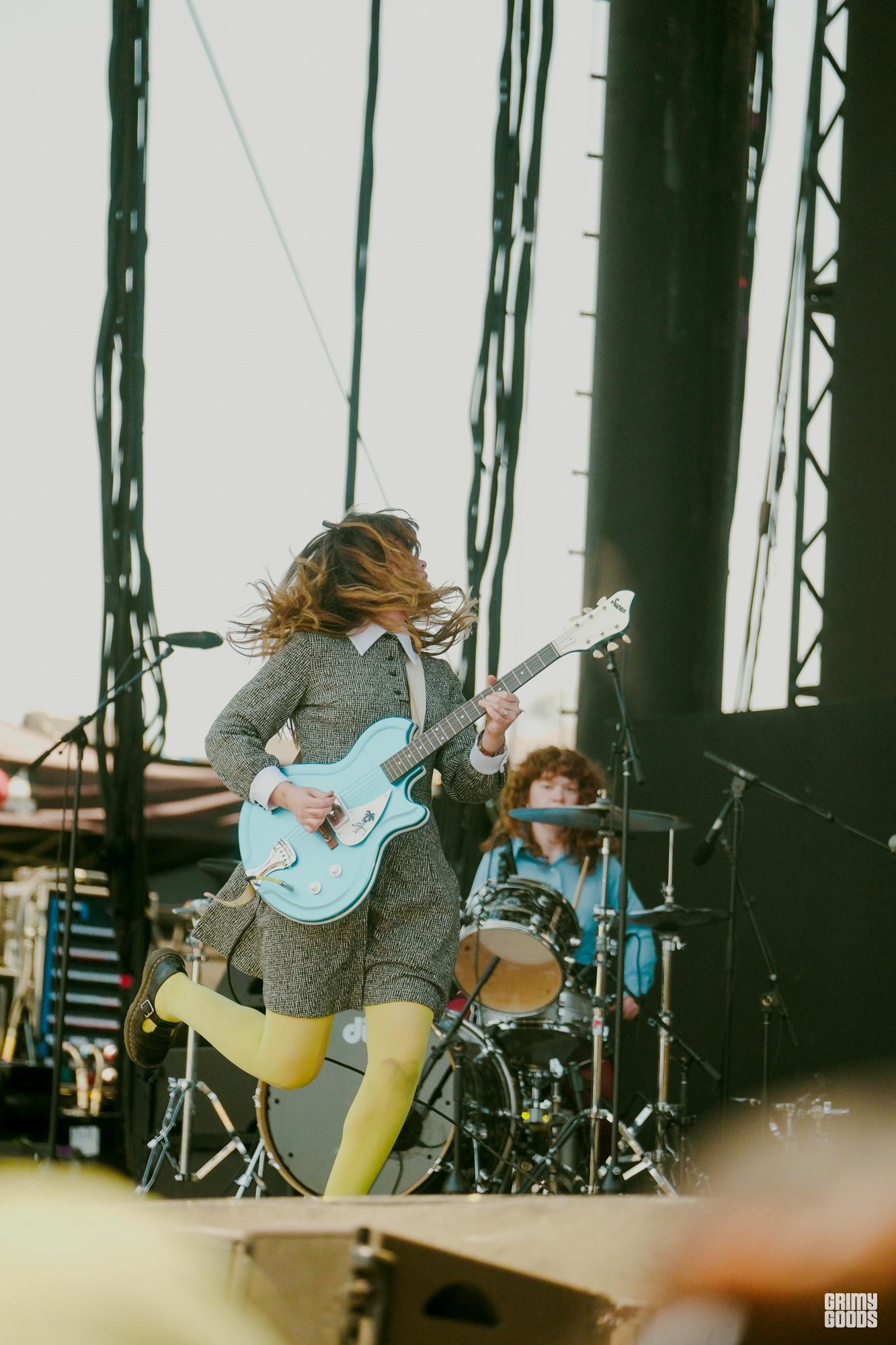
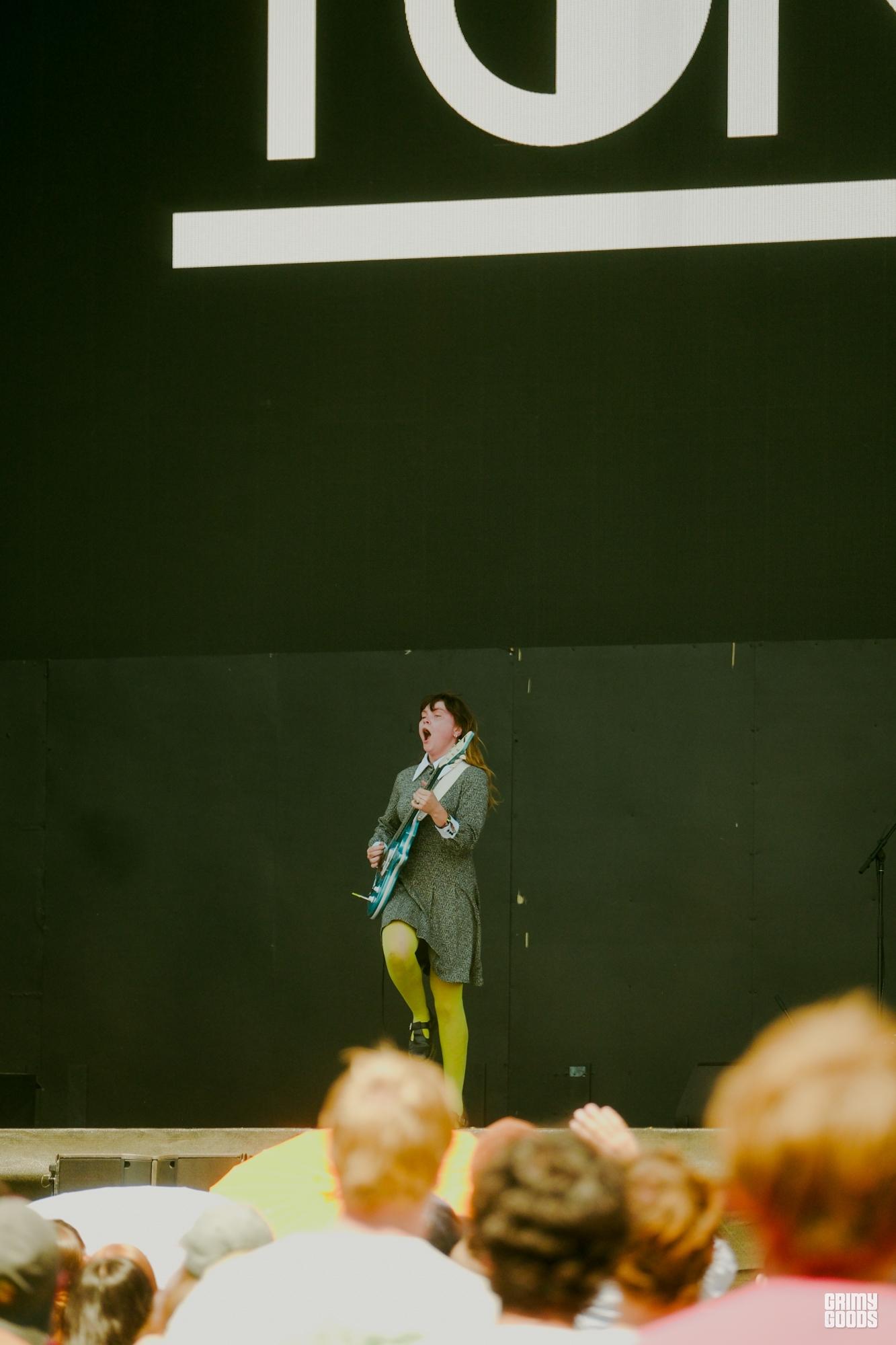
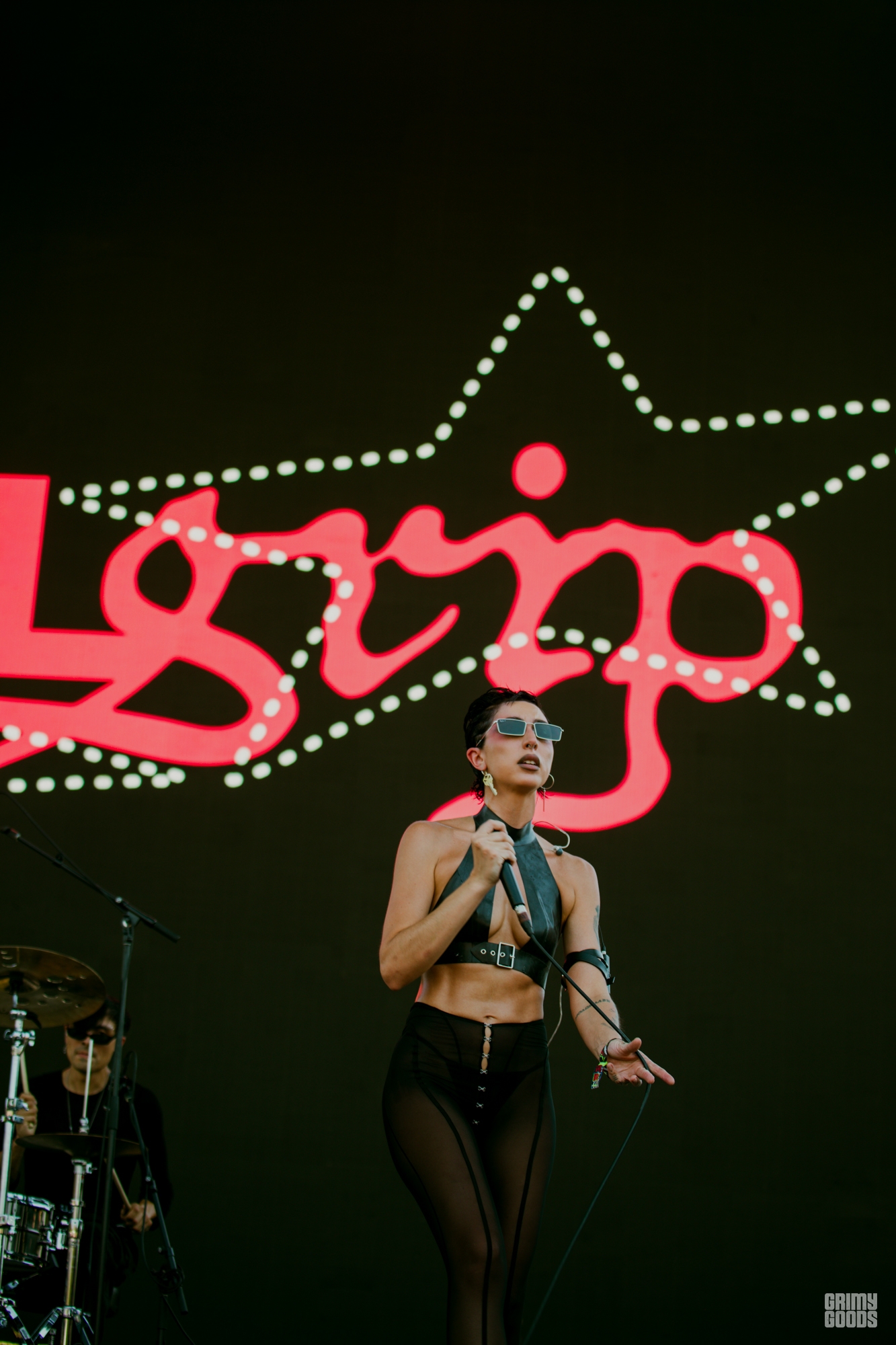
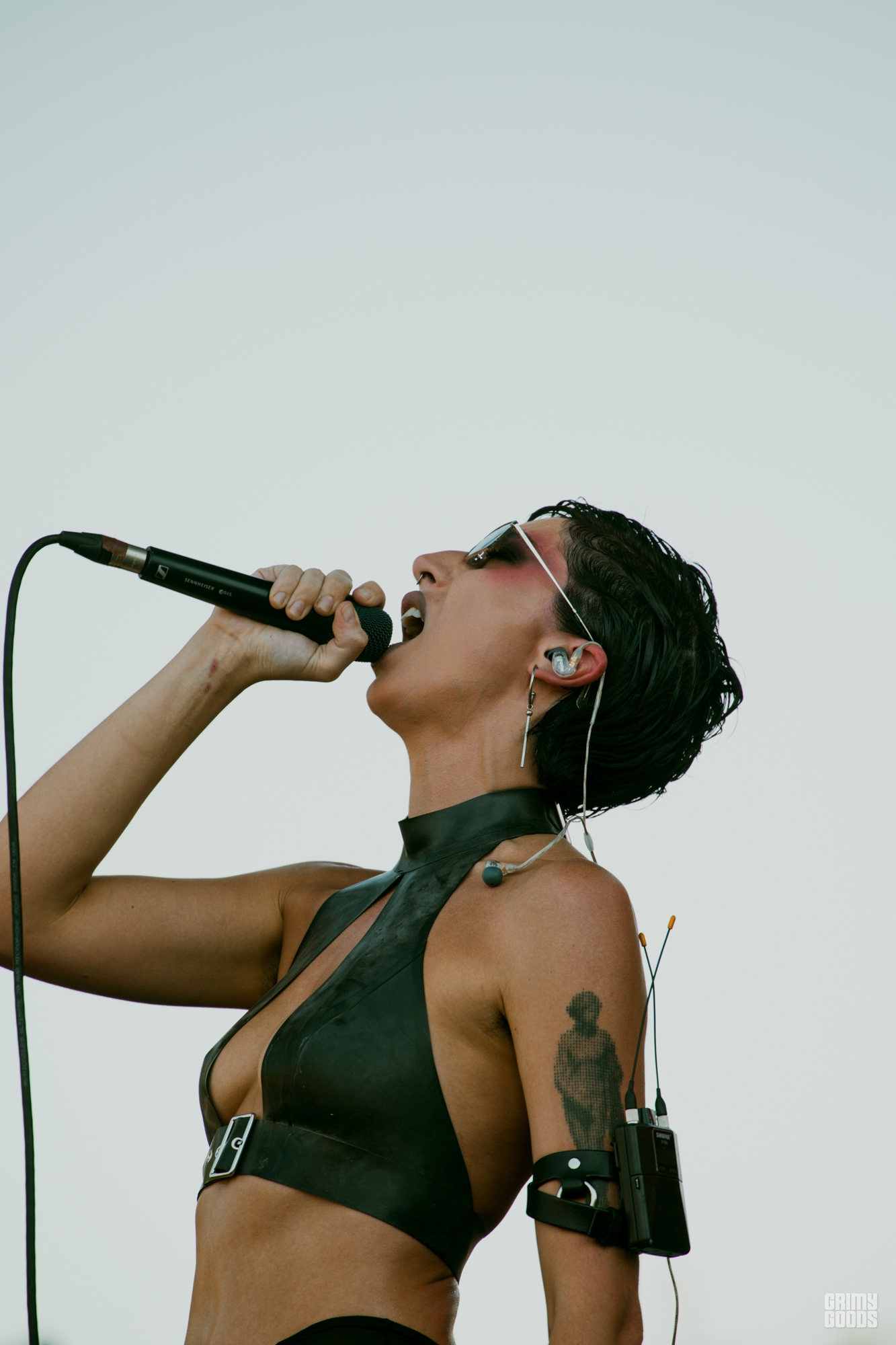
Acts like Pixel Grip, Coco & Clair Clair and Girl Tones aren’t just rebooted copies of the music that came before them. You can hear the roots, but you can also see where they’ve sprouted. Indie rock now collides effortlessly with punk, pop, darkwave and club music influence to all become more bodily, as once-sacred genre boundaries loosen considerably.


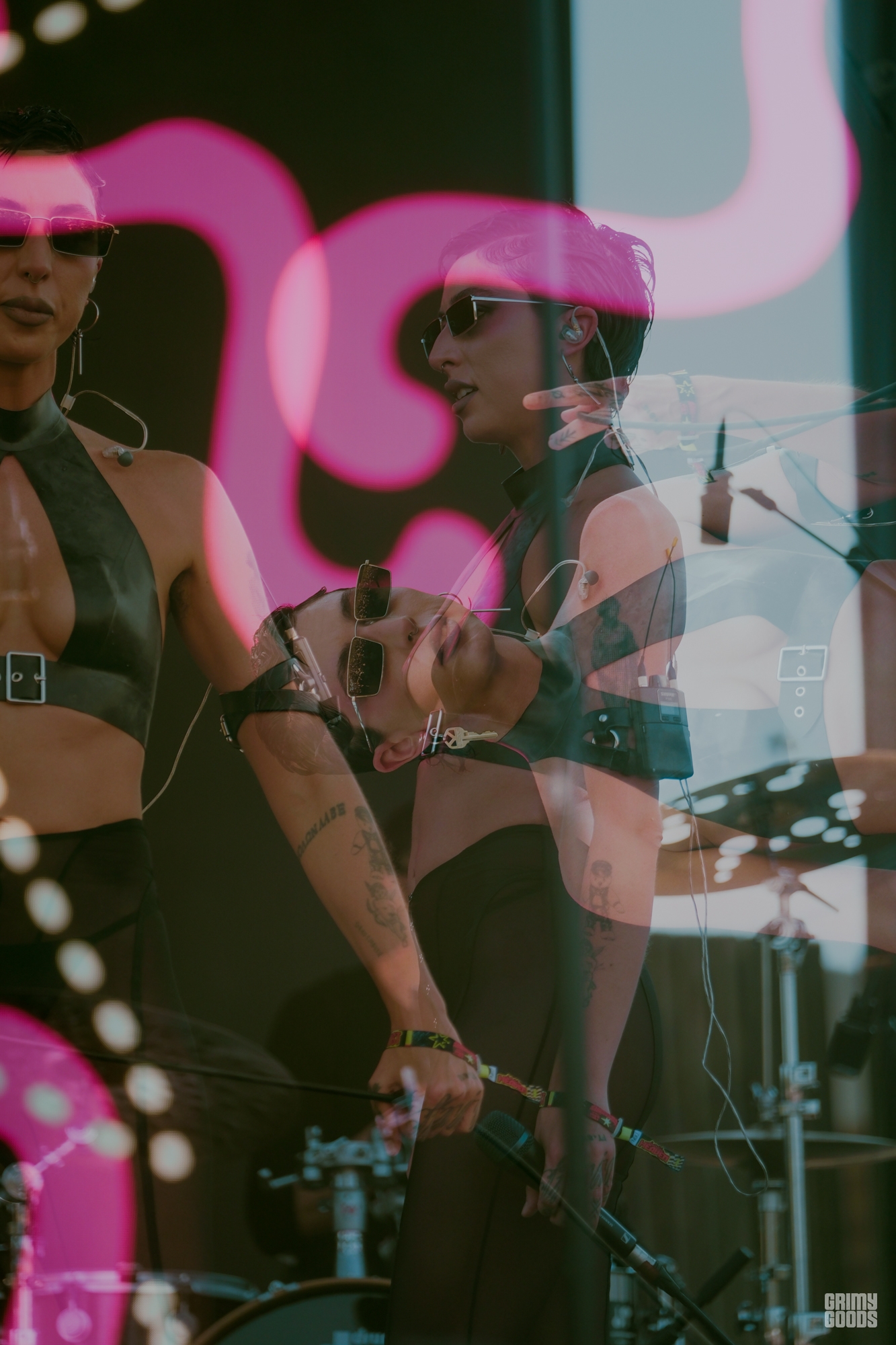
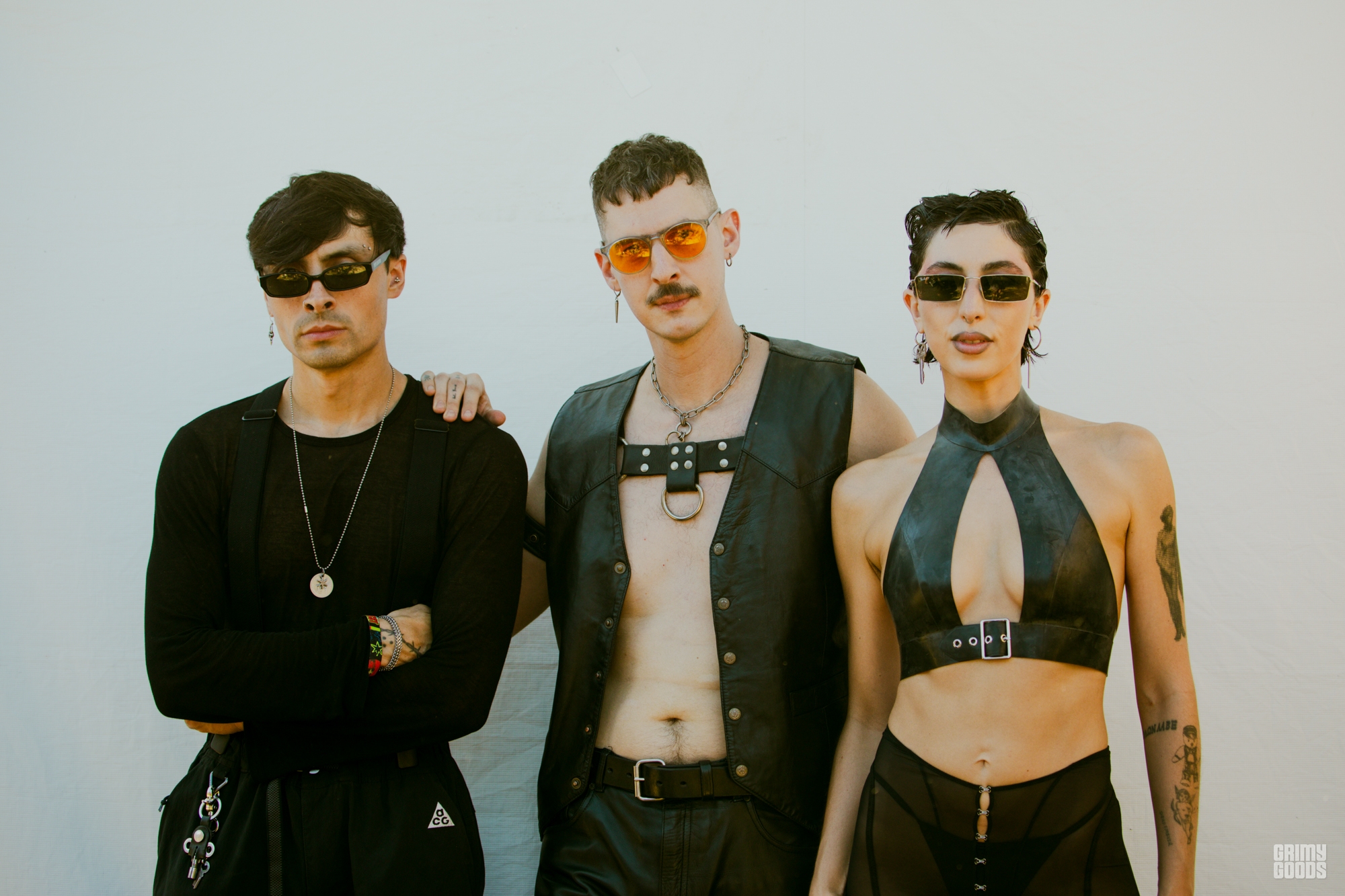
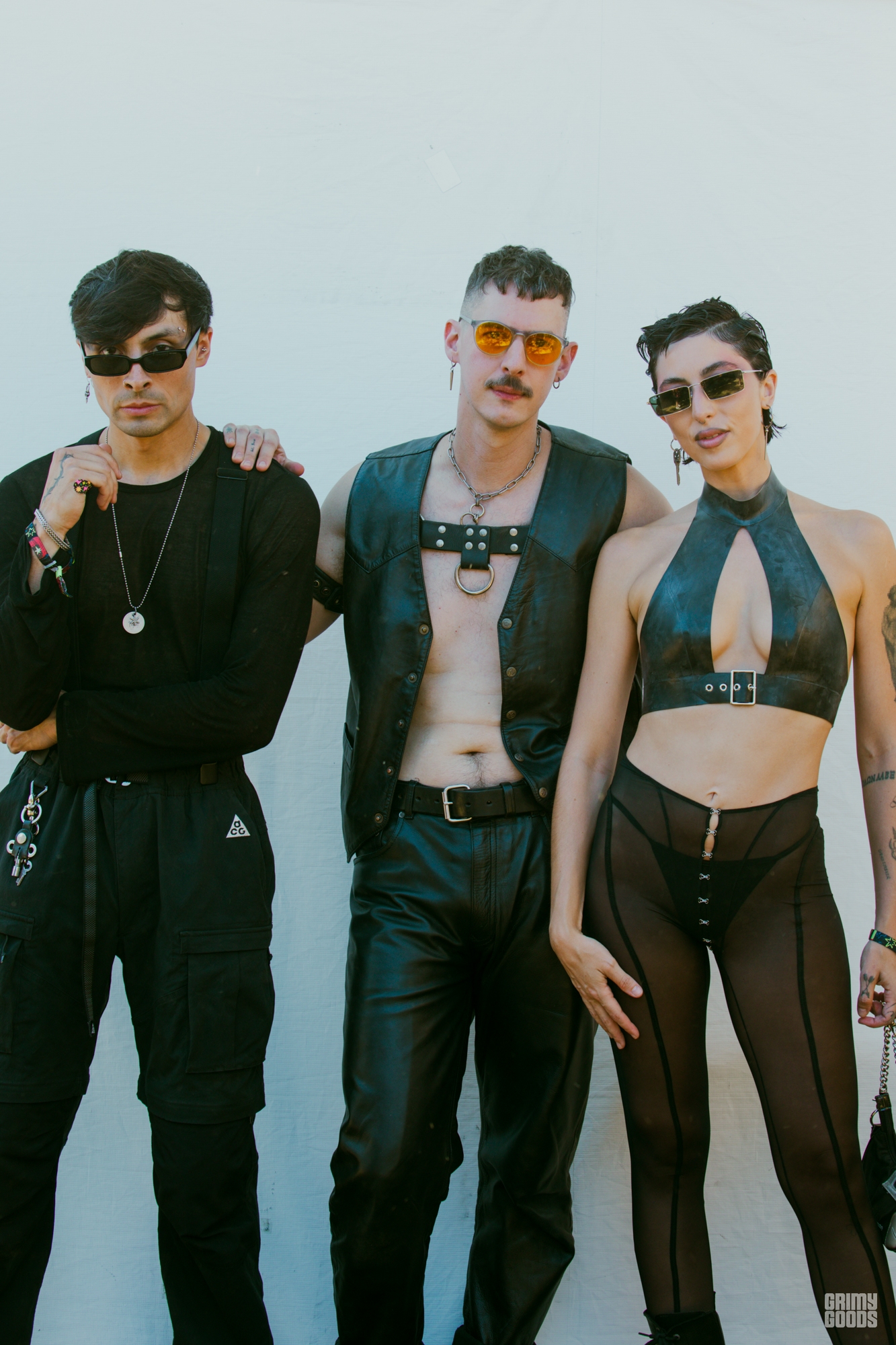
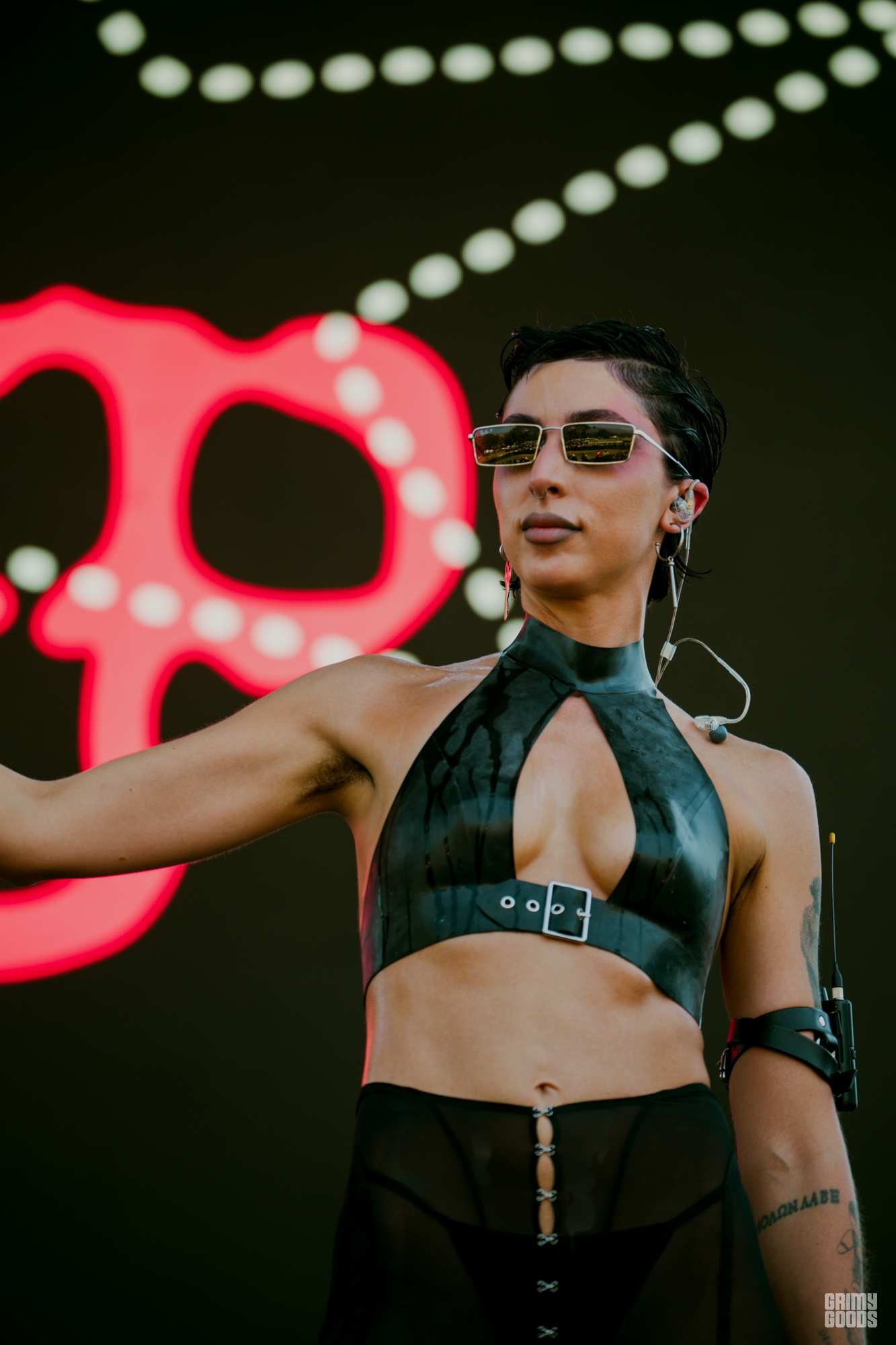
Talking backstage with Pixel Grip (stay tuned for the Grimy Goods TV interview) about that shift made the generational divide especially funny: younger listeners seem increasingly uninterested in treating genres as mutually exclusive identities. There was a time when liking punk and, dare I say it, musicals could earn you a side-eye from someone questioning your credibility. To a younger generation raised with essentially every genre ever recorded sitting inside the same device, that rigidity can feel almost foreign.
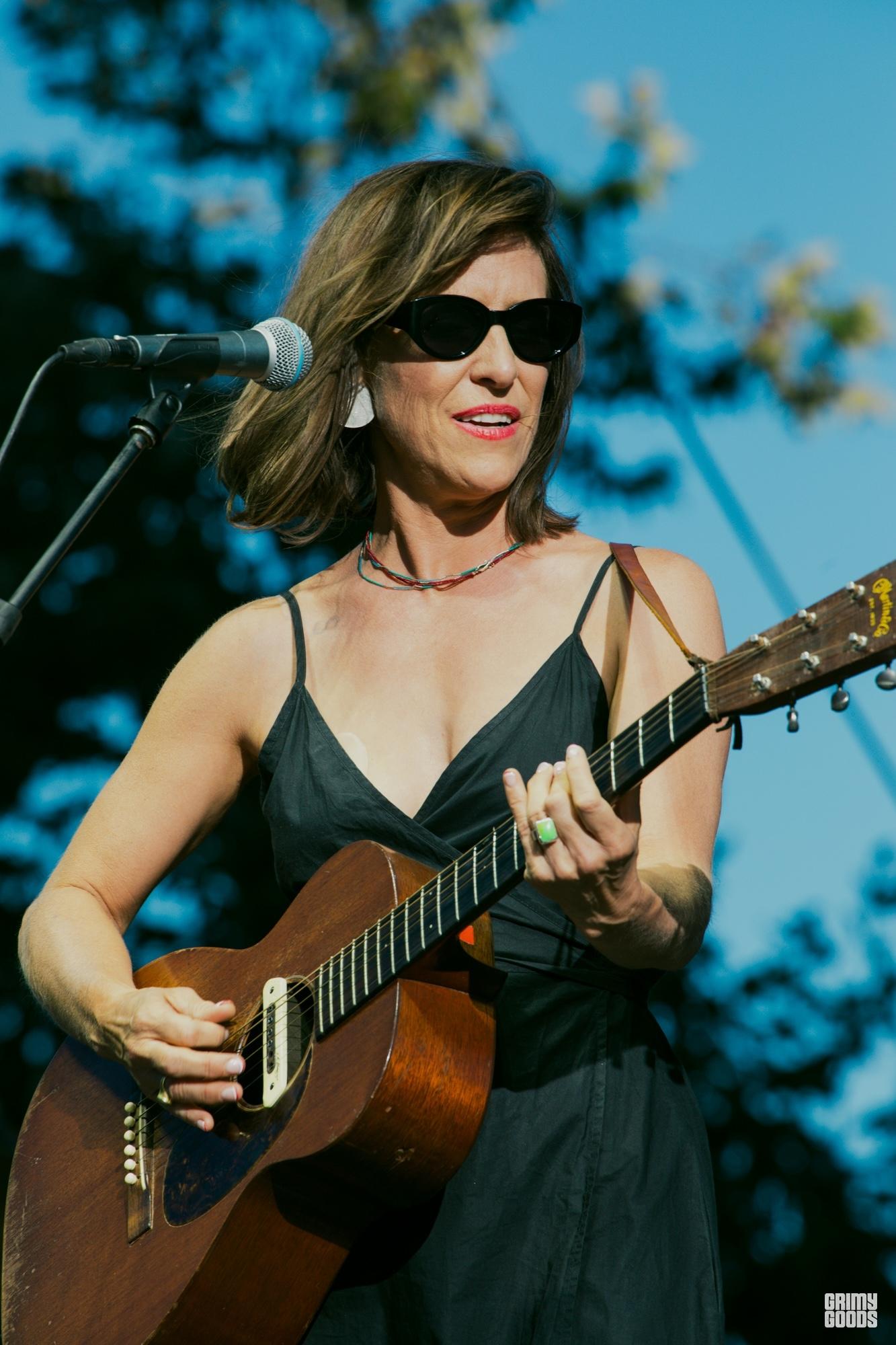
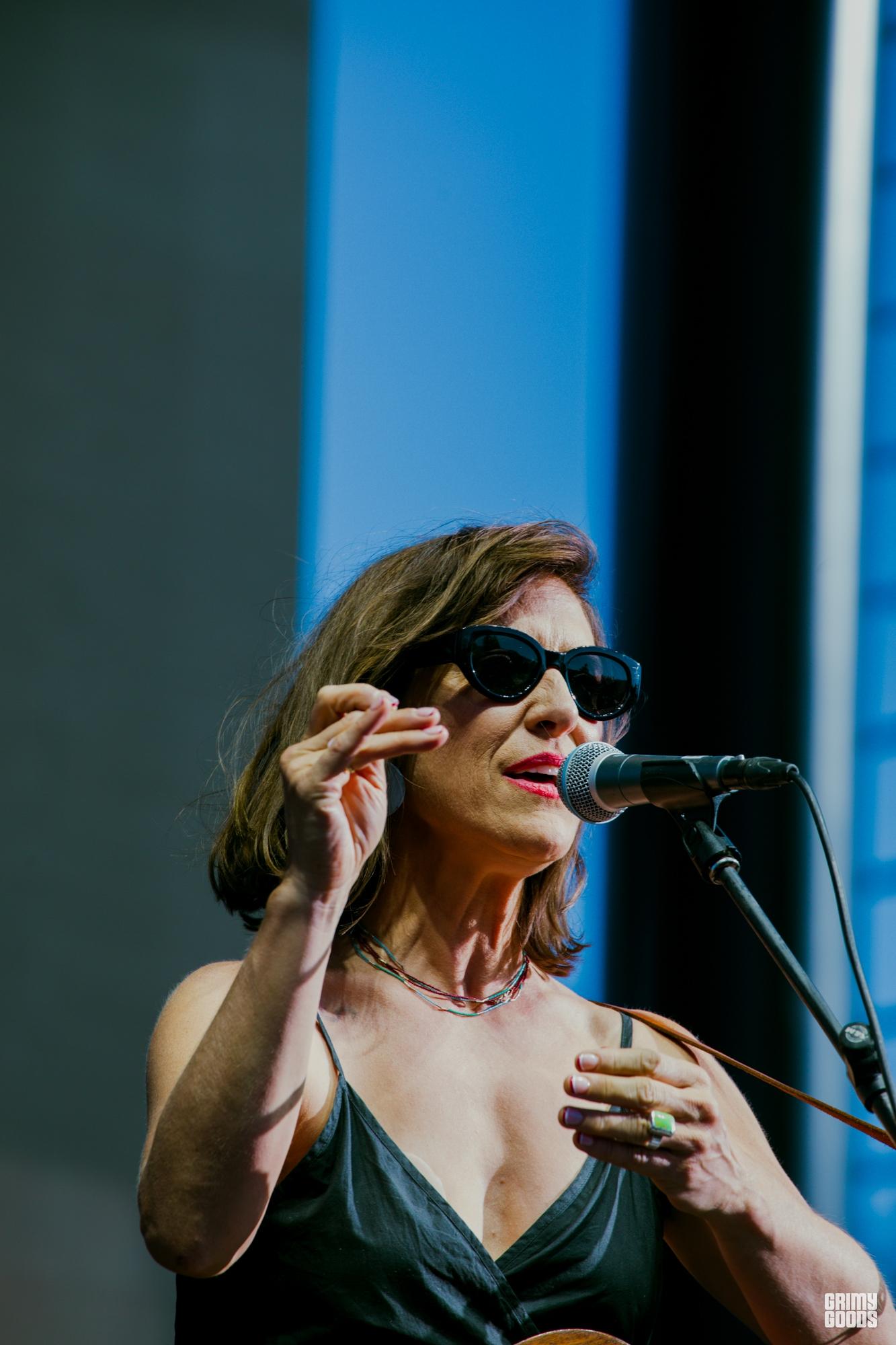
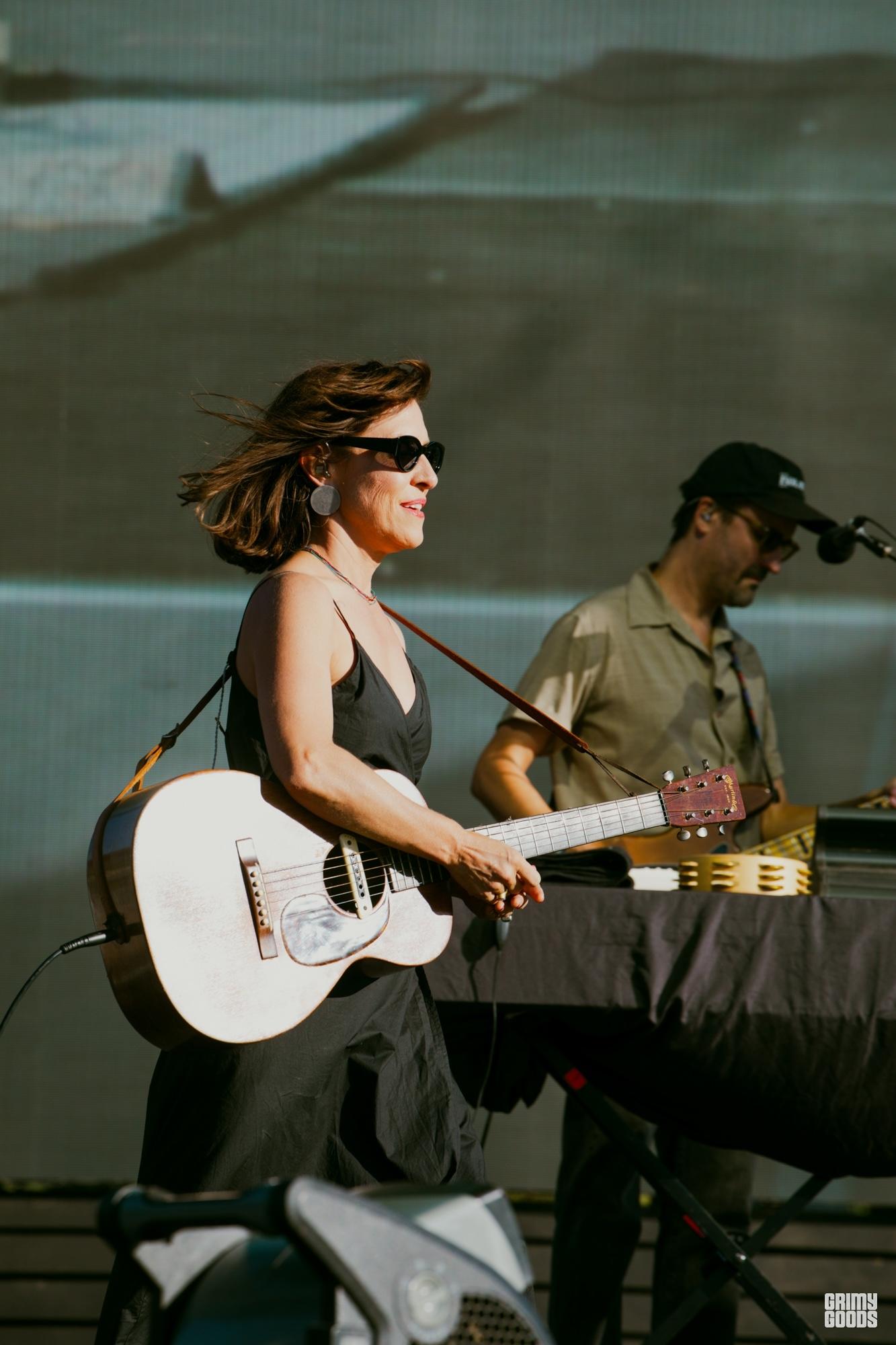
Just Like Heaven is at its smartest when it recognizes that nostalgia doesn’t have to mean preservation in amber. The festival works better as a living lineage than a museum exhibit, allowing the people who built this world to exist alongside artists reshaping it. Few moments illustrated that better than Feist.

As her set wound toward “My Moon My Man” and “1234,” the latter became a strangely perfect cross-generational experiment. For some, the song conjured memories of its ubiquitous late-2000s cultural run. For others, it was attached to childhood, television or simply discovering Feist years later. Around me, people carried entirely different memories into the same chorus, then jumped and sang together anyway. That is ultimately nostalgia’s strangest trick. We can share a song without sharing the memory attached to it.

Maybe that’s also part of why this particular era feels so irresistible again. The first indie (aka indie-sleaze according to Gen Z) boom happened alongside digital cameras, MySpace, iPods, LimeWire and a thriving music-blog ecosystem, back when there still was one. Technology was everywhere, but it still felt like something we played with rather than something constantly playing us. In 2026, amid AI anxiety, algorithm fatigue and an increasingly desperate desire to unplug, there is something understandably seductive about returning to music associated with the last era when the internet still felt a little messy and human.
RELATED: AI Is Decimating Music Blogs and Media, Brooklyn Vegan’s Demise Is Just The Start
Interestingly, the day itself remained largely apolitical. Unlike previous editions where artists frequently used the stage to address politics, this year’s performances largely stayed centered on the music. Whether intentional or not, it made the festival feel even more escapist. While we did see both artists and fans alike donning keffiyehs, f*ck ICE shirts, watermelon pins, and/or fanny packs — for one brutally hot day, thousands seemed content to disappear into a shared musical past.

The Rapture certainly helped. Returning after playing Just Like Heaven’s inaugural 2019 edition, they sounded every bit as urgent, briefly making the time-travel fantasy convincing. My only grievance was scheduling them directly before LCD Soundsystem on the opposite stage, an indie-dance Sophie’s choice that left me walking away while “House of Jealous Lovers” taunted me from behind. The sequencing was fitting, if personally cruel: the track was DFA’s first release, produced by James Murphy and Tim Goldsworthy, making The Rapture-to-LCD pipeline almost too perfect.

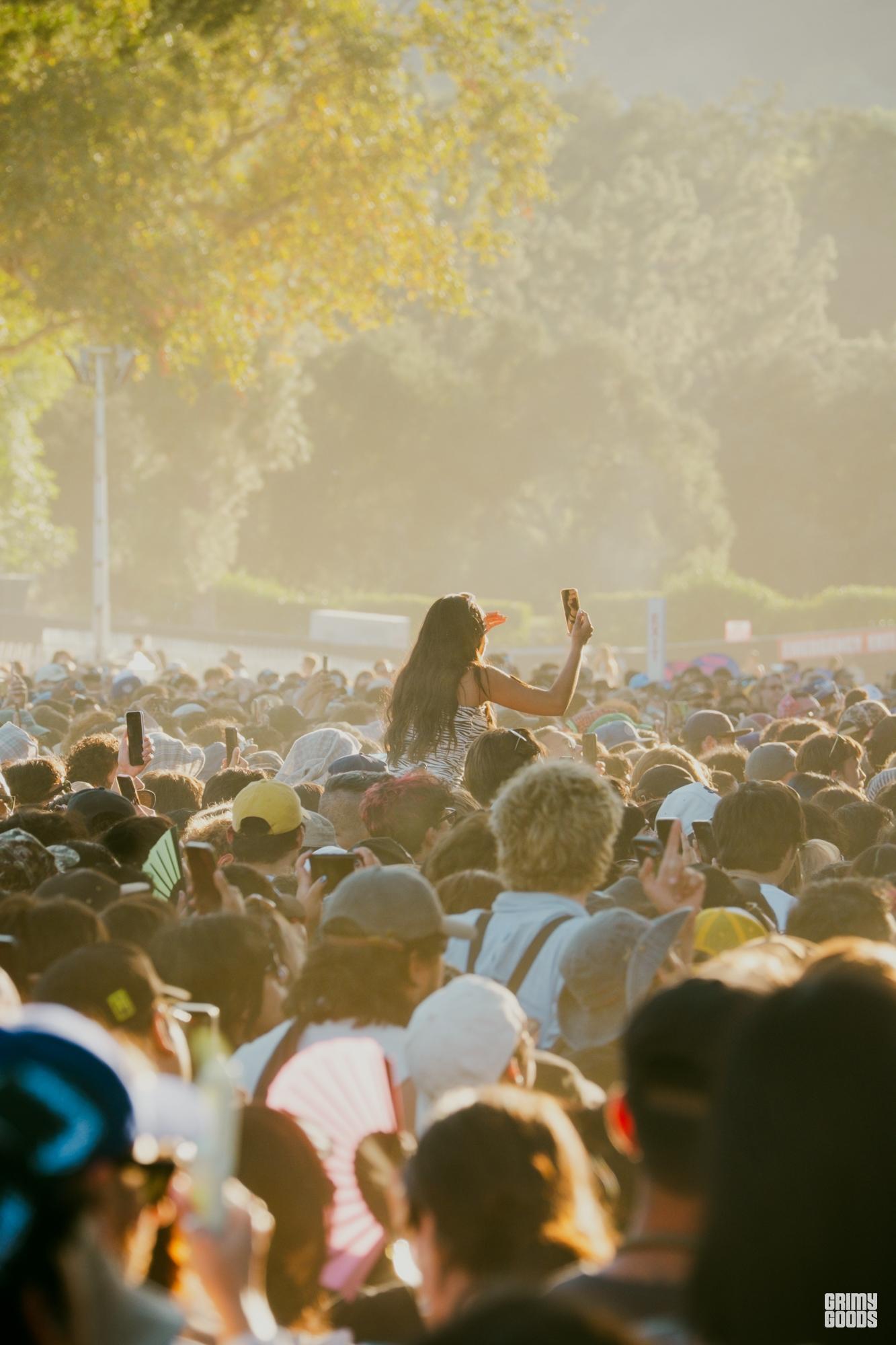
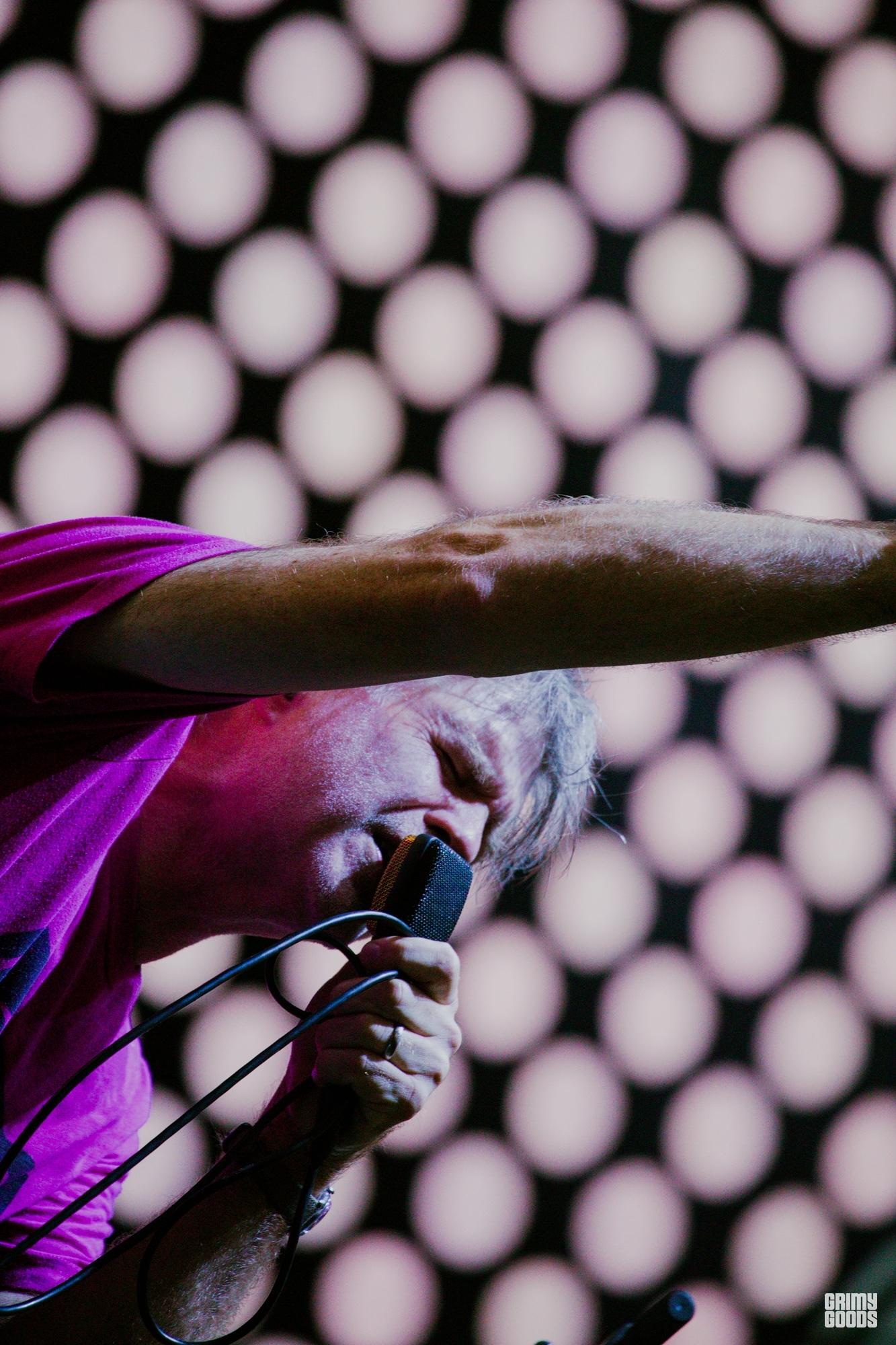
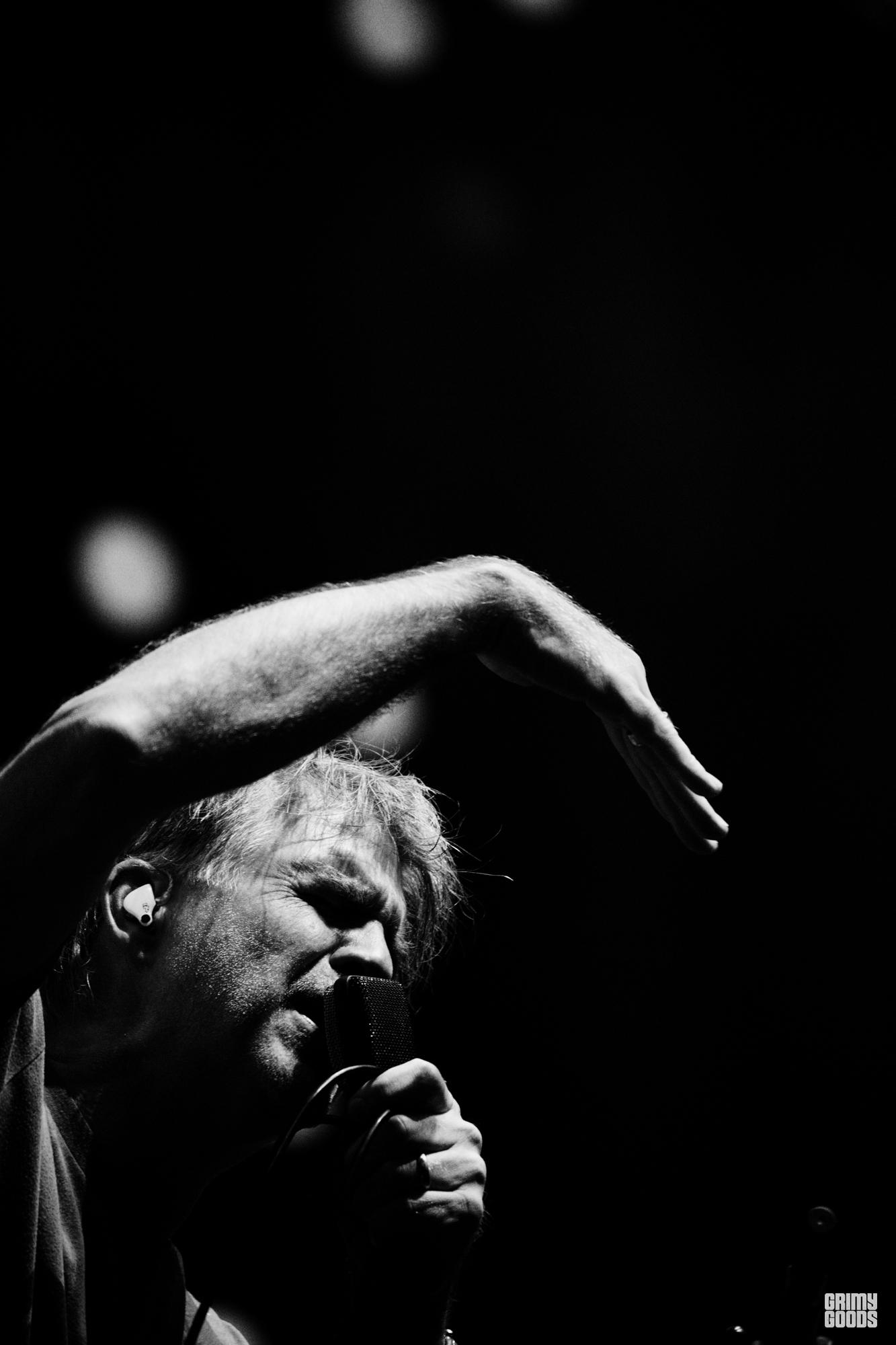
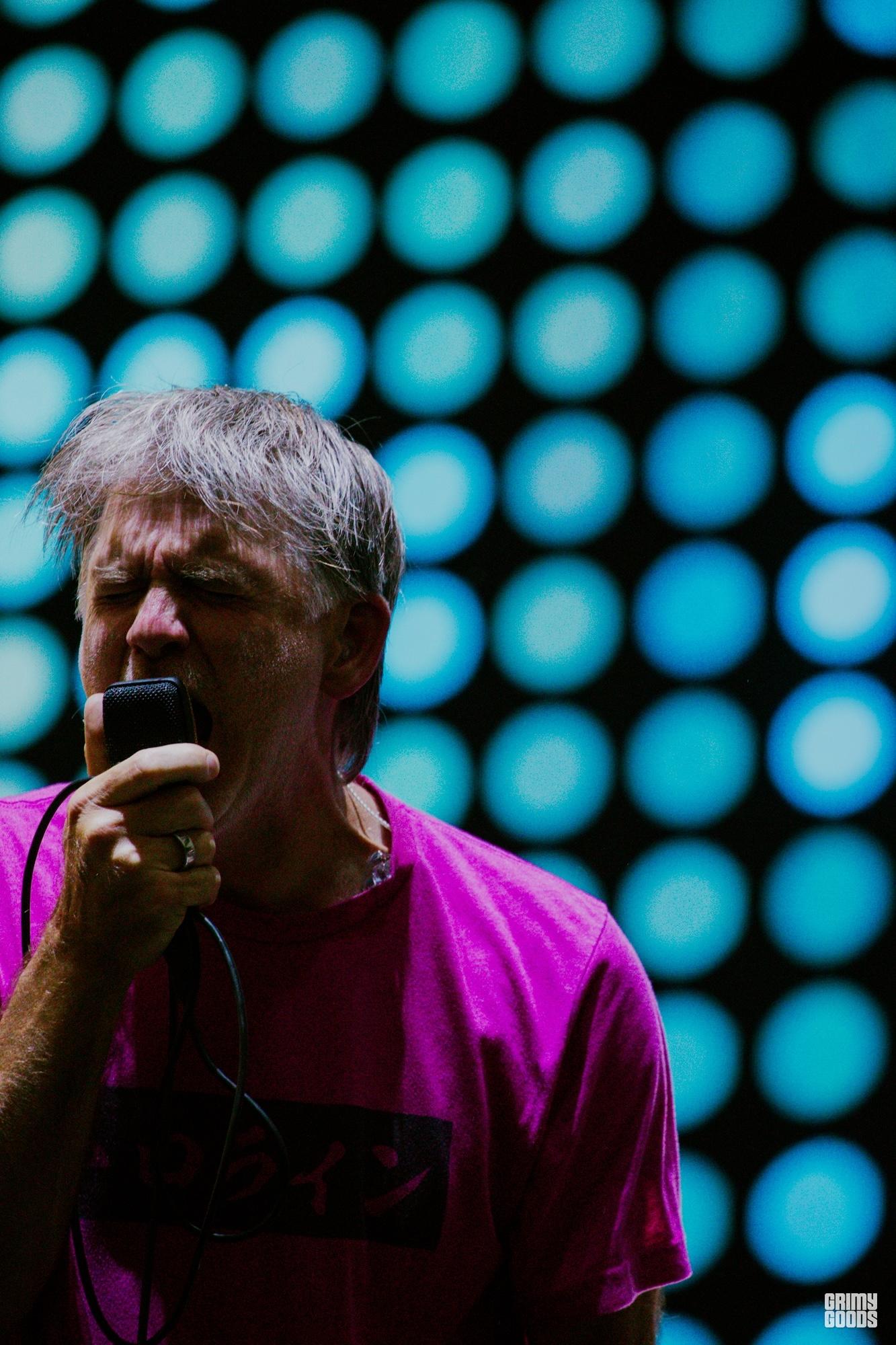
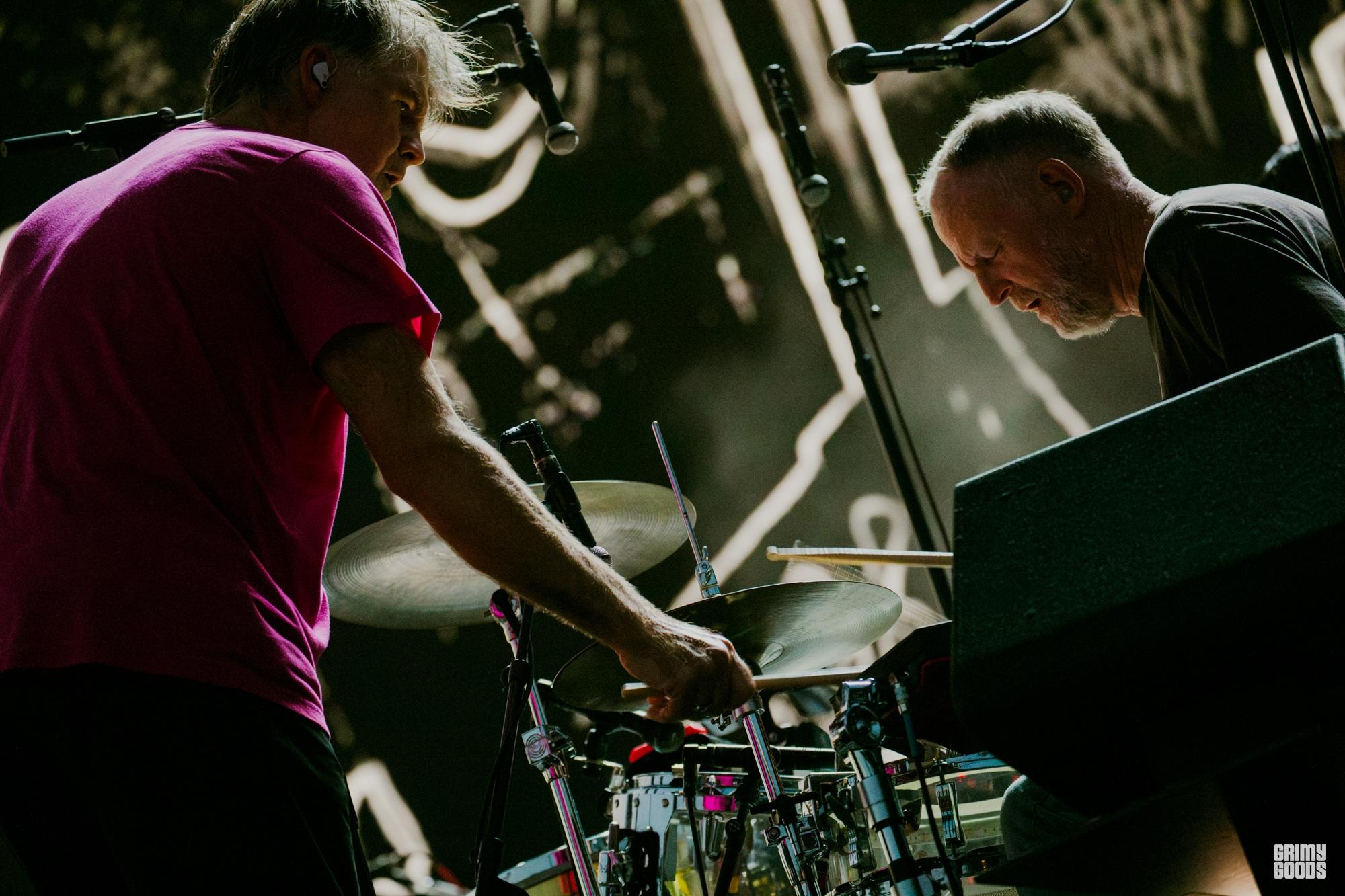
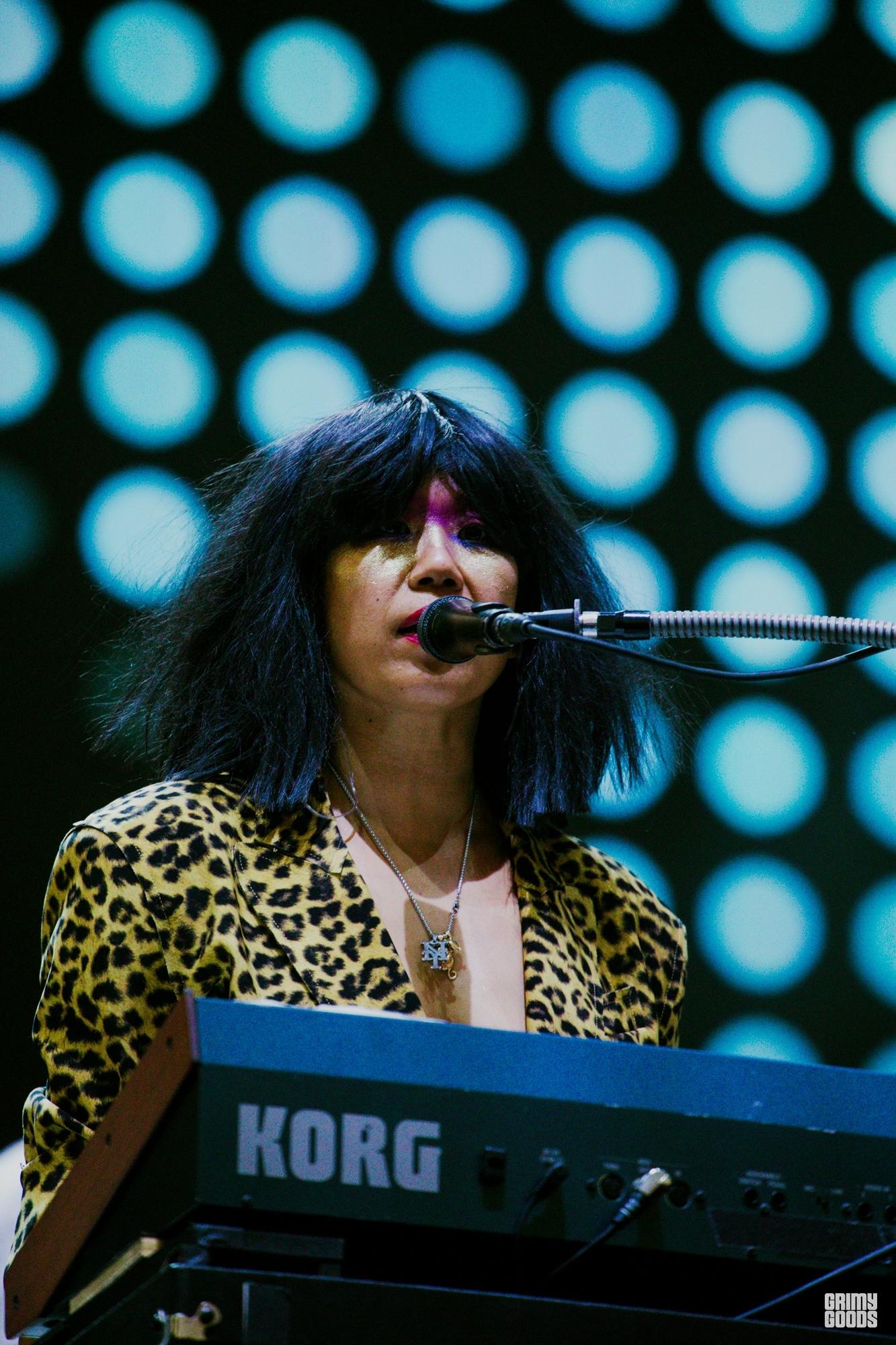
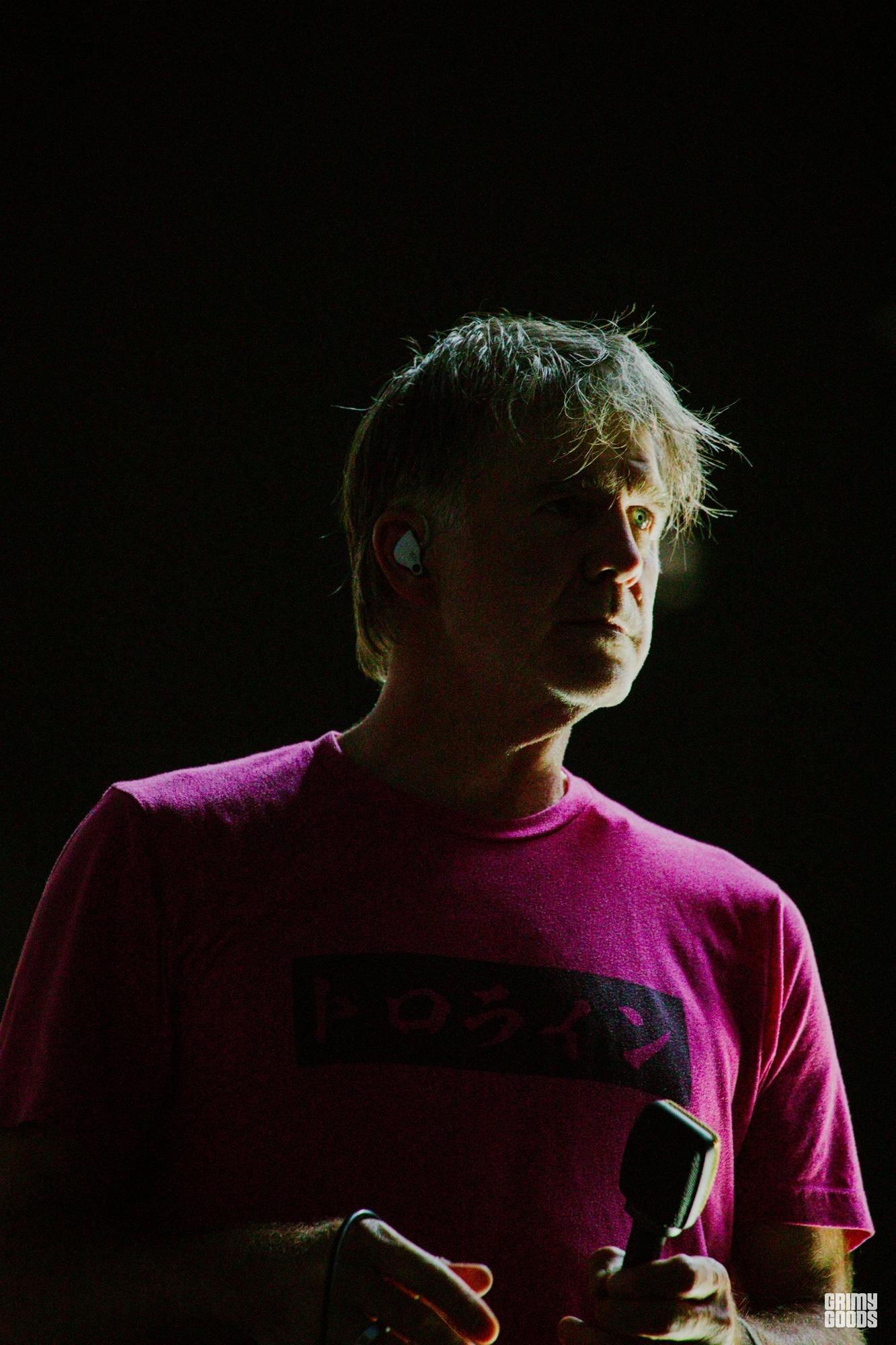
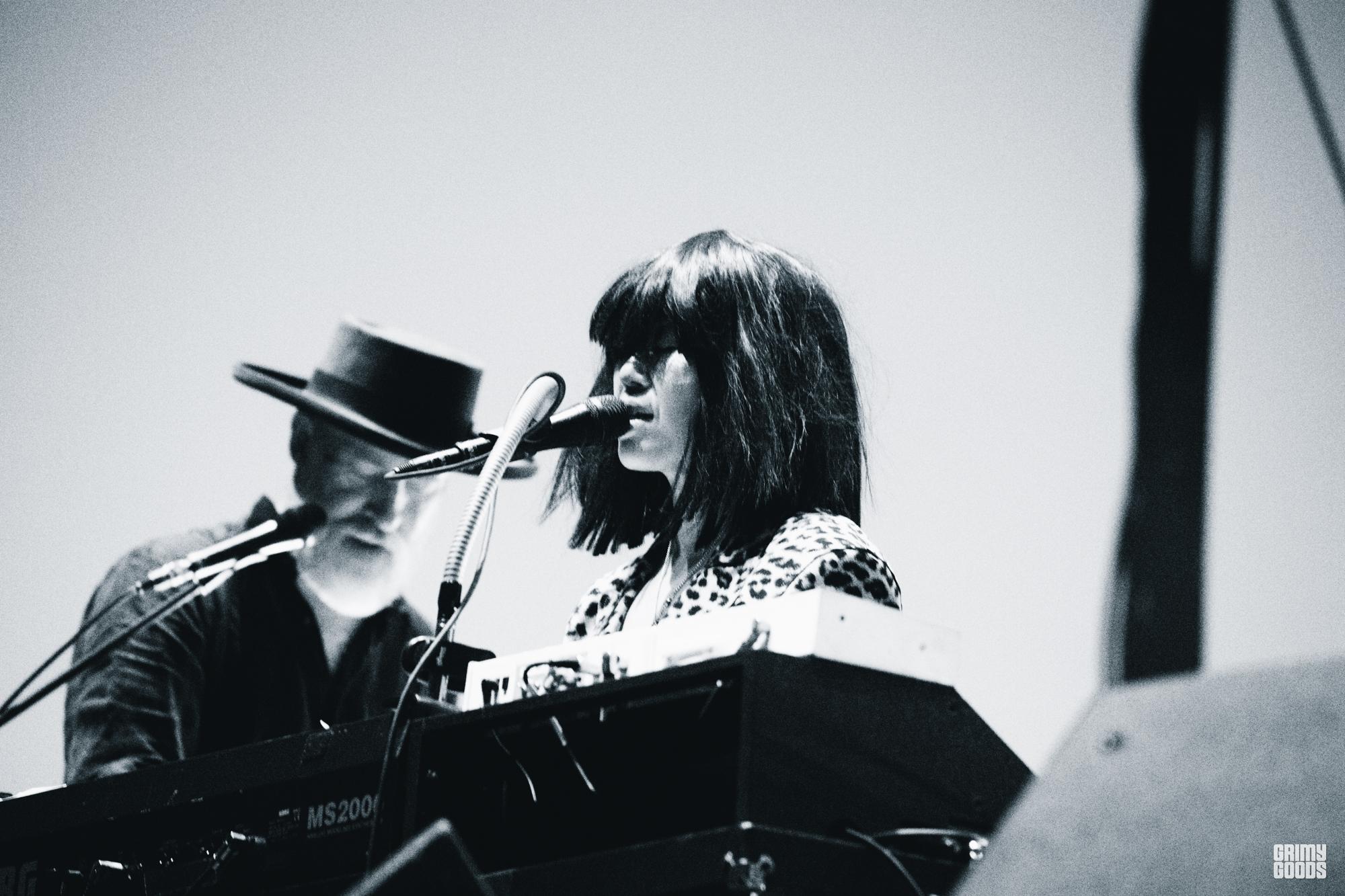
Once I made it across the grounds, LCD Soundsystem proved worth the heartbreak. James Murphy remains one of music’s most compellingly regular-looking frontmen, Nancy Whang remains a fucking G, and the band can still make a disco ball feel like sufficient stage production when the songs underneath it are this good. “Dance Yrself Clean” can still launch a thousand dance parties, while “Someone Great” still hurts exactly where it should. But “All My Friends” landed differently this time. By then, a break was needed, so we’d moved farther up the hill, away from the densest part of the crowd. From there, the disco ball scattered light across thousands of people singing a song fundamentally concerned with friendship, aging and wondering where all that time went. Subtle, universe.

Of course, nothing makes you confront the passage of time quite like hearing two very young guys rave about LCD Soundsystem as though they’ve just discovered electricity. While grabbing food afterward, I overheard them recounting what they considered one of the best performances they’d ever witnessed, baffled that anyone around them could possibly have stood still. It was adorable. It was also devastating. Because somewhere along the way, apparently I became the older person at the indie festival.
And then came The Strokes.

This year marks 25 years since Is This It, and somewhere across those years I have seen this band roughly 35+ times across cities, states, countries and continents. There was a period of my life when a Strokes show meant waiting at barricades, recognizing nearly everyone around me and finding friends scattered across the internet who became friends in real life. We were Tumblr cousins before some of the people surrounding me at Brookside were old enough to use Tumblr, or god forbid, even know what Tumblr is.
RELATED: Songs of a Generation: How The Strokes Helped Define Indie Rock With “Hard to Explain”
Walking into their set came with a complication I’d never experienced before. Guitarist Nick Valensi is currently taking a temporary break from touring, with Steve Schiltz filling in. Outside the band’s statement announcing his absence at the start of the Reality Awaits tour, no further explanation has been given. Call me a purist, but you can replicate a guitar part. You just can’t duplicate the history behind it.

Valensi’s guitar work is inseparable from The Strokes’ architecture, just as his presence is from the image of five people who changed rock music together. For a first-timer, perhaps that absence registers differently; some people around me didn’t seem to register it at all. But after a lifetime of experiencing The Strokes as those five men, watching four walk onstage felt like confronting change in its least metaphorical form. And yet, paradoxically, The Strokes have rarely looked bigger.

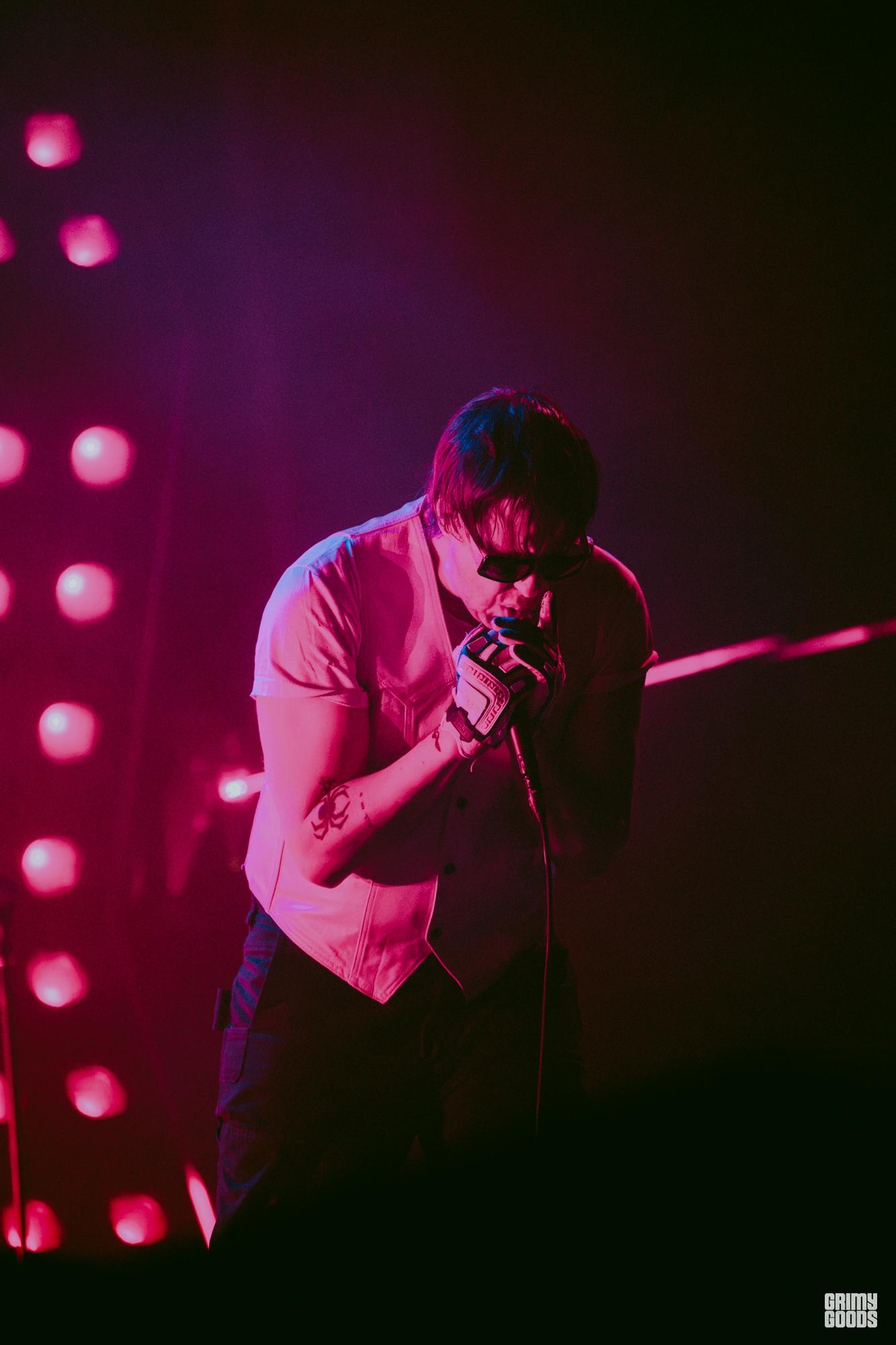
Their current production is far more elaborate than the famously minimal, backlit shows of their earlier years. The setlist pulled broadly from their catalog rather than leaning exclusively on festival staples, and Julian Casablancas appeared loose and particularly chatty, at one point teasing LCD Soundsystem for famously announcing “we are retiring from the game” 15 years ago, only to become one of indie music’s most reliable touring acts.
When medical attention was needed in the crowd, Casablancas stopped the show and instructed everyone to clear a path. Looking out at the opening, he joked that he’d seen IDLES create a “wall of death,” but this was a “wall of life.” Then the music started again.

For all my internal conflict about what constitutes The Strokes in 2026, the annoying truth is that “Someday” still makes intellectual criticism pretty useless. Standing there alone, I found myself drifting through an involuntary montage of everything that song has soundtracked. Friends I met because of this band, some still in my life, others long gone. Trips across the world. Video vlogs we made. Shows we waited hours for. The people who introduced me to the music industry before I ever understood that I could build a career inside it.
“Fate, my friend, you say the strangest things.” Twenty-five years later, apparently it does.

And maybe that is what Just Like Heaven understands better than most nostalgia festivals. You cannot actually recreate the past. The bands change. Their audiences change. Technology changes. The world changes. You change. Sometimes a guitarist is missing. Sometimes the kid who once waited at the barricade is wearing sensible cushioned New Balances and strategically conserving electrolytes. Sometimes the kids standing next to you know these songs for reasons completely different from yours. And, annoyingly, and very hipster-ingly, that might be beautiful.
I had to leave The Strokes a few songs early to catch my carpool, a personal tragedy compounded by hearing songs I love continue somewhere behind me as I crossed the parking lot. But eventually I stopped and turned around.

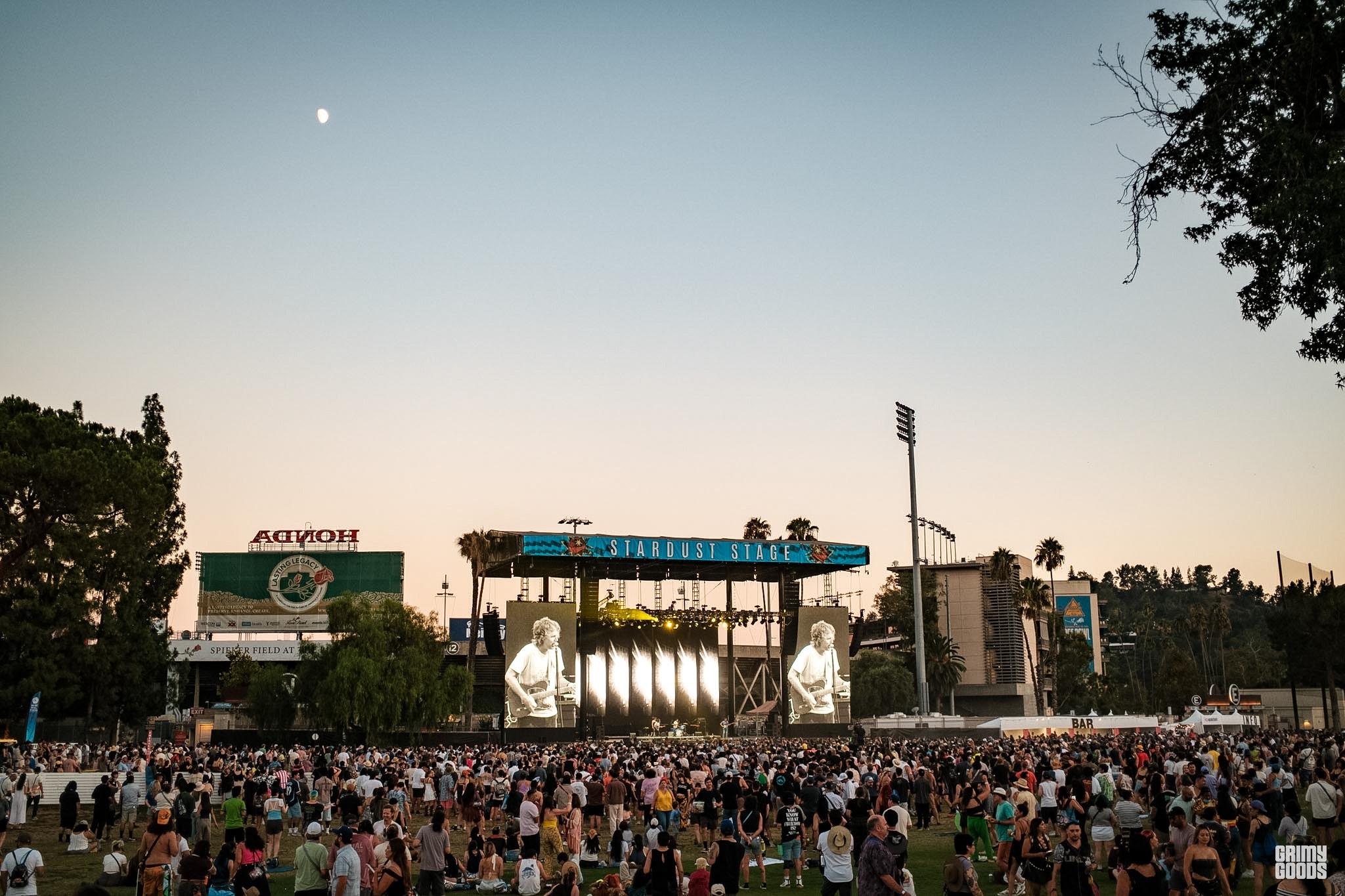
For once, I wasn’t at the barricade. I wasn’t photographing or interviewing someone. I wasn’t in production mode or putting out some kind of work fire. I was far enough away to see almost the entire crowd stretched between me and a tiny stage glowing in the distance. Suddenly, my own history with The Strokes felt very small against the thousands of other histories being made in front of me.
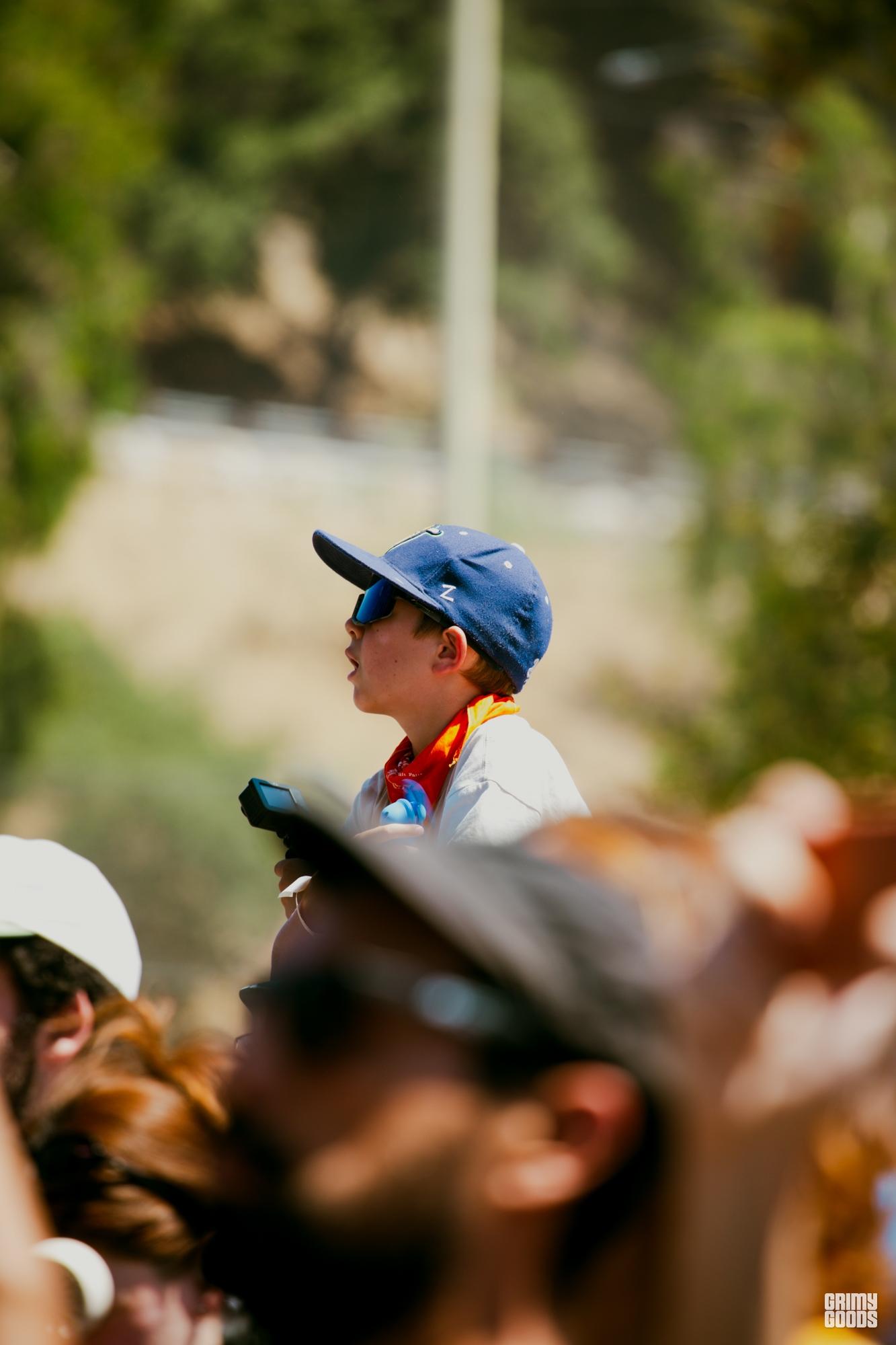
Someone down there was seeing them for the first time, decades after someone else (me included) had theirs. Someone had waited years to see LCD Soundsystem with the parent who introduced them. A couple came to swoon for TV Girl. Friends discovered Girl Tones. Everyone had paid, driven, walked, sweated, refilled water bottles and sacrificed sets because something had brought them there.

By night’s end, Instagram captions were already declaring that groups of friends had “survived” Just Like Heaven together. Funny because it was true. The heat became an unfortunate communal badge of honor, but the community mattered more than the suffering. Live music has always required a little irrational devotion; increasingly, it also requires remembering that getting through these spaces safely is communal work. Drink water. Know when to sit down. Give someone room. Pick each other up. When someone needs help, part the crowd and build the wall of life.

Maybe that’s what Just Like Heaven has figured out as it’s grown alongside the scene it celebrates. Nostalgia doesn’t have to keep us frozen in the past. The bands change, the crowds change, the world keeps getting hotter, and we change too. Yet somehow, year after year, Just Like Heaven gives all those different versions of us somewhere to meet.
Words: Jeanette Diaz
Photography: Lilly Duran and Bryan Olinger
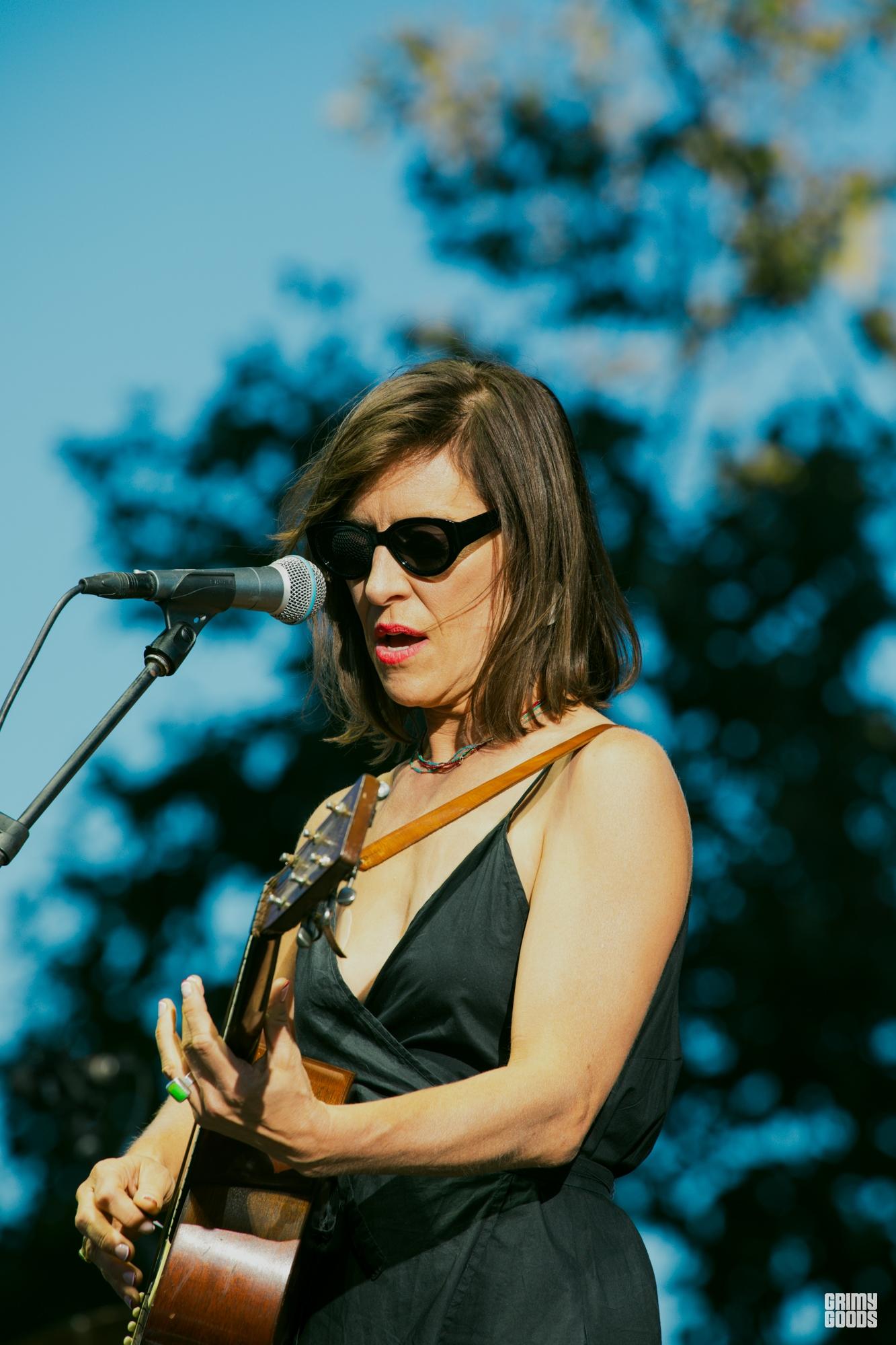
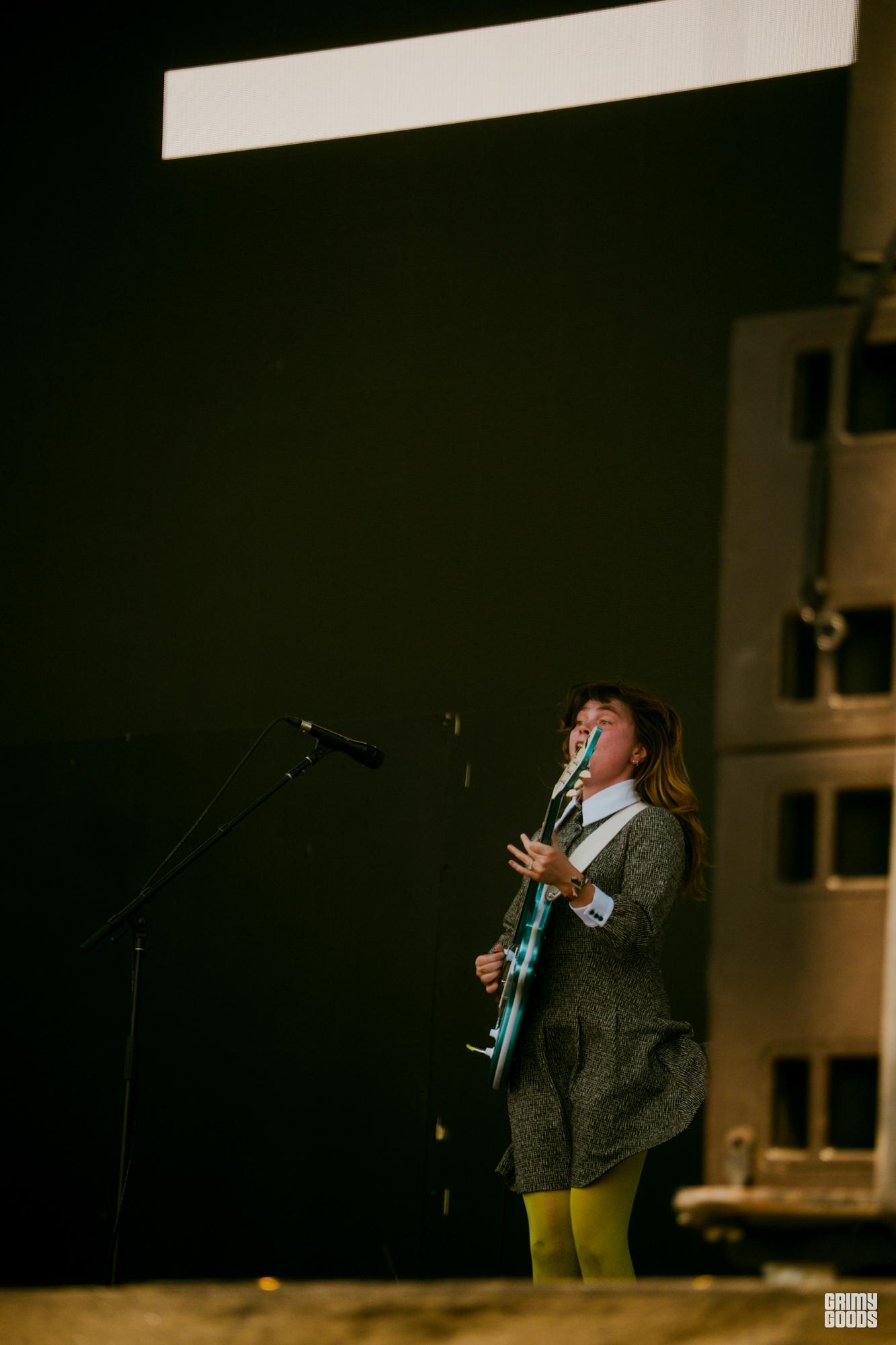
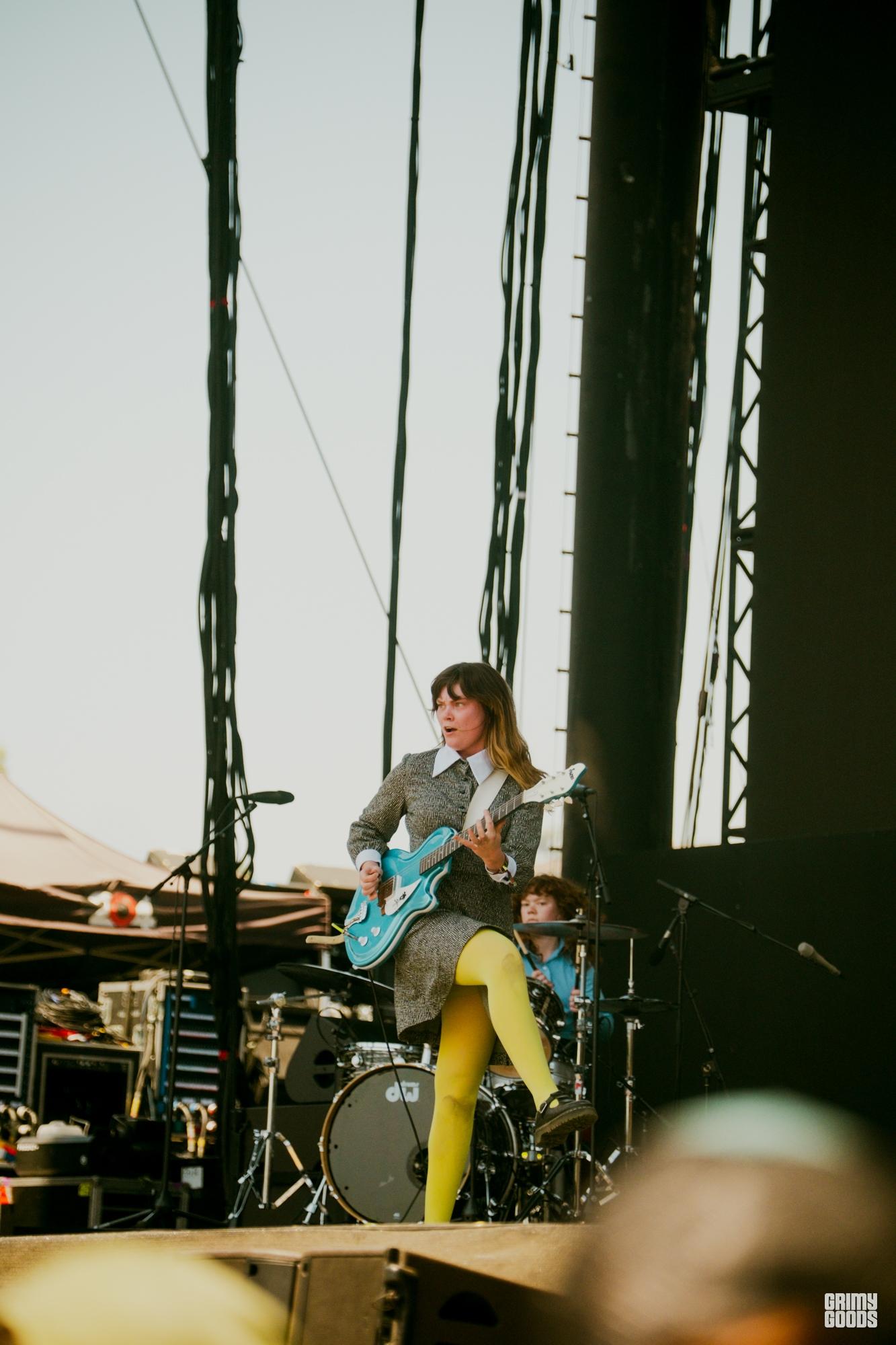
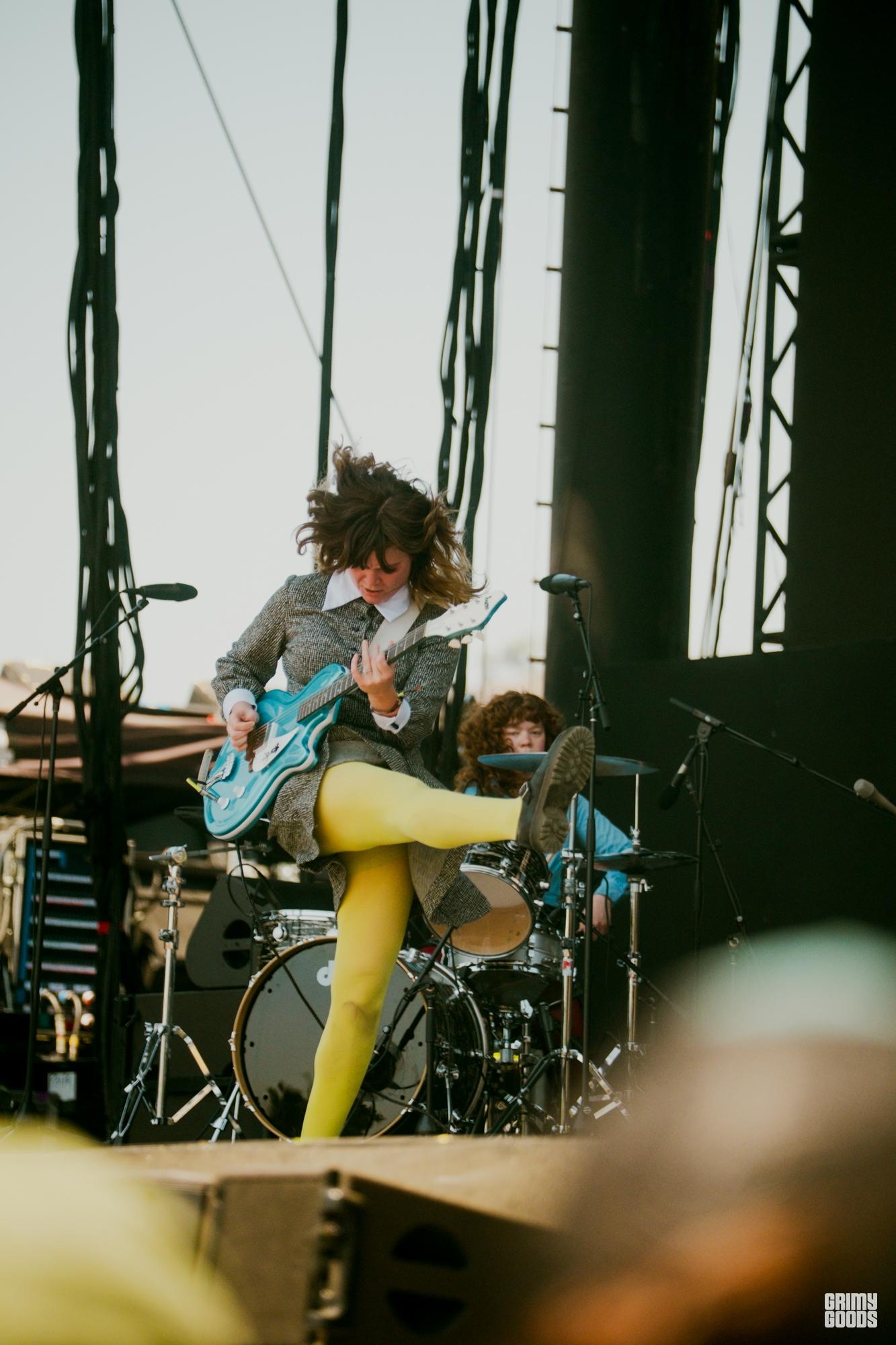
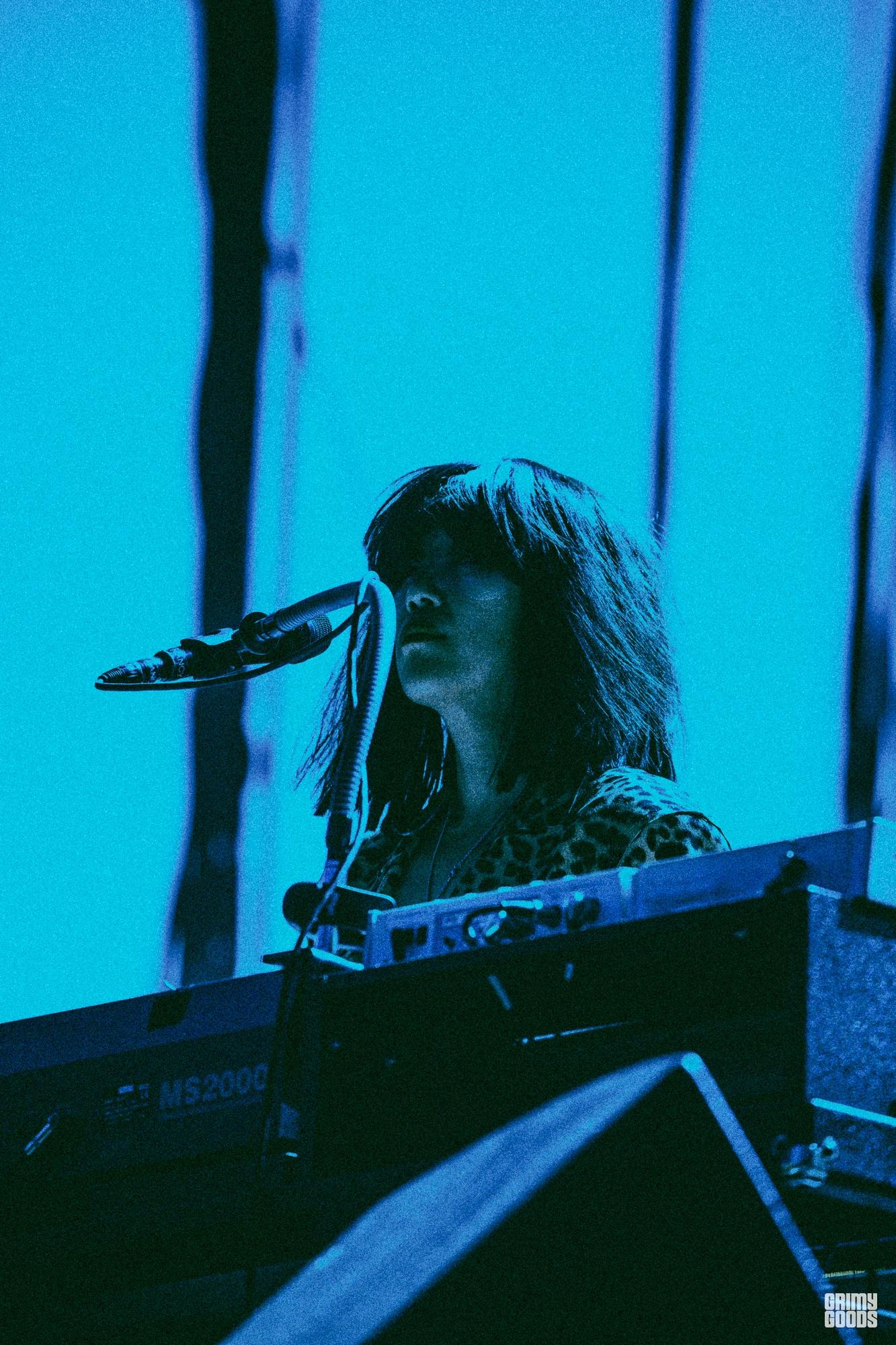
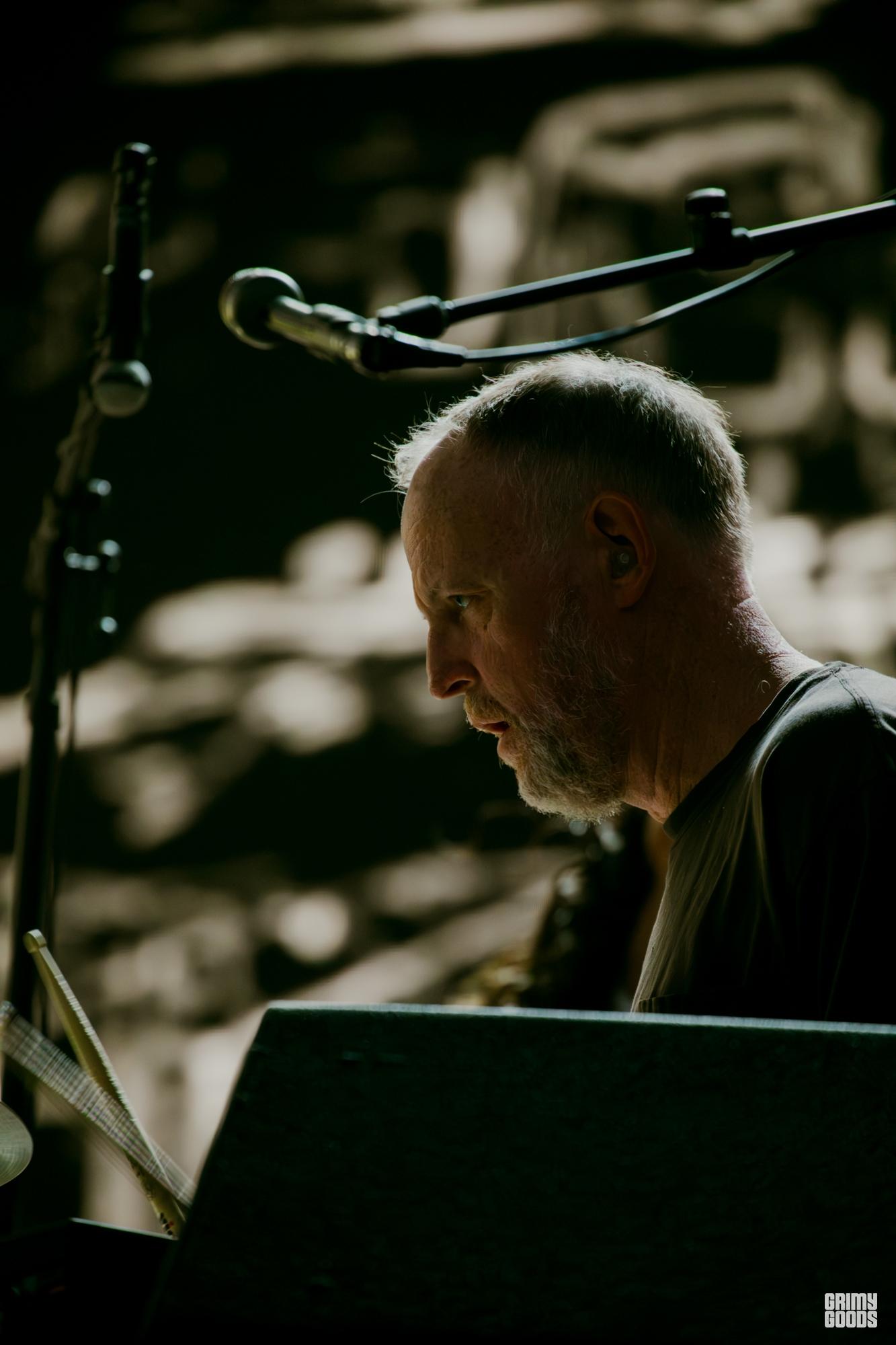
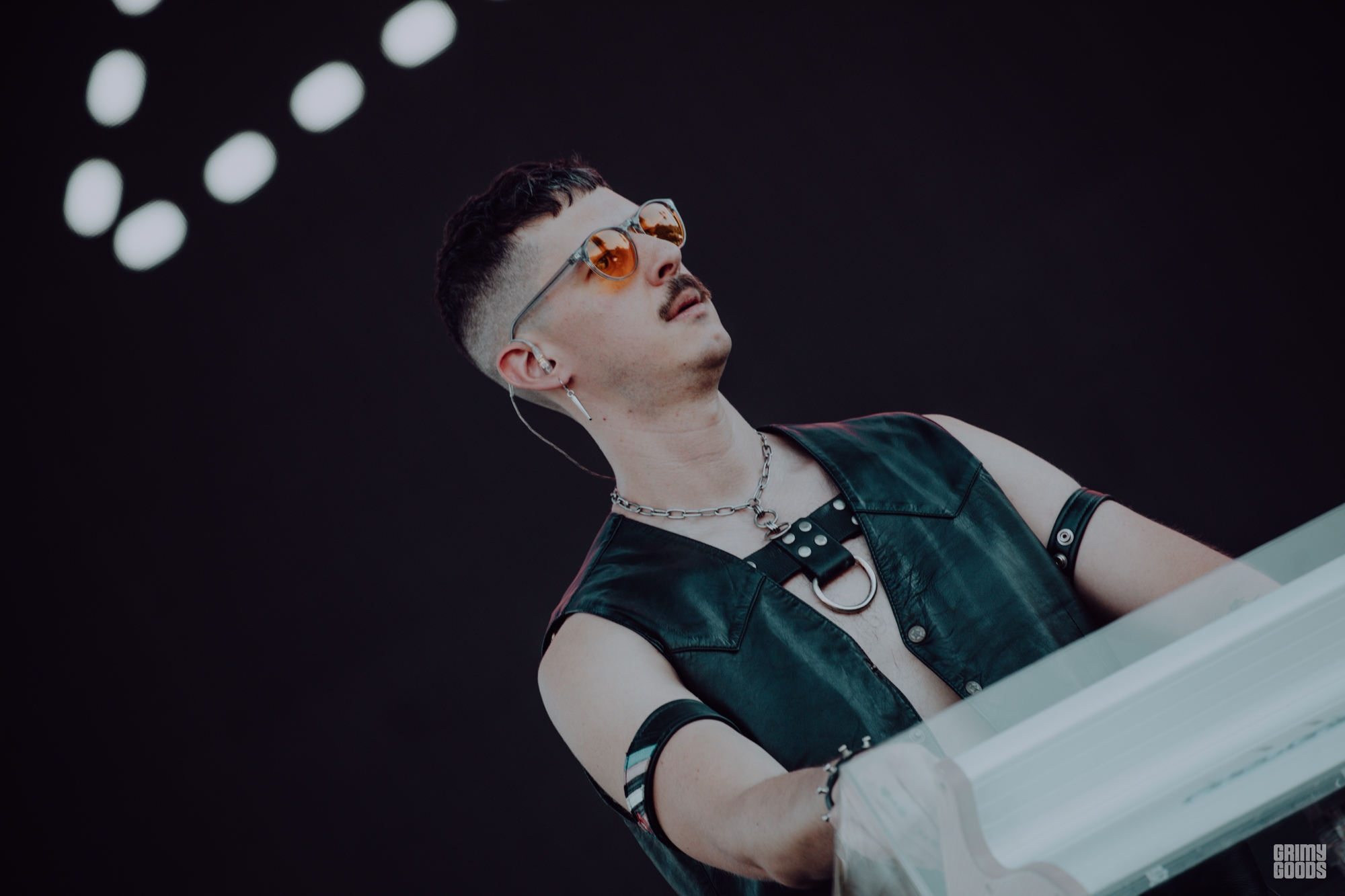
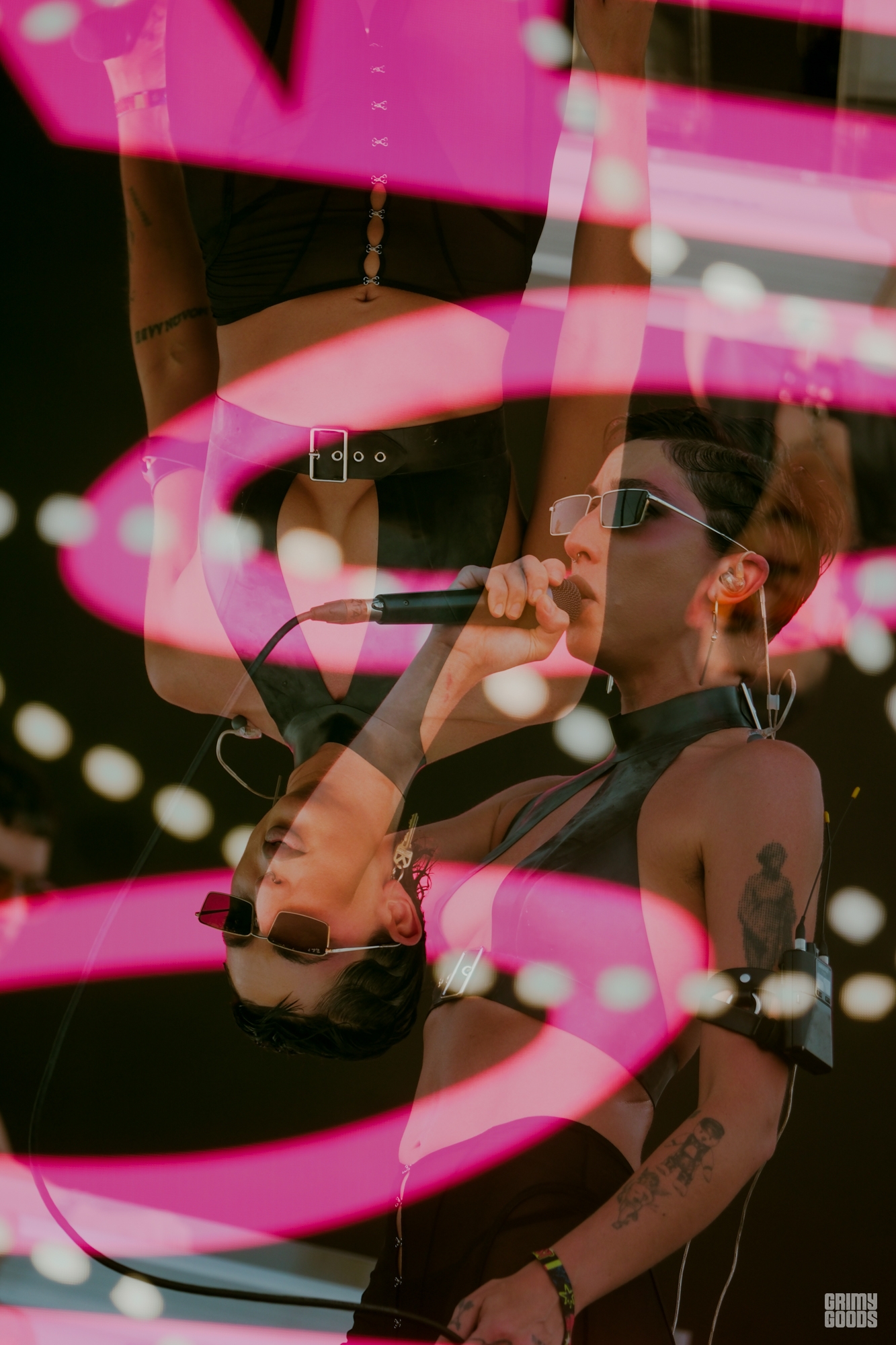
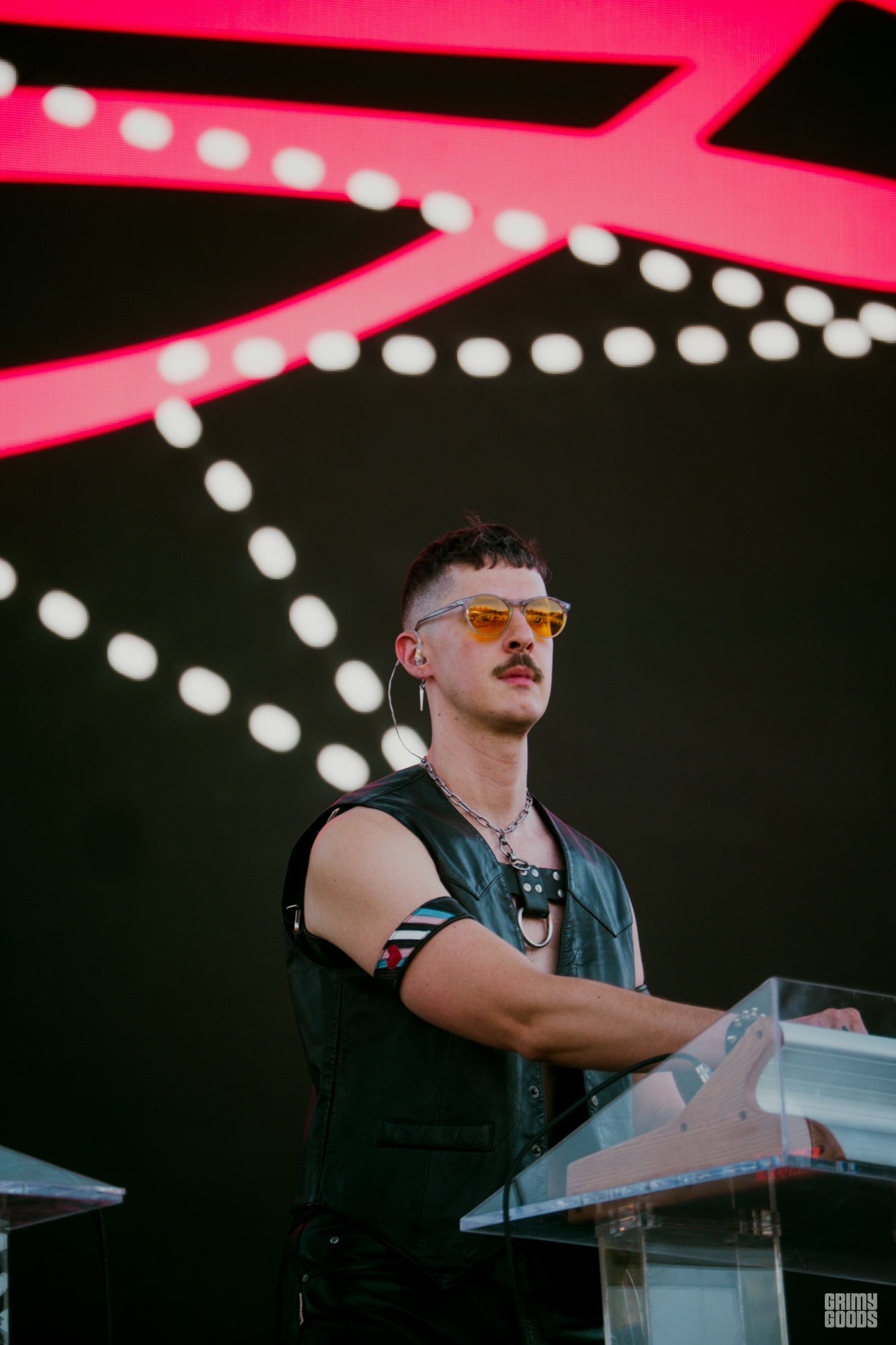
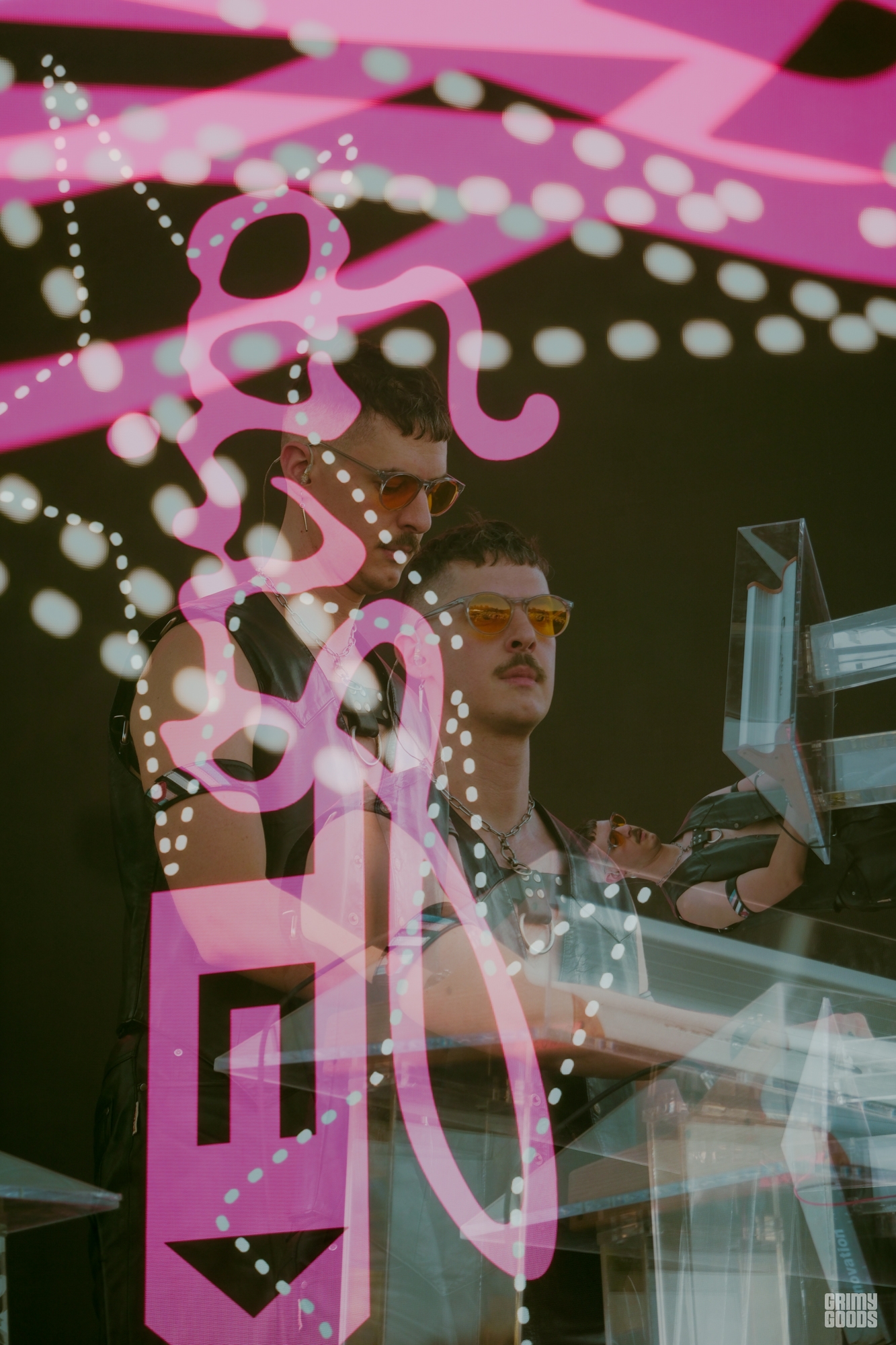
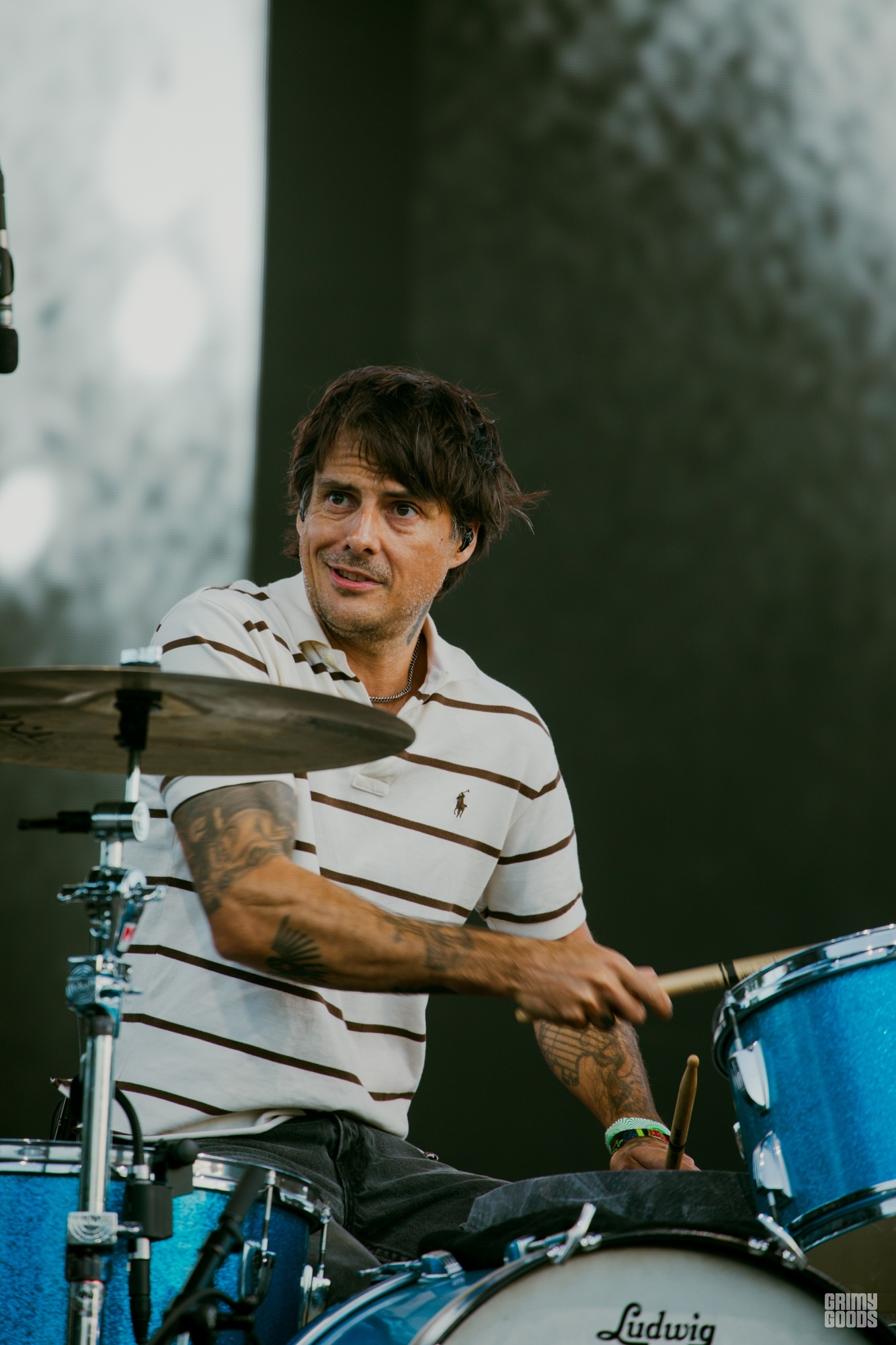
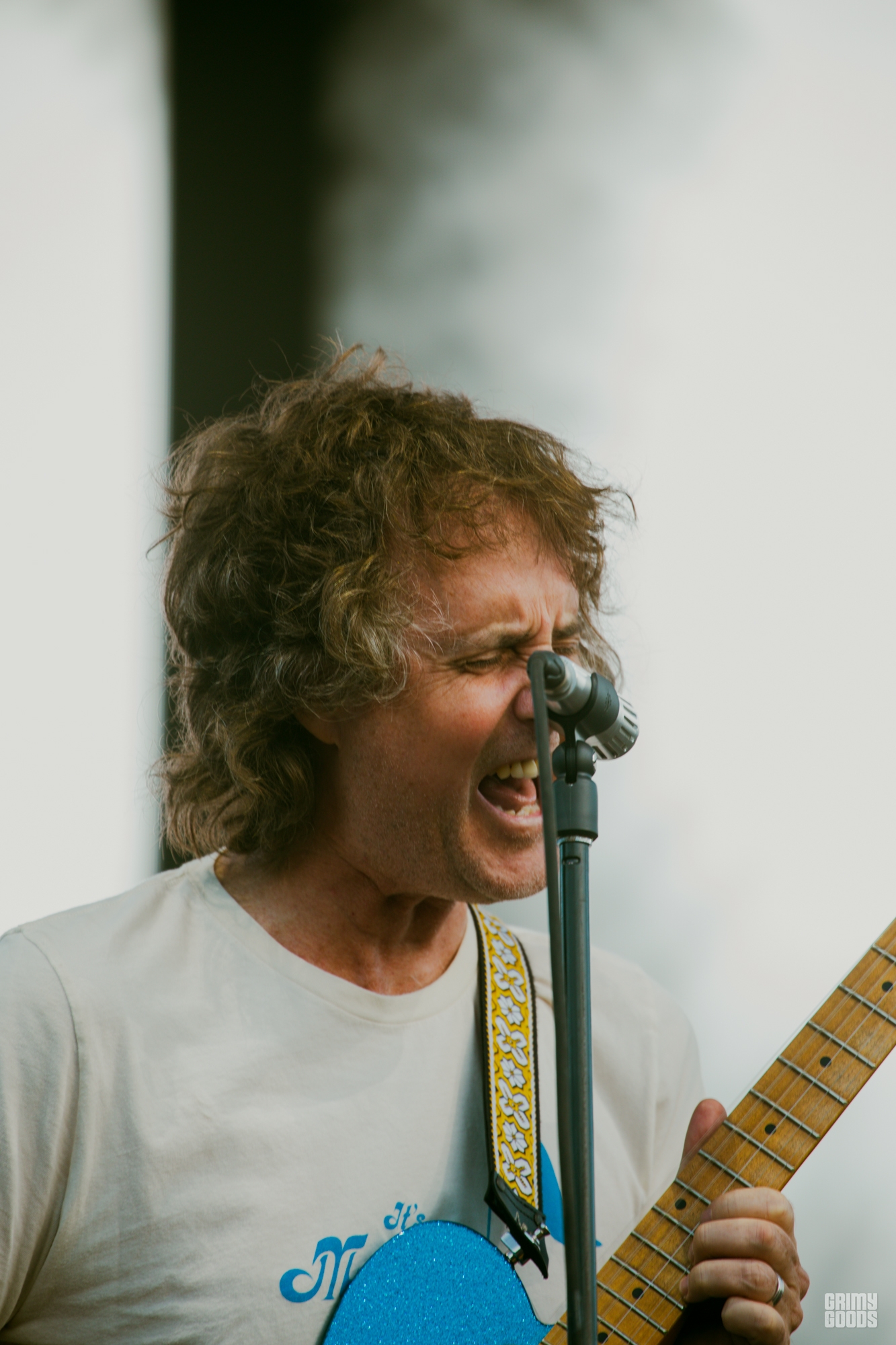
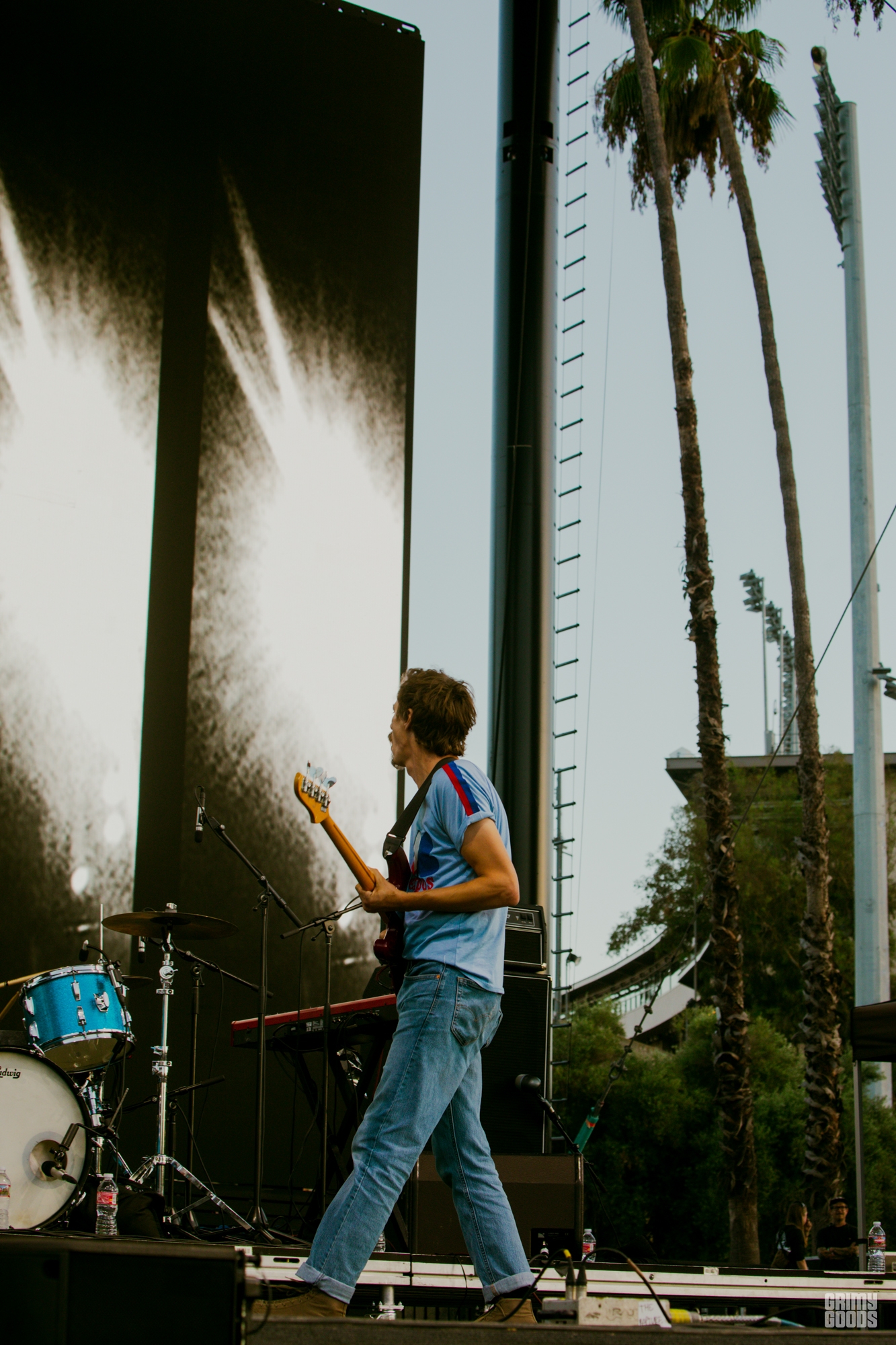
Just Like Heaven 2026 Concert Photos
All photos in this gallery by Lilly Duran

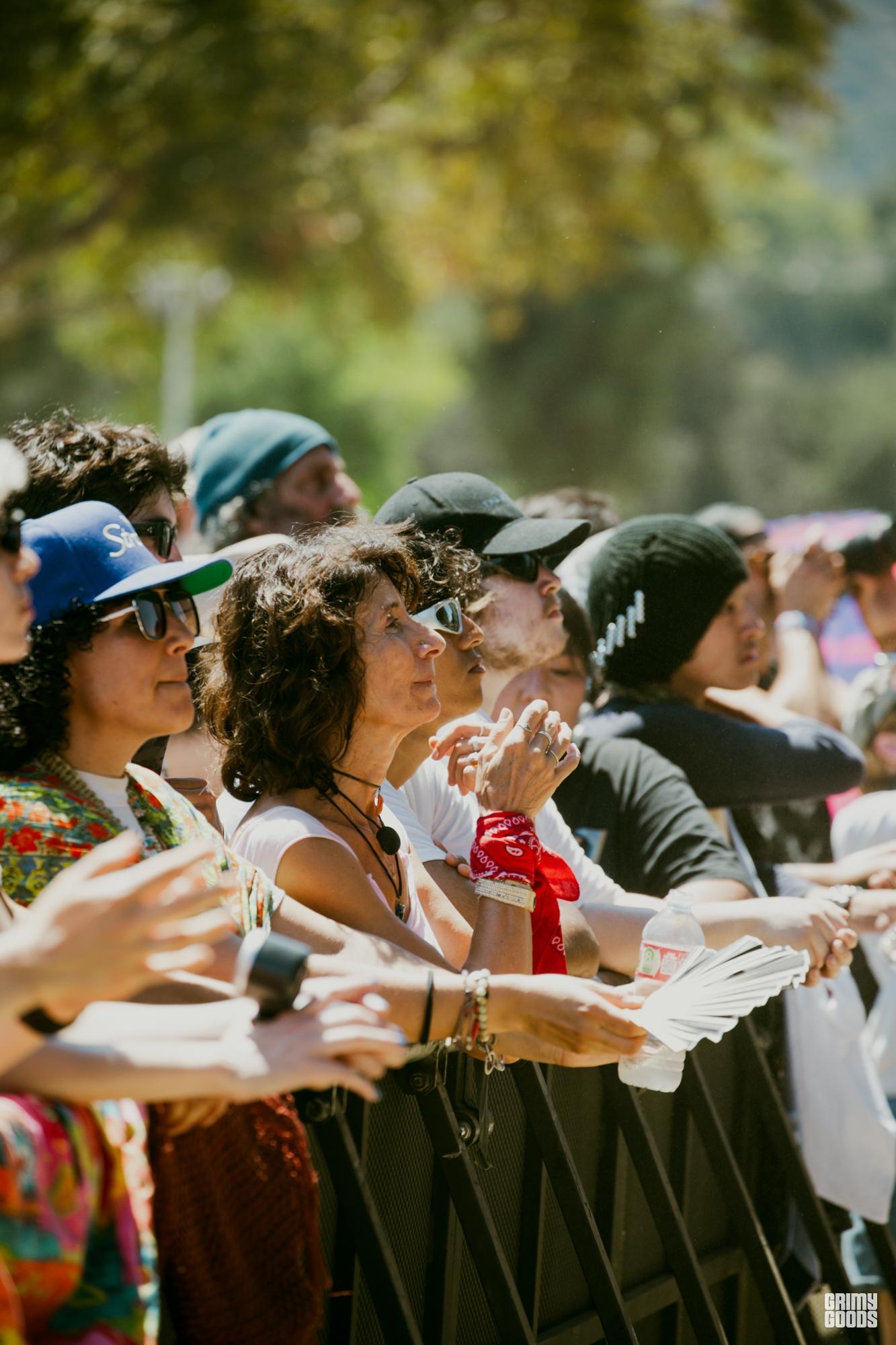
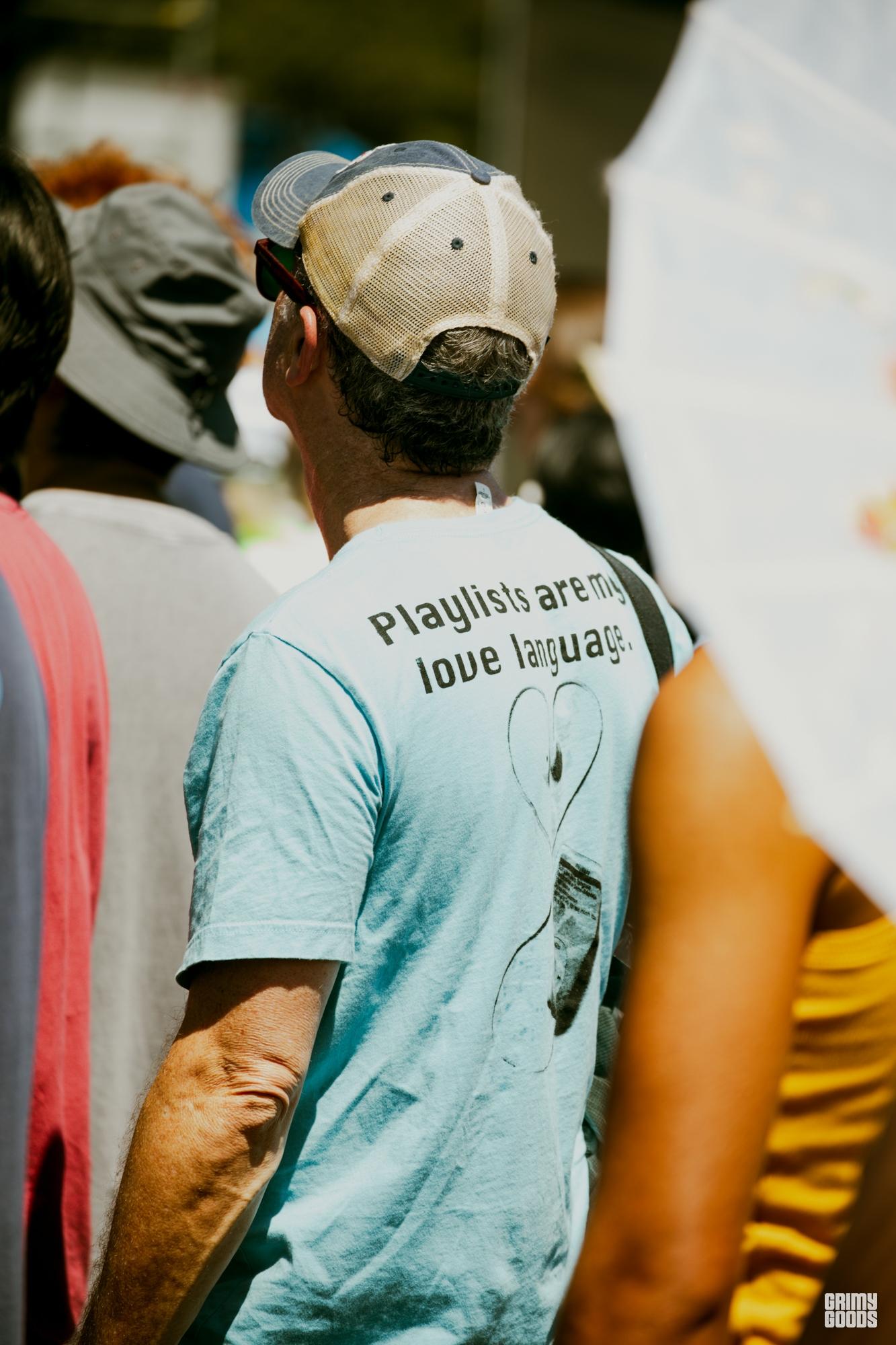




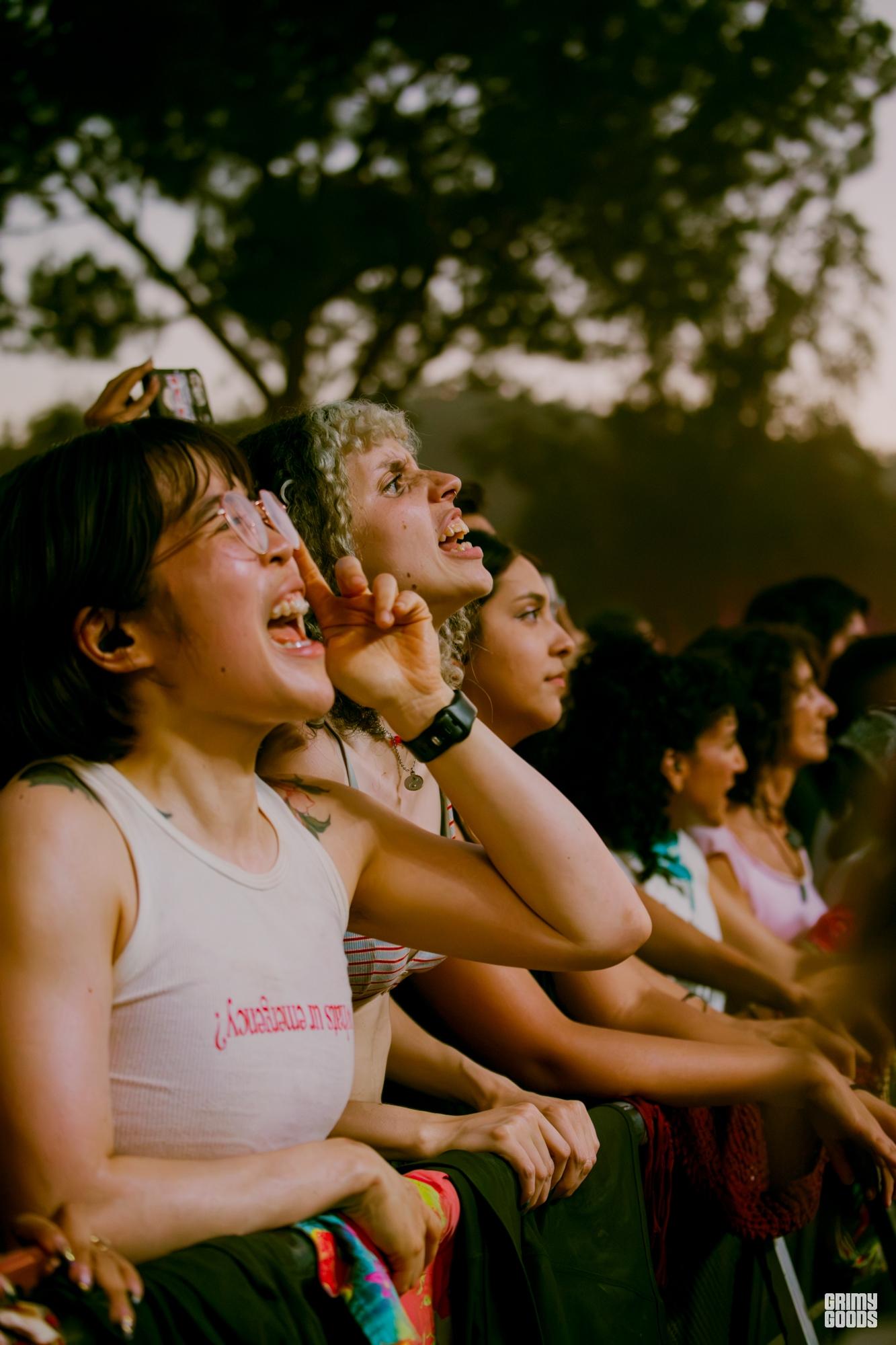








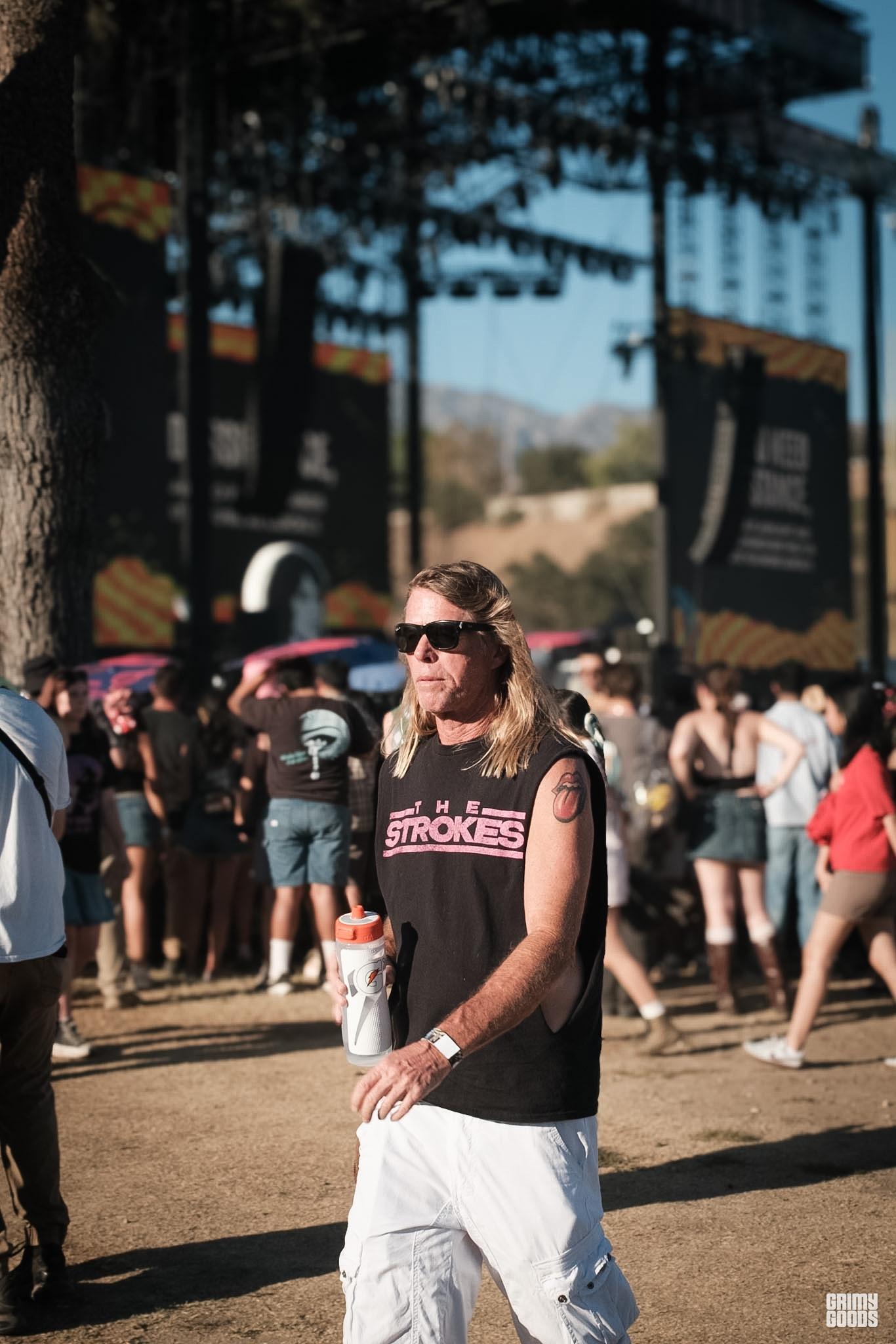
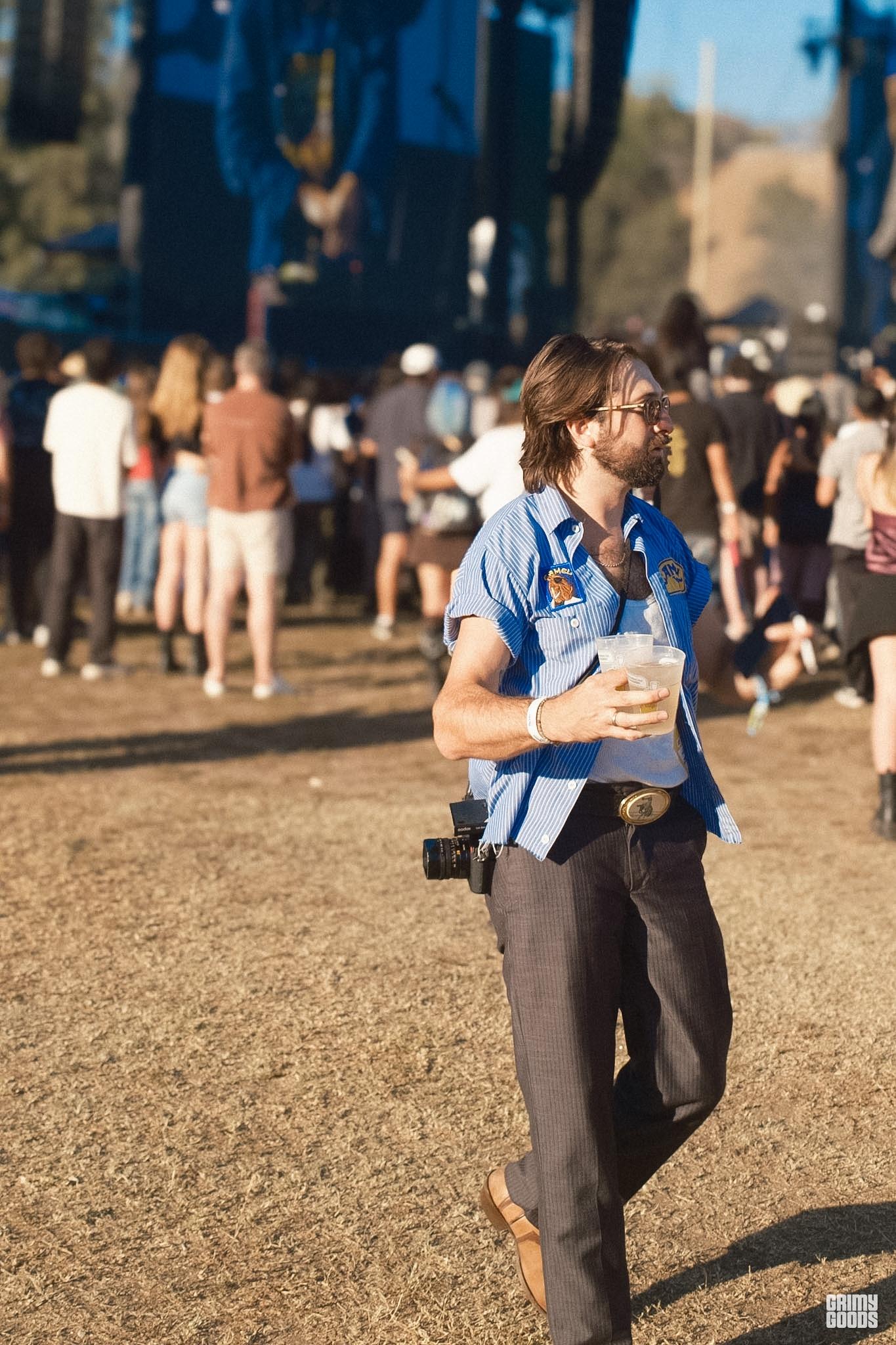
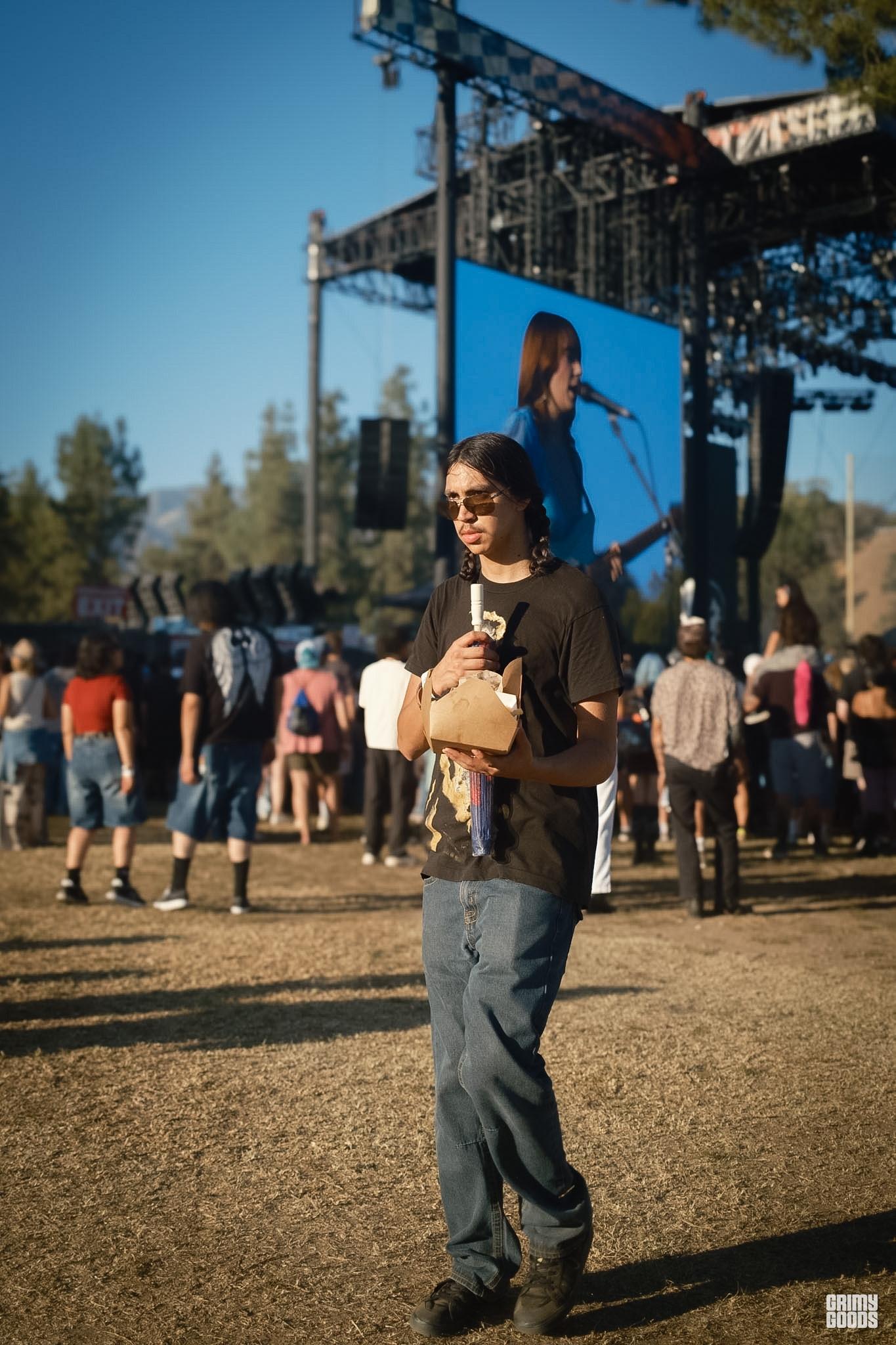
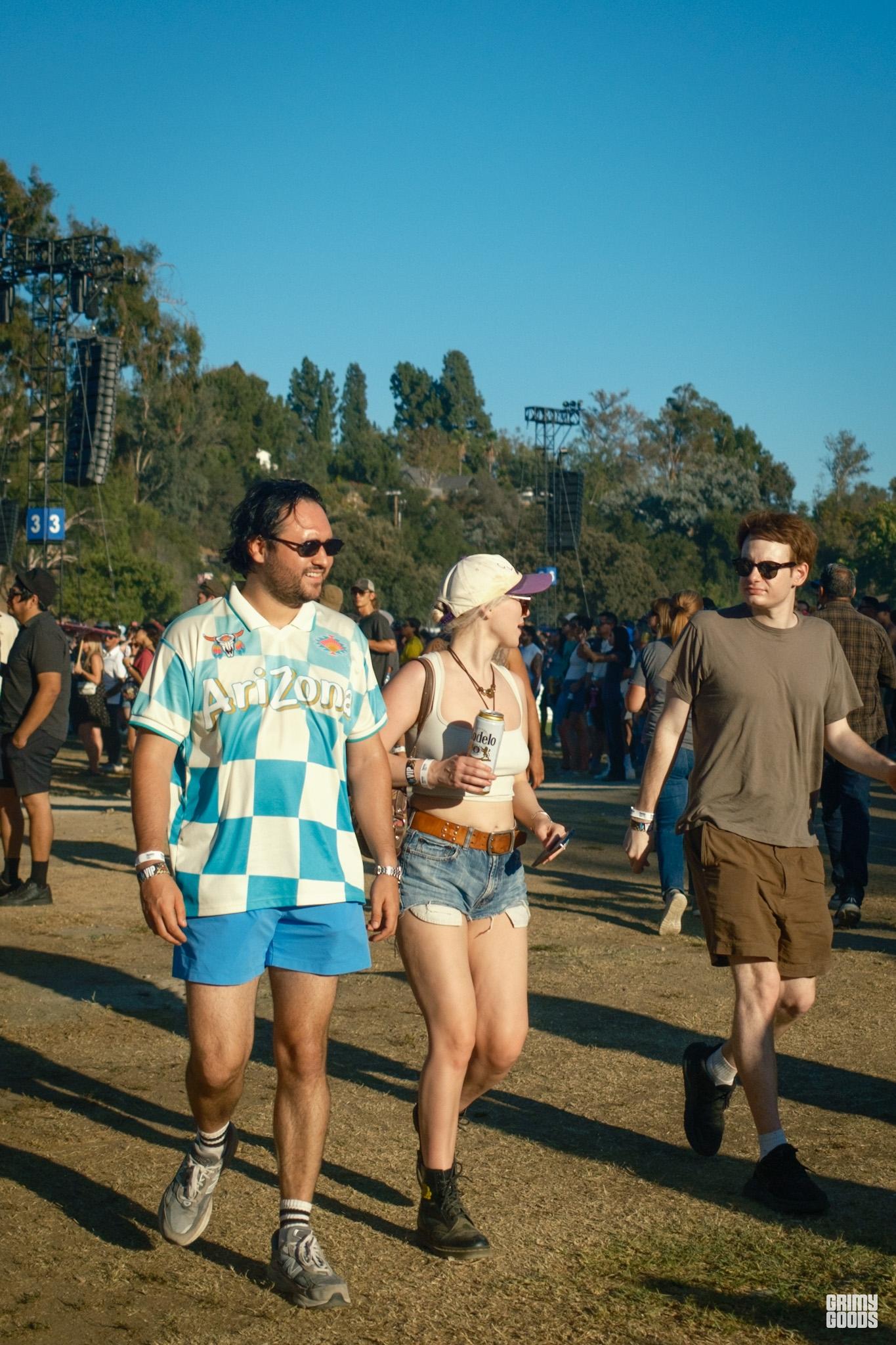
Just Like Heaven 2026 Fashion and Crowd Photos
All photos is this gallery by Bryan Olinger